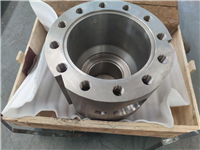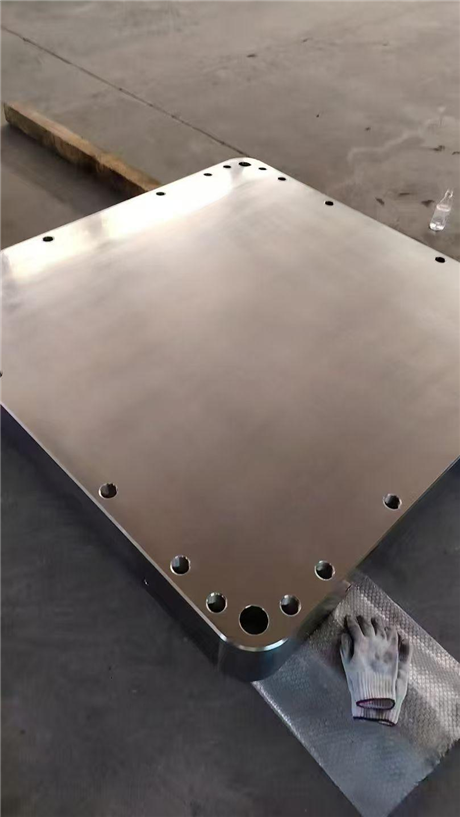

TC4 titanium alloy 3D printed substrate, high-strength and corrosion-resistant additive manufacturing raw material
Category:
machining/Mechanical processing/forging
Model:
TC4
Brand:
Hengze Xinhui
Material Grade:
TC4 (Ti-6Al-4V)
tensile strength:
≥895 MPa
yield strength:
≥828 MPa
elongation:
≥10%
density:
4.43 g/cm³
hardness:
≤33 HRC
Operating temperature:
-200 ℃ to 400 ℃
Surface Treatment:
Sandblasting/Mechanical Processing
Retail Price
10,000,000.00USD
重量
kg
- Product Description
-
Material Grade TC4 (Ti-6Al-4V)
tensile strength ≥895 MPa
yield strength ≥828 MPa
elongation ≥10%
density 4.43 g/cm³
hardness ≤33 HRC
Operating temperature -200 ℃ to 400 ℃
Surface Treatment Sandblasting/Mechanical Processing
Description :
TC4 3D printed substrate is a high-performance titanium alloy raw material designed specifically for additive manufacturing processes, mainly addressing the demand for lightweight, high-strength, and complex structural component forming in aerospace, medical equipment, and high-end equipment manufacturing. This material is based on TC4 (Ti-6Al-4V) titanium alloy and is prepared using specific powder or sheet processing techniques to ensure excellent flowability and powder uniformity during 3D printing processes such as laser selective melting (SLM) or electron beam melting (EBM). As a key industrial foundational material, TC4 3D printed substrates can be directly used to manufacture components with complex geometric shapes, significantly shortening the research and development cycle and reducing material waste. They are an indispensable core consumable in the field of modern precision manufacturing.
In terms of specifications and processes, TC4 3D printed substrates strictly follow relevant standards such as ASTM B348 or GB/T 2965. Its typical chemical composition includes 5.5% -6.8% aluminum (Al) and 3.5% -4.5% vanadium (V), with the remainder being titanium. This α+β biphasic structure endows the material with excellent comprehensive mechanical properties. For substrates in powder form, the particle size distribution is usually controlled within the range of 15-53 μ m or 53-105 μ m, with a loose density of not less than 2.0g/cm ³ and a Hall flow rate of less than 40s/50g to ensure the stability of the printing process. If the substrate is in the form of a sheet, the surface needs to be sandblasted or mechanically processed. The roughness Ra value is usually less than 3.2 μ m, and the flatness error is controlled within 0.5mm/m to ensure the adhesion quality of the first layer printed and the accuracy of subsequent molding.
When selecting, it is necessary to clarify the specific requirements of the application scenario for mechanical performance. TC4 3D printed substrates are suitable for working conditions that require high specific strength, high temperature corrosion resistance, and biocompatibility, such as aircraft engine blades, orthopedic implants, and racing parts. Compared with pure titanium (TA1/TA2), TC4 has higher strength and hardness, but slightly lower plasticity; Compared with stainless steel or aluminum alloy, it has better corrosion resistance and heat resistance, but the cost is higher and the processing difficulty is greater. If purchased for static structural components and insensitive to weight, alternative materials with lower costs can be considered; If it involves high-temperature oxidation environments or highly corrosive media, TC4 is an ideal choice. It should be noted that differences in oxygen content between different batches can affect material brittleness. When selecting, attention should be paid to the gap element content in the quality inspection report provided by the supplier.
In terms of installation and maintenance, when using TC4 3D printed substrates for additive manufacturing, it is necessary to operate in an inert gas (such as argon) protective environment, and the oxygen content should be controlled below 50ppm to prevent material oxidation and brittleness. After printing is completed, the substrate usually needs to undergo stress relief annealing treatment (about 600-700 ℃) to eliminate internal residual stress and prevent part deformation or cracking. In daily storage, unused powders or boards should be sealed and stored in a dry and ventilated place to avoid moisture absorption that may cause porosity defects in printing. Common faults such as poor interlayer bonding are often caused by insufficient substrate preheating temperature or improper parameter settings. It is recommended to regularly calibrate the laser power and scanning speed of the printing equipment to ensure that the TC4 3D printed substrate performs at its best.
AfterSalesService :
Key words: