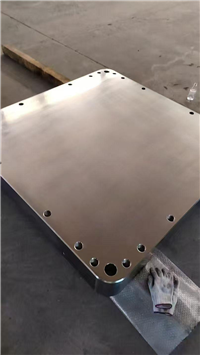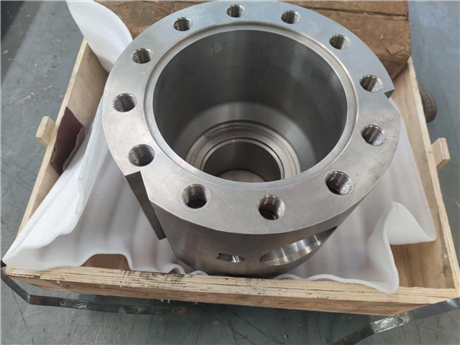

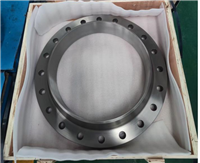
TC4 titanium alloy forgings with high strength and corrosion resistance, aviation grade forging, free forging blanks, customized according to drawings
Category:
metallurgy/Metal processing materials/Titanium and titanium alloy materials
Model:
TC4
Brand:
Hengze Xinhui
Material Grade:
TC4 (Ti-6Al-4V)
Execution Standard:
GB/T 2965 / ASTM B348
tensile strength:
≥895 MPa
yield strength:
≥828 MPa
elongation:
≥10%
Operating temperature:
-250℃ ~ 400℃
density:
4.43 g/cm³
hardness:
≤320 HB
Processing Technology:
Free forging/forging
heat treatment condition:
Annealing (M)/Solution Aging (STA)
Retail Price
10,000,000.00USD
重量
kg
- Product Description
-
Material Grade TC4 (Ti-6Al-4V)
Execution Standard GB/T 2965 / ASTM B348
tensile strength ≥895 MPa
yield strength ≥828 MPa
elongation ≥10%
Operating temperature -250℃ ~ 400℃
density 4.43 g/cm³
hardness ≤320 HB
Processing Technology Free forging/forging
heat treatment condition Annealing (M)/Solution Aging (STA)
Description :
TC4 titanium alloy forgings are key structural components formed by forging process of α+β - type two-phase titanium alloy with Ti-6Al-4V as a typical component. This material combines high strength, low density, and excellent corrosion resistance, mainly addressing the urgent demand for lightweight and high reliability components in aerospace, medical equipment, and chemical equipment. Under typical working conditions, TC4 titanium alloy forgings can maintain stable mechanical properties in the temperature range of -250 ℃ to 400 ℃, making them suitable for harsh environments with high loads, high speeds, or strong corrosive media. They are an ideal choice to replace traditional steel components and achieve weight reduction and efficiency improvement.
The specifications of TC4 titanium alloy forgings include rods with diameters ranging from 50mm to 800mm, cakes with thicknesses ranging from 20mm to 300mm, and various shaped die forgings. Its chemical composition strictly follows standards such as GB/T 2965 and ASTM B348, with aluminum content controlled between 5.5% and 6.75%, vanadium content between 3.5% and 4.5%, and iron content ≤ 0.3%. After multiple vacuum consumable arc melting and precision forging, the structure is uniform and dense, without macroscopic segregation. The conventional heat treatment state is annealed (M) or solution aged (STA), with a tensile strength of ≥ 895MPa, a yield strength of ≥ 828MPa, an elongation rate of ≥ 10%, and a cross-sectional shrinkage rate of ≥ 25%, ensuring consistency in batch performance.
When selecting, it is necessary to clarify the specific usage scenarios and processing requirements of TC4 titanium alloy forgings. For components that require subsequent cutting, it is recommended to choose the annealed state to reduce tool wear; For connectors or load-bearing components that require extremely high strength, the solid solution aging state can be selected. It should be noted that although TC4 has excellent corrosion resistance, it needs to be carefully evaluated in pure reducing acids or high-temperature dry chlorine environments. Compared with TC11, TC4 has slightly lower room temperature strength but better process plasticity; Compared to TA15, TC4 has a more balanced overall performance. Detailed drawings or blank allowance requirements should be provided during procurement to determine the forging ratio and fiber flow direction, in order to avoid a decrease in fatigue life due to streamline cutting.
TC4 titanium alloy forgings need to be surface cleaned before installation to remove oxide scale and oil stains, and if necessary, shot peening treatment should be carried out to improve fatigue strength. During welding, argon arc welding or electron beam welding should be used, and the high temperature zone should be strictly protected to prevent gas embrittlement. During daily maintenance, surface cracks and corrosion points should be regularly inspected, especially in stress concentration areas. Common faults include deformation or microcracks caused by residual stresses during processing, which can be alleviated by stress relief annealing. When storing, it should be placed in a dry and ventilated place to avoid direct contact with metals such as carbon steel to prevent electrochemical corrosion. For long-term storage, it is recommended to apply anti rust oil and wrap it with protective film.
AfterSalesService :
Key words: