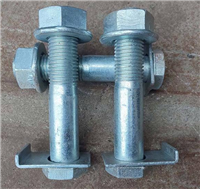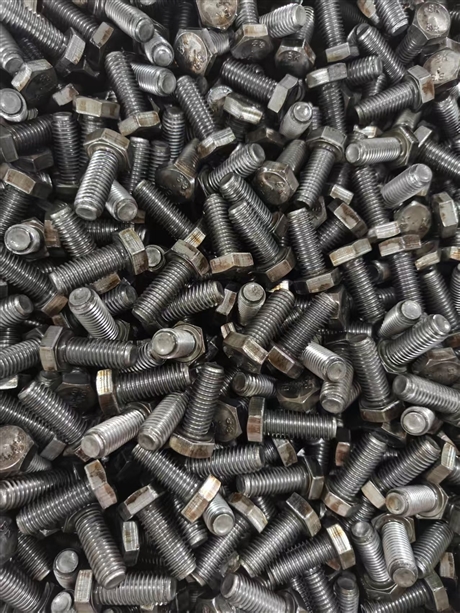

High strength steel structure bolts M8-M24 hot-dip galvanized black treatment package inspection
Category:
mechanical equipment/Fasteners, connectors/bolt
Model:
M8/M10/M12/M16/M20/M24
Brand:
Initially metal
Specification Range:
M8-M24
strength grade:
10.9S/8.8S
Surface Treatment:
Blackening/hot-dip galvanizing
Material:
Alloy steel (35CrMo/40Cr)
Execution Standard:
GB/T 1231
Applicable Scenarios:
Steel structure engineering/factory/bridge
connection type:
Friction type/pressure type
Retail Price
10,000,000.00USD
重量
kg
- Product Description
-
Specification Range M8-M24
strength grade 10.9S/8.8S
Surface Treatment Blackening/hot-dip galvanizing
Material Alloy steel (35CrMo/40Cr)
Execution Standard GB/T 1231
Applicable Scenarios Steel structure engineering/factory/bridge
connection type Friction type/pressure type
Description :
Steel structure bolts are high-strength fasteners designed specifically for heavy-duty steel structure connections, mainly solving the problem of rigid connections between steel beams, steel columns, and node plates. This product is widely used in large-scale steel structure engineering such as industrial plants, high-rise buildings, bridge supports, etc., ensuring the stability and safety of the structure under dynamic and static loads. As a key load-bearing component, steel structure bolts need to have extremely high tensile strength and shear resistance. They are usually used in conjunction with high-strength nuts and washers to form a fastening pair, suitable for friction or pressure bearing connection scenarios that require a large pre tightening force. They are essential basic connectors in modern construction engineering.
This series of steel structure bolts covers the entire range from M8 to M24, meeting the installation requirements of different thickness steel plates and node designs. The surface treatment process provides two mainstream options: blackening and hot-dip galvanizing: blackening treatment has low cost and is suitable for indoor dry environments; The hot-dip galvanized layer has uniform thickness and excellent anti-corrosion performance, suitable for outdoor or humid corrosive environments. The product strictly complies with national and industry standards such as GB/T 1231 and GB/T 3632, and is made of high-quality alloy steels such as 35CrMo and 40Cr. After quenching and tempering heat treatment, the strength grade can reach 10.9S or 8.8S. Each batch of products supports third-party mechanical performance testing to ensure that key indicators such as torque coefficient and wedge load meet engineering acceptance standards.
When selecting steel structure bolts, it is necessary to choose according to the strength grade, connection type (friction type or pressure type), and environmental corrosion level required by the design drawings. M8-M12 specifications are commonly used for secondary beam connections or lightweight supports, while M16-M24 is more commonly used for core load-bearing parts such as main frame nodes. Attention should be paid to distinguishing the construction differences between high-strength bolts with large hexagonal heads and high-strength bolts with twist shear types. The former requires torque or angle control to control the pre tension, while the latter uses a plum blossom head twist as the final twist mark. If the working conditions involve strong acidity, alkalinity or marine climate, it is recommended to prioritize the use of hot-dip galvanized or Dacromet treated steel structural bolts to avoid rapid corrosion of ordinary blackened parts leading to connection failure. It is strictly prohibited to replace high-strength steel structural bolts with low-strength ordinary bolts.
Before installing steel structure bolts, it is necessary to clean the contact surface of the connecting plate to ensure that there is no floating rust, oil stains, or burrs. The anti slip coefficient of the friction surface must meet the design requirements. During construction, it should be carried out in two steps: initial tightening and final tightening. The initial tightening torque is about 50% of the final tightening torque, and the final tightening should be completed on the same day to ensure stable pre tension. Regular checks should be conducted on nodes for looseness, corrosion, or coating peeling during daily maintenance, especially after experiencing extreme loads such as earthquakes and typhoons, which require special attention. Common faults include slip caused by insufficient torque, fracture caused by overload, or hydrogen embrittlement caused by improper corrosion prevention. If abnormalities are found, steel structural bolts of the same specification should be replaced in a timely manner and the safety of the connecting nodes should be retested.
AfterSalesService :
Key words: