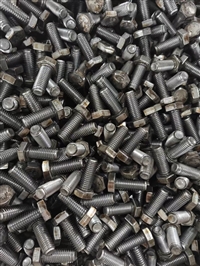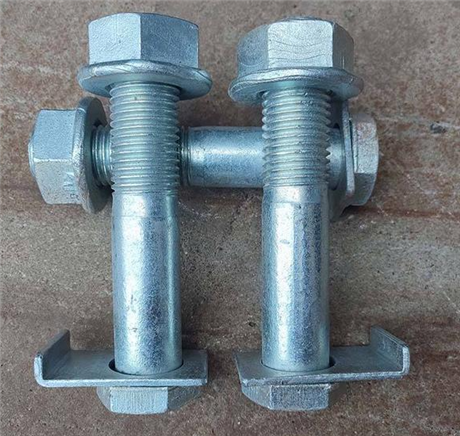

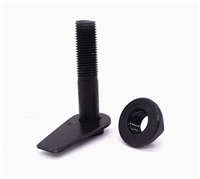
Beilei Bridge Support Bolt M22x110 Steel Temporary Bridge Accessory High Strength Connector
Category:
machining/Building materials processing/Building materials processing
Model:
M22*110
Brand:
Initially metal
Specification Model:
M22*110
Applicable Scenarios:
Steel Bridge/Bridge
Material Classification:
High strength/ordinary carbon steel
Surface Treatment:
Hot dip galvanized/black material
tensile strength:
≥ 8.8 level
Supporting components:
Including nuts/washers
Inspection Service:
Package inspection
Retail Price
10,000,000.00USD
重量
kg
- Product Description
-
Specification Model M22*110
Applicable Scenarios Steel Bridge/Bridge
Material Classification High strength/ordinary carbon steel
Surface Treatment Hot dip galvanized/black material
tensile strength ≥ 8.8 level
Supporting components Including nuts/washers
Inspection Service Package inspection
Description :
Bracket bolts are key connecting fasteners in the structure of steel bridges and Bailey bridges, mainly used to fix Bailey plates, support frames, crossbeams and other components, ensuring the stability and load-bearing capacity of the overall bridge structure. This category of products solves the problem of node looseness in temporary or permanent steel bridges under dynamic loads. Typical working conditions include emergency repairs, field construction access roads, mining transportation channels, and other scenarios. As a specific application form of beret bolt, it integrates dispersed steel components into a unified force system through high-strength thread engagement and pre tightening force, which directly affects the safety factor and service life of the bridge.
The bracket bolts of this specification are usually designed in M22 * 110 size, where M22 represents a nominal diameter of 22 millimeters and 110 represents an effective length of 110 millimeters for the screw. In terms of material, it is divided into two types: high-strength alloy steel and ordinary carbon steel. The high-strength version is usually quenched and tempered, and the tensile strength can reach 8.8 or 10.9 or above. The surface is often hot-dip galvanized or treated with Dacromet to enhance anti-corrosion performance. The execution standard refers to GB/T or industry-specific specifications for Bailey bridge fittings. The thread accuracy is usually 6g, and the fit tolerance is strictly controlled within the allowable range. Each batch of products needs to undergo tensile testing and salt spray testing before leaving the factory to ensure that they do not rust or break in humid and high load environments, and meet engineering inspection requirements.
When selecting, it is necessary to clarify the load level and environmental corrosion degree of the bridge design. If used for heavy vehicle traffic or long-term outdoor exposure environments, it is recommended to use high-strength and hot-dip galvanized bracket bolts; If it is for short-term lightweight use, ordinary materials can meet the demand. Attention should be paid to the difference between the Thunderbolt Cap bolt and the ordinary hexagonal bolt. The former is usually equipped with a specially designed conical washer or anti loosening nut to adapt to the special structure of the Beret pin hole. When purchasing, it is necessary to check whether the thread length is sufficient to penetrate all connecting plates and expose the nuts, in order to avoid insufficient locking force due to insufficient length or affecting the installation of surrounding components due to excessive length.
When installing bracket bolts, a torque wrench should be used to tighten them according to the pre tightening torque required by the design, following the principle of diagonal cross tightening to prevent deformation caused by uneven stress on the flange surface. In daily maintenance, it is necessary to regularly check whether the bolts are loose, corroded, or cracked, especially during the rainy season or after heavy traffic. If the thread slips or is severely corroded, it should be replaced in a timely manner. It is strictly prohibited to reuse bolts that have undergone plastic deformation. When storing, it should be kept dry and ventilated to avoid contact with acidic and alkaline substances. If dismantling is necessary after long-term use, a loosening agent can be sprayed in advance to reduce the risk of biting and ensure smooth maintenance work in the future.
AfterSalesService :
Key words: