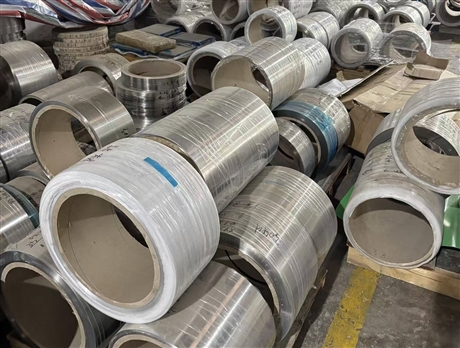

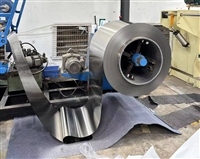
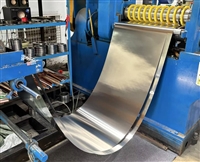
SUS304 stainless steel strip with multiple hardness levels, precision stamping, corrosion resistance, electronic shrapnel, hardware material
Category:
metallurgy/Stainless steel material/Stainless steel strip
Model:
H,3/4H,1/2H,1/4H
Brand:
Jintewei
Material Grade:
SUS304
Hardness grade:
H/3/4H/1/2H/1/4H
surface state:
2B/BA/Mirror
thickness range:
0.05-3.0mm
execution standard:
GB/T 20878
tensile strength:
≥520MPa
elongation:
≥40%
packaging method:
Moisture proof and rust proof packaging
Retail Price
10,000,000.00USD
重量
kg
- Product Description
-
Material Grade SUS304
Hardness grade H/3/4H/1/2H/1/4H
surface state 2B/BA/Mirror
thickness range 0.05-3.0mm
execution standard GB/T 20878
tensile strength ≥520MPa
elongation ≥40%
packaging method Moisture proof and rust proof packaging
Description :
SUS304 stainless steel strip is a strip metal material based on austenitic stainless steel substrate, processed by cold rolling process, mainly to meet the diversified requirements of material corrosion resistance, formability and strength grade in industrial manufacturing. This category is widely used in the fields of electronic appliances, precision hardware, kitchenware manufacturing, and automotive parts, and is particularly suitable for working conditions that require cold work hardening to enhance strength. SUS304 stainless steel strip has become the preferred substrate for many precision components due to its excellent acid and alkali corrosion resistance and good toughness. According to different hardness levels, SUS304 stainless steel strip can adapt to various processing scenarios from deep drawing and stretching to high elastic rebound, ensuring the stability and durability of end products under different stress environments. It is an indispensable basic structural material in modern industrial production.
The core specifications of SUS304 stainless steel strip cover a thickness of 0.05mm to 3.0mm, and the width can be customized according to the needs. The common standard width is 10mm-600mm. The material strictly follows the GB/T 20878 and ASTM A240 standards, with a chromium content of 18% -20% and a nickel content of 8% -10% in the chemical composition, ensuring the stability of the matrix structure. The surface state can be divided into 2B surface, BA surface, and mirror surface, with a surface smoothness Ra value of up to 0.2 μ m. Strict differentiation of hardness levels: 1/4H hardness HV130-180, 1/2H hardness HV180-230, 3/4H hardness HV230-280, H fully hard state hardness HV280-350. Each batch of SUS304 stainless steel strip undergoes tensile testing, bending testing, and salt spray testing to ensure uniform and consistent mechanical properties, without cracks or scratches, in compliance with ROHS environmental certification requirements, and meeting export and high-end manufacturing standards.
When selecting SUS304 stainless steel strip, it is necessary to match the hardness level according to the specific processing technology. 1/4H semi soft state has excellent ductility, suitable for deep drawing, complex bending, and multiple forming processes, such as kitchen liner and sink stretching; 1/2H semi hard state balances strength and formability, suitable for general metal stamping parts and bracket structures; 3/4H ultra hard state with high rigidity and good rebound control, suitable for making structural components that require certain support force; H has the highest strength and outstanding elasticity in its fully hard state, and is specifically designed for precision components such as electronic spring plates, battery contact plates, and mainsprings that require extremely high elasticity. If subsequent welding or annealing treatment is required, it is recommended to prioritize low hardness grades to avoid the risk of intergranular corrosion. For high-precision dimensional requirements, precision segmented SUS304 stainless steel strips with tolerances controlled within ± 0.01mm should be selected to ensure smooth operation of the automated production line.
During the installation and use of SUS304 stainless steel strip, attention should be paid to avoiding surface scratches. Moisture proof and rust proof packaging should be used during transportation, and the storage environment should be kept dry and ventilated, away from chloride ion pollution sources to prevent pitting corrosion. During stamping processing, it is necessary to adjust the mold clearance and stamping speed according to the hardness level. For high hardness levels, appropriate lubrication should be added to reduce mold wear. In daily maintenance, if there is slight oxidation or stains on the surface, neutral cleaning agents can be used to wipe and restore luster. Common faults such as stamping cracking are often caused by improper selection of material hardness or too small R angle of the mold. It is recommended to re evaluate the hardness matching degree of SUS304 stainless steel strip. Regularly check the burrs on the edges of materials to ensure the accuracy of subsequent assembly. Reasonable selection and maintenance of SUS304 stainless steel strip can significantly extend the life of the mold, improve the yield rate, and reduce the overall production cost.
AfterSalesService :
Key words: