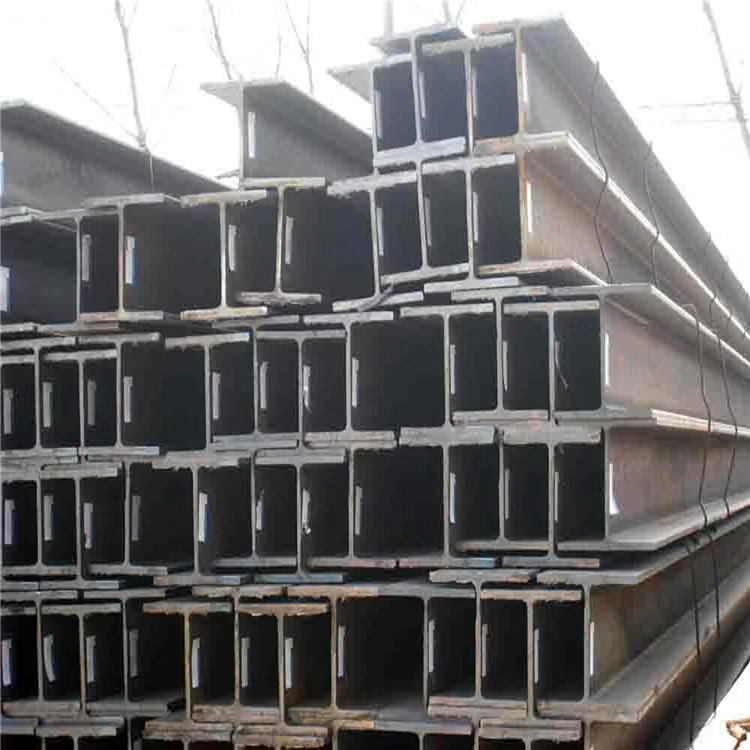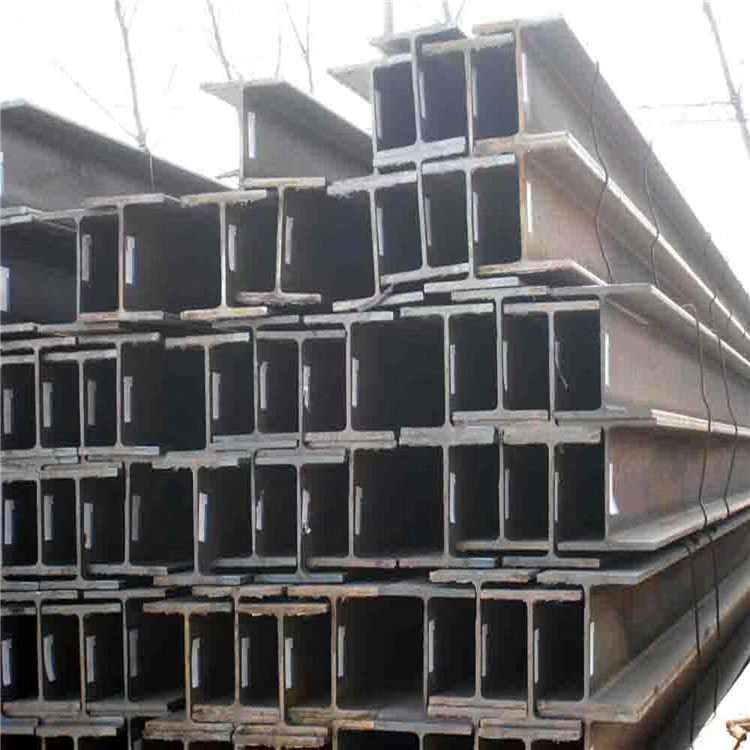

National standard hot-rolled H-beam 150-500 specification complete building structural steel
Category:
metallurgy/Profile/H-shaped steel
Model:
150*75/200*100/250*125/300*150/350*175/400*200/450*200/500*200
Brand:
Hongye Metal
material:
Q235B/Q355B
execution standard:
GB/T 11263-2017
production process:
hot rolling
Specification range:
150*75-500*200mm
length:
6m/9m/12m (customizable)
Cross-section type:
Wide/Medium/Narrow Flanges
Theoretical Weight:
Calculated according to national standards
surface treatment:
Black material/rust removal/painting
Retail Price
10,000,000.00USD
重量
kg
- Product Description
-
material Q235B/Q355B
execution standard GB/T 11263-2017
production process hot rolling
Specification range 150*75-500*200mm
length 6m/9m/12m (customizable)
Cross-section type Wide/Medium/Narrow Flanges
Theoretical Weight Calculated according to national standards
surface treatment Black material/rust removal/painting
Description :
H-beam is an economical and efficient profile with a more optimized cross-sectional area distribution and a more reasonable strength to weight ratio, named after its cross-section that is the same as the English letter "H". It is mainly used for various building structures and engineering structures, such as industrial plants, large bridges, high-rise steel structures, heavy machinery and equipment, shipbuilding, and support foundations. This product has higher bending strength and stability under the same weight by optimizing the cross-sectional design, which can effectively solve the structural support problem under large-span and high load conditions. It is an indispensable basic material in modern steel structure engineering.
The specification range of H-beam covers the wide flange (HW), medium flange (HM), and narrow flange (HN) series, and the 150 * 75 to 500 * 200 mentioned in the article cover common small and medium-sized models. The production process usually adopts hot rolling forming, and the implementation standard is GB/T 11263-2017 "Hot rolled H-beams and sectional T-beams". The material is mostly Q235B or Q355B, which has good welding performance, plasticity, and toughness. The dimensional deviation is controlled within the allowable range of national standards, and the parallelism between the inner and outer sides of the flange is good, which facilitates subsequent drilling, welding and other processing procedures, ensuring the accuracy and efficiency of engineering installation.
When selecting, it is necessary to choose the appropriate section height and flange width based on the specific stress situation. Small specification H-beams such as 150 * 75 are suitable for lightweight steel structure purlins, small supports, or secondary load-bearing components; Large scale models such as 300 * 150 to 500 * 200 are commonly used for main load-bearing structures such as main beams and columns. Compared with ordinary I-beams, H-beams have wider flanges and parallel inner and outer sides, with a larger section modulus, which can significantly save welding and riveting work and reduce construction costs. If the working conditions involve highly corrosive environments, it is recommended to use weather resistant steel materials or undergo post anti-corrosion treatment. Ordinary carbon structural steel should be used in conjunction with fire-resistant and anti-corrosion coatings.
Before installation, the surface quality of H-beams should be checked, and there should be no defects such as cracks, scars, folds, etc. The corrosion level should meet the requirements of the specifications. During transportation and stacking, wooden pads should be installed to prevent deformation, water accumulation, and corrosion. After cutting or drilling on the construction site, the cut should be promptly treated with rust prevention. In daily maintenance, it is necessary to regularly check whether there are signs of cracking in the welding seams of the connecting nodes and whether the coating has peeled off. For H-shaped steel structures that are exposed to moisture or chemical corrosion for a long time, it is recommended to conduct comprehensive anti-corrosion testing and maintenance every 3-5 years to extend the service life of the structure and ensure building safety.
AfterSalesService :
Key words: