
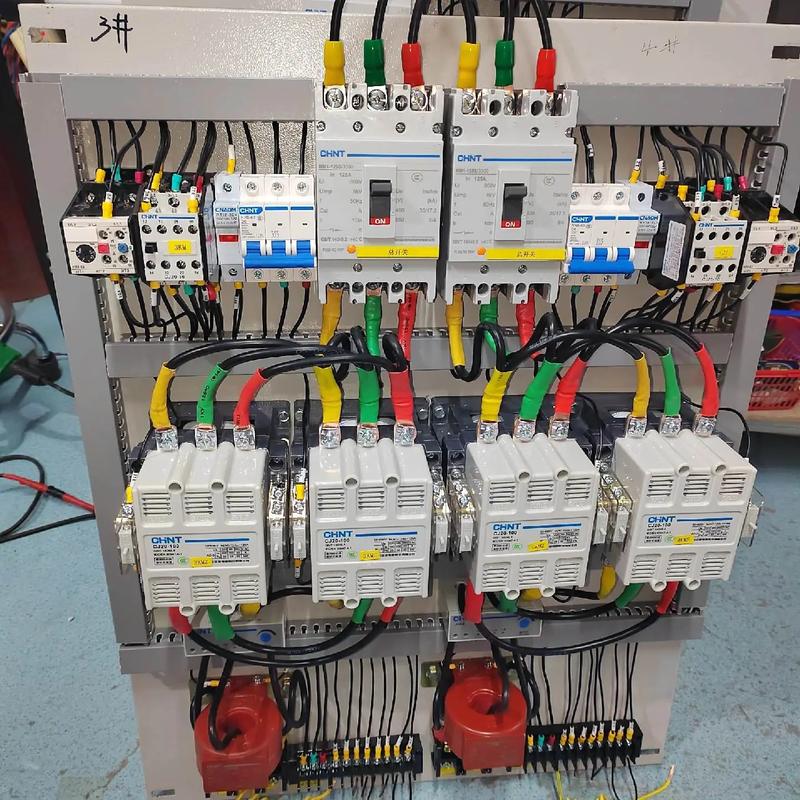
Schneider LC1D205 AC contactor rated current 205A coil voltage optional for industrial control
Category:
Electrical Engineering/Low voltage electrical appliances/contactor
Model:
LC1D205
Brand:
Schneider
Rated working current:
205A
Rated insulation voltage:
690V
polar number:
3P
Contact Type:
3NO
Coil voltage:
AC 220V/380V (optional)
Execution Standard:
IEC 60947-4-1
mechanical life:
≥ 10 million times
Installation Method:
Installation of guide rails/screws
Retail Price
10,000,000.00USD
重量
kg
- Product Description
-
Rated working current 205A
Rated insulation voltage 690V
polar number 3P
Contact Type 3NO
Coil voltage AC 220V/380V (optional)
Execution Standard IEC 60947-4-1
mechanical life ≥ 10 million times
Installation Method Installation of guide rails/screws
Description :
Schneider LC1D205 AC contactor is an automatic control electrical device used for remote connection and disconnection of circuits, mainly solving the problem of frequent start stop control under high current loads. This model belongs to the Telemecanique series and is suitable for three-phase AC motor control and distribution systems with a rated working current of up to 205A. Under typical operating conditions, it is commonly used for power switching of heavy machinery such as fans, water pumps, compressors, etc. It can withstand high operating frequencies and electrical shocks, ensuring the stability and reliability of production line control.
The core specifications of this AC contactor include a rated insulation voltage of 690V, a specified heating current of 205A, and compliance with IEC 60947-4-1 and GB 14048.4 standards. The main contact configuration is usually 3-pole normally open (3NO), and auxiliary contacts can be expanded with side or top mounted modules according to needs. The common specifications for coil control voltage include AC 220V, AC 380V, and DC 24V, etc. The specific specifications need to be confirmed according to the ordering code. The product uses silver alloy contact material, which has low contact resistance and high resistance to welding. Its mechanical life can reach tens of millions of times, and its electrical life is also excellent in the AC-3 usage category, suitable for harsh industrial environments.
When selecting, it is important to distinguish the usage categories. The AC-3 category is suitable for the starting and breaking of squirrel cage induction motors during operation, while the AC-4 category is suitable for high stress scenarios such as inching and reverse braking, with the latter requiring reduced capacity for use. If you need to control DC loads or special voltage levels, you need to consult the specific technical manual to confirm the coil parameters and contact capacity. Compared with small contactors, LC1D205 has a larger volume and requires sufficient heat dissipation space and wiring terminal operation distance during installation. It is not recommended to use it for small current signal control to avoid contact damage or poor contact due to excessive contact pressure.
When installing Schneider LC1D205 AC contactor, it should be installed vertically on standard guide rails or mounting plates, and the tightening torque should meet the requirements of the manual to prevent loose wiring caused by vibration. It is recommended to regularly check the wear of the contacts for daily maintenance. If severe oxidation or pit depth exceeding the specified value is found on the surface of the contacts, they should be replaced in a timely manner. Common faults include coil burnout, excessive noise, or insufficient suction, often caused by unstable voltage, dirty iron core end faces, or broken short-circuit rings. Maintaining stable voltage in the control circuit and regularly cleaning the interface of the iron core can effectively extend the service life of the equipment and reduce the risk of shutdown.
AfterSalesService :
Key words:
More Products