
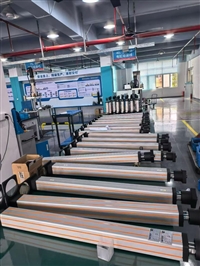
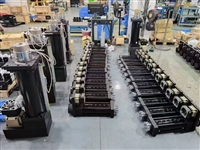
High precision servo electric cylinder linear motion module automation equipment dedicated to thrust stability
Category:
mechanical equipment/Industrial control system and equipment/Servo positioning system
Model:
SFA
Brand:
Xuntou
Transmission method:
Ball screw/planetary roller screw
Repetitive positioning accuracy:
±0.01mm
Protection rating:
IP54
maximum thrust:
100N-2000kN
Main material:
High strength aluminum alloy
Applicable motors:
Communication servo motor
Operating temperature:
-10℃~+60℃
lubrication method:
Grease lubrication
Retail Price
10,000,000.00USD
重量
kg
- Product Description
-
Transmission method Ball screw/planetary roller screw
Repetitive positioning accuracy ±0.01mm
Protection rating IP54
maximum thrust 100N-2000kN
Main material High strength aluminum alloy
Applicable motors Communication servo motor
Operating temperature -10℃~+60℃
lubrication method Grease lubrication
Description :
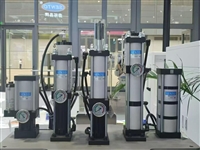
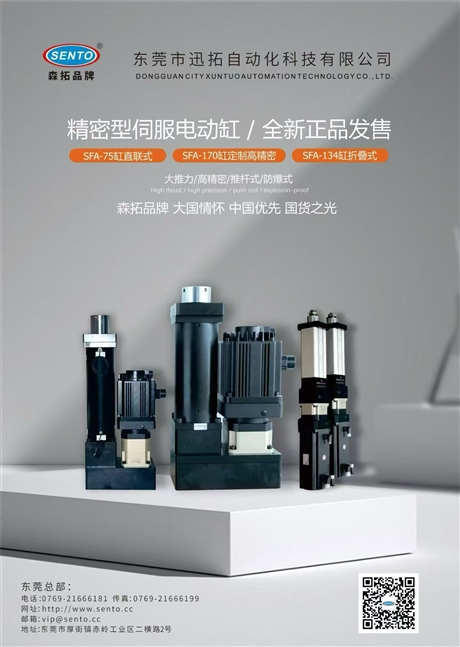
A servo electric cylinder is a precision actuator that converts the rotational motion of a servo motor into linear reciprocating motion, mainly solving the problems of low positioning accuracy of traditional cylinders, complex maintenance of hydraulic systems, and high energy consumption. It is driven by a screw or synchronous belt to achieve high-speed, high-speed, and high-precision position control. Typical operating conditions include electronic assembly, automotive welding, packaging machinery, and new energy battery production lines. This category has clear boundaries and is different from ordinary electric push rods. The servo cylinder has closed-loop control capability and can provide real-time feedback on position and torque. It is suitable for automation scenarios with strict requirements for dynamic response and repetitive positioning accuracy. It is one of the core components for modern intelligent factories to achieve flexible production.
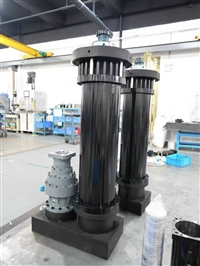
In terms of specifications and processes, servo electric cylinders usually use high-strength aluminum alloy or stainless steel as the main material, with precision ball screw or planetary roller screw integrated inside, and transmission efficiency can reach over 90%. The execution standards mostly refer to ISO and GB/T related specifications for linear moving parts, with common protection levels of IP54 or IP65, suitable for environments with high dust or slight splashing. Its core parameters include a maximum thrust range ranging from several hundred newtons to tens of thousands of newtons, and the stroke can be customized according to requirements. The common repeated positioning accuracy is controlled between ± 0.02mm and ± 0.05mm. Some high-end models are equipped with absolute value encoders and support power-off memory function, ensuring that operations can continue without returning to zero after restart, meeting the extremely high stability requirements of continuous production.
When selecting, it is important to distinguish between load types and installation methods. For vertical installation scenarios that require power-off self-locking, servo motors with brake function and self-locking screws must be selected to prevent the load from slipping off; Priority should be given to lightweight design and matching with low inertia motors for horizontal high-speed reciprocating motion. If the application scenario involves heavy-duty high-frequency impact, the planetary roller screw scheme is superior to the ball screw scheme, although it has a higher cost, it has a longer lifespan. Compared with pneumatic cylinders, servo electric cylinders have a larger initial investment, but significantly reduce energy consumption during long-term operation, and do not require gas source processing components, making them suitable for production lines that pursue energy conservation and data visualization. Not suitable for extremely humid, highly corrosive gases, or extreme environments beyond the rated temperature range. Such working conditions require special anti-corrosion treatment or hydraulic solutions.
During the installation process, it is necessary to ensure the coaxiality between the motor shaft and the screw shaft to avoid early bearing wear caused by excessive radial force. It is recommended to use a flexible coupling connection to compensate for small deviations. Daily maintenance mainly focuses on regularly adding lubricating grease, and generally checks the wear of the screw nut pair every 2000 kilometers or six months of operation. Common faults include abnormal noise, positioning drift, or overheating. Abnormal noise is often caused by insufficient lubrication or foreign objects entering. For positioning drift, it is necessary to check the encoder wiring and driver parameter gain settings. Keeping the heat dissipation channel unobstructed and avoiding long-term overload operation can effectively extend the service life of servo cylinders, ensure the continuous and stable operation of automated production lines, and reduce the risk of unplanned shutdowns.
AfterSalesService :
Key words: