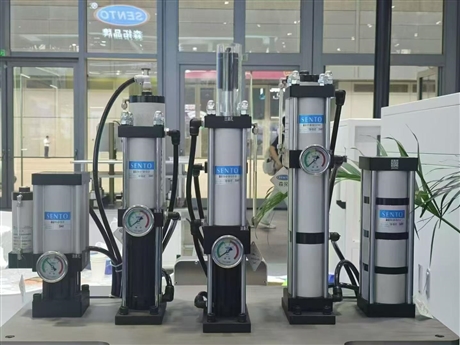

High frequency stable output automation stamping assembly special for gas-liquid booster cylinder
Category:
mechanical equipment/Pneumatic components/cylinder
Model:
STA
Brand:
Xuntou
working medium:
Clean compressed air+specialized hydraulic oil
Range of work pressure:
0.4-0.8 MPa
Boost ratio:
5:1 - 50:1
Main material:
High strength aluminum alloy/high-quality steel
Sealing Material:
Oil resistant rubber/polyurethane
Installation Method:
Front flange/rear flange/ear shaft type
Operating temperature:
-10℃ - 60℃
Action mode:
Single acting/double acting
Retail Price
10,000,000.00USD
重量
kg
- Product Description
-
working medium Clean compressed air+specialized hydraulic oil
Range of work pressure 0.4-0.8 MPa
Boost ratio 5:1 - 50:1
Main material High strength aluminum alloy/high-quality steel
Sealing Material Oil resistant rubber/polyurethane
Installation Method Front flange/rear flange/ear shaft type
Operating temperature -10℃ - 60℃
Action mode Single acting/double acting
Description :
Boosting cylinder is a gas-liquid conversion device that converts pneumatic energy into hydraulic energy, mainly solving the problems of low output of traditional cylinders, high energy consumption of pure hydraulic systems, and complex maintenance. It drives the piston movement through compressed air and uses the principle of area difference to generate high-pressure oil locally, thereby obtaining output force far exceeding that of cylinders of the same diameter. Typical working conditions include automated production processes that require short stroke and high output, such as metal sheet stamping, riveting, press fit bearings, and bending forming. This category combines the fast response of pneumatic systems with the high output advantages of hydraulic systems, making it suitable for modern factory environments with strict limitations on equipment space, energy consumption, and noise. It is the core executive component for achieving efficient and precision machining.
The main body of the conventional booster cylinder is made of high-strength aluminum alloy or high-quality steel, and the surface is treated with hard anodizing or chrome plating, which has good wear resistance and corrosion resistance. Internal seals are usually made of imported oil resistant rubber or polyurethane materials to ensure sealing performance and service life under high-frequency reciprocating motion. The execution standard refers to the relevant pneumatic component specifications of JB/T or ISO. The common working pressure range is 0.4-0.8MPa air pressure, and the boost ratio is usually between 5:1 and 50:1, depending on the model design. The stroke specifications include pre compression stroke and boost stroke, and the total stroke is generally controlled within 200mm to ensure stability. Some high-end models are equipped with magnetic rings for position detection in conjunction with magnetic switches. The installation methods include front flange, rear flange, ear shaft and other standard interfaces, making it easy to integrate into existing automated production lines.
When selecting, it is important to consider the required output size, working stroke, and installation space limitations. Firstly, calculate the load resistance, determine the target tonnage based on the safety factor, and then deduce the required cylinder diameter and pressure ratio based on the available air pressure value. If long-distance air travel followed by short distance pressurization is required, a model with a longer preloading stroke should be selected; If the space is compact, attention should be paid to the overall dimensions and installation hole positions. Compared to regular cylinders, turbocharged cylinders have a higher output but their speed is limited by the amount of fuel; Compared to hydraulic cylinders, it does not require a hydraulic station, is clean and energy-efficient. Not applicable scenarios include continuous long-term pressure maintenance (which may cause an increase in oil temperature), excessive travel requirements, or extremely harsh dust environments (requiring the installation of protective covers). For similar categories such as gas-liquid damping cylinders, it should be noted that the latter is mainly used for speed control rather than significantly increasing output.
During installation, it should be ensured that the load axis is concentric with the axis of the booster cylinder piston rod to avoid lateral forces causing seal wear or piston rod bending. It is recommended to use clean and dry compressed air for connecting the trachea, and install an oil-water separator to extend the service life of internal seals. Daily maintenance mainly includes regularly checking whether the oil pipe joints are leaking oil and listening for smooth and abnormal movement sounds. Common faults such as insufficient output are often caused by low air pressure, internal seal wear, or lack of hydraulic oil. It is necessary to promptly replenish specialized hydraulic oil or replace sealing components. In terms of usage cycle, under normal lubrication and load conditions, the lifespan of the seal can reach millions of cycles. It is recommended to check the hydraulic oil level and quality every six months. If excessive emulsification or impurities are found, they should be replaced in a timely manner to maintain the efficient and stable operation of the booster cylinder.
AfterSalesService :
Key words: