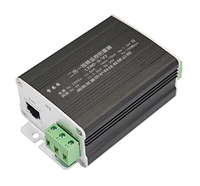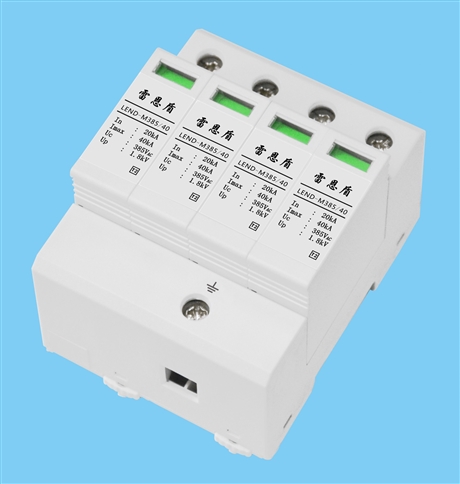

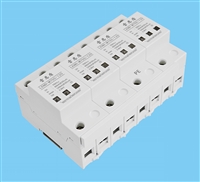
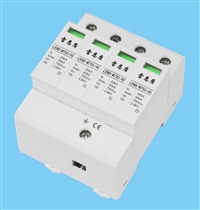
Surge protector power supply lightning protection module anti-interference overvoltage protection equipment
Category:
electron/Protective devices/Surge protection
Model:
First level and second level surge protectors
Brand:
Ren Dun
Maximum continuous operating voltage:
275V/320V
Nominal discharge current:
20kA/40kA/80KA
Voltage protection level:
≤1.5kV
response time:
≤25ns
Working temperature range:
-40℃~+85℃
housing material:
Flame Retardant PC
Installation Method:
35mm standard guide rail
Execution Standard:
GB/T 18802.11
Retail Price
10,000,000.00USD
重量
kg
- Product Description
-
Maximum continuous operating voltage 275V/320V
Nominal discharge current 20kA/40kA/80KA
Voltage protection level ≤1.5kV
response time ≤25ns
Working temperature range -40℃~+85℃
housing material Flame Retardant PC
Installation Method 35mm standard guide rail
Execution Standard GB/T 18802.11
Description :
Surge protector is an electrical safety device used to limit transient overvoltage and discharge surge current, mainly solving the problems of damage to backend precision electronic equipment caused by lightning induction, operation overvoltage, etc. In areas with frequent lightning strikes or industrial sites with large fluctuations in the power grid, surge protectors can effectively clamp the line voltage, protect the distribution system and terminal loads. This category is usually installed at various levels of entrances in low-voltage distribution systems, serving as a key protective component at the boundary of lightning protection zones (LPZ) to ensure the continuous and stable operation of electrical systems.
The core specifications of surge protectors include maximum continuous operating voltage Uc, nominal discharge current In, and voltage protection level Up. Common products comply with GB/T 18802.11 or IEC 61643-11 standards and use zinc oxide varistors (MOVs) or gas discharge tubes (GDTs) as core components. The shell is usually made of flame-retardant PC material and has thermal trip protection function to prevent device aging and short circuit from causing fires. Some models are equipped with remote signal contacts, which can be connected to monitoring systems to achieve fault alarms. The test waveform is usually an 8/20 μ s current wave or a 1.2/50 μ s voltage wave to ensure stable protective performance even in harsh environments.
When selecting surge protectors, the wiring mode (such as 1P, 2P, 3P, 4P) should be determined based on the type of power supply system (such as TN-S, TT, IT system). First level protection focuses on leakage capacity and large flow capacity; The second and third level protection focuses on residual low voltage and high protection accuracy. If the input end already has coarse protection, the backend should be equipped with a fine protection module with faster response speed. Pay attention to distinguishing between power surge protectors and signal surge protectors. The former is used for strong current distribution, while the latter is used for weak current systems such as network cables and telephone lines, and should not be mixed. For important data centers, it is recommended to adopt a multi-level coordinated protection scheme.
When installing surge protectors, attention should be paid to keeping the lead length as short and straight as possible, following the "Kevin wiring" principle to reduce inductance effects, and ensuring that the grounding resistance meets regulatory requirements (usually less than 4 Ω). During daily maintenance, the status indicator window should be regularly checked. Green indicates normal, while red indicates failure and immediate replacement is required. It is recommended to conduct a comprehensive inspection before the thunderstorm season and record leakage current data. If deformation, burnt smell or frequent tripping of the shell is found, the power should be immediately cut off for inspection. Proper maintenance can extend the service life of surge protectors and ensure continuous and reliable overvoltage protection.
AfterSalesService :
Key words: