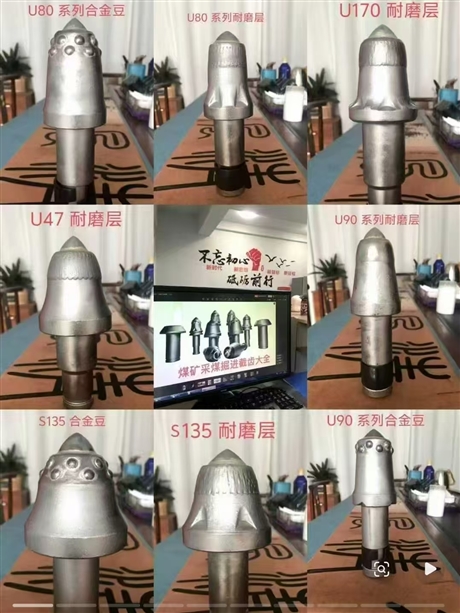

U95-30 straight column cutting tooth wear-resistant alloy head coal mining machine excavator accessories
Category:
metallurgy/Mining and beneficiation equipment/Mining and beneficiation equipment accessories
Model:
U95-30
Brand:
Gnawing on rocks, Little
model:
U95-30
structural type:
Straight column type
Head material:
Wear resistant layer alloy beans
Applicable Models:
Coal mining machine/tunneling machine
Handle diameter:
Φ 22mm/Φ 25mm (to be compatible with gear seat)
total length:
About 95mm
Alloy head diameter:
About 16-19mm
heat treatment process:
High frequency quenching/overall quenching and tempering
Packaging method:
Carton/wooden crate
Retail Price
10,000,000.00USD
重量
kg
- Product Description
-
model U95-30
structural type Straight column type
Head material Wear resistant layer alloy beans
Applicable Models Coal mining machine/tunneling machine
Handle diameter Φ 22mm/Φ 25mm (to be compatible with gear seat)
total length About 95mm
Alloy head diameter About 16-19mm
heat treatment process High frequency quenching/overall quenching and tempering
Packaging method Carton/wooden crate
Description :
The U95-30 straight column cutter is a key cutting tool used in heavy-duty mining machinery such as coal mining machines and tunneling machines. This category mainly solves the problem of efficient crushing and cutting in hard rock formations or coal seams, and is suitable for harsh working conditions with high loads and strong impacts. As a straight column structure, its force distribution is uniform, which can effectively transmit torque and resist radial forces, ensuring the stability of the equipment during continuous operation. Typical application scenarios include rock fragmentation in coal mining, tunnel excavation, and road construction, which are the core vulnerable components to ensure project progress and equipment efficiency.
The U95-30 straight column cutting teeth are made of high-quality alloy steel substrate, and the head is embedded with high hardness wear-resistant alloy beans (hard alloy balls). The manufacturing process usually involves high-frequency quenching or overall heat treatment to ensure that the tooth body has sufficient toughness and strength to prevent fracture. The alloy head is precision welded or sintered, with high bonding strength and excellent wear resistance. The execution standard refers to relevant coal industry standards such as MT/T 248, and the size specifications strictly match the U95 series tooth socket interface. The common hardness index HRC is ≥ 45, and the bending strength reaches a specific megapascal level, ensuring sharp cutting edges under complex geological conditions and extending service life.
When selecting, it is important to distinguish the differences between straight column and conical cutters. U95-30 belongs to the straight column structure and is suitable for most conventional coal mining machines and some tunneling machines. If the rock hardness is extremely high or the abrasion is extremely strong in the working conditions, it is necessary to confirm the specific grade and particle size of the alloy head. Not applicable to old equipment with non-standard gear seats. Before installation, it is necessary to check the fit tolerance between the inner diameter of the gear sleeve and the diameter of the cutting handle. Compared with similar models, the U95 series has stronger universality, but there may be slight deviations in the 30mm length specifications produced by different manufacturers. It is recommended to provide samples or detailed drawings for comparison when purchasing to avoid detachment or increased wear due to excessive fitting clearance.
When installing the U95-30 straight column tooth cutter, it is necessary to ensure that the inside of the tooth seat is clean and free of debris. Use a special tool to press it into place and check whether the retaining spring or fixing device is locked. During daily maintenance, it is necessary to regularly check the wear of the cutting teeth, especially the integrity of the alloy head. If any defects or excessive wear are found, they should be replaced in a timely manner to avoid damaging the tooth seat or increasing the machine load. The typical service life depends on geological conditions, with a longer lifespan in soft coal and a shorter lifespan in hard rock. Common faults include alloy head detachment, tooth bending or fracture, often caused by overload or fatigue. It is recommended to establish a regular inspection system and record the replacement frequency to optimize spare parts inventory management.
AfterSalesService :
Key words:
More Products