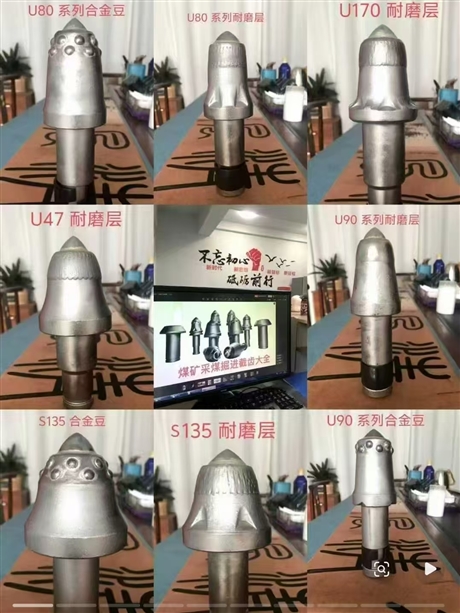

47-25 straight column cutting tooth alloy head wear-resistant coal mining machine excavator accessories
Category:
metallurgy/Mining and beneficiation equipment/Mining and beneficiation equipment accessories
Model:
47-25
Brand:
Gnawing on rocks, Little
Product Type:
Straight column tooth cutter
Specification Model:
47-25
Alloy head material:
Hard alloy beans
Tooth material:
42CrMo alloy steel
connection method:
High frequency brazing
Applicable Devices:
Coal mining machine/tunneling machine
heat treatment process:
quenching and tempering
Packaging method:
Carton/wooden crate
Retail Price
10,000,000.00USD
重量
kg
- Product Description
-
Product Type Straight column tooth cutter
Specification Model 47-25
Alloy head material Hard alloy beans
Tooth material 42CrMo alloy steel
connection method High frequency brazing
Applicable Devices Coal mining machine/tunneling machine
heat treatment process quenching and tempering
Packaging method Carton/wooden crate
Description :
【 Tax inclusive shipping 】 Open a 13% special ticket free shipping nationally
The 47-25 straight column cutter is a core cutting tool designed specifically for heavy-duty mining machinery such as coal mining machines and tunneling machines. This product mainly solves the problem of frequent downtime caused by fast tool wear and high fracture rate during the excavation process of hard rock, coal seam, and semi coal rock tunnels. By combining high-strength alloy heads with high-quality substrates, stable rock breaking ability is ensured under high-speed rotary cutting conditions. Typical working conditions include fully mechanized mining faces underground in coal mines, tunnel excavation projects, and road milling operations. As a consumable, its performance directly determines mining efficiency and operating costs, making it suitable for complex geological environments with dual requirements for impact toughness and wear resistance.
This model of tooth cutter adopts a straight column structure design, consisting of a tooth body, an alloy head, and an intermediate transition layer as a whole. The tooth body is usually made of high-quality alloy structural steel such as 42CrMo or 35CrMnSi, which undergoes strict heat treatment to ensure that the core has high toughness to absorb impact loads, and the surface has high hardness to resist abrasive wear. The alloy head is made of YG11C or similar grade hard alloy, which is firmly connected to the tooth body through high-frequency induction brazing technology, and the weld seam is full and free of pores. The execution standard refers to relevant coal industry standards such as MT/T 1362. In common specifications, "47" represents the diameter or fitting size of the installation hole, and "25" involves the diameter or length parameters of key parts. The specific dimensions need to be matched with the corresponding tooth seat to ensure that the installation clearance meets the tolerance requirements.
When selecting, it is important to distinguish between the application scenarios of straight column and conical cutters. 47-25 straight column cutters are more suitable for installation in the tooth seat of drum type coal mining machines or cantilever tunneling machines, relying on interference fit or snap spring fixation, and are suitable for rock crushing of medium hardness and above. If the working condition is extremely hard rock or strong impact environment, the specific grade and protective structure of the alloy head need to be confirmed; If it is soft coal or clay layer, reducing the alloy grade can be considered to optimize costs. Compared with conical cutters, the straight column structure has better stability under radial force, but has greater axial pull-out resistance. Therefore, it is necessary to ensure that the inner hole of the tooth seat is clean and free of deformation to avoid early detachment or tooth breakage due to improper installation.
Before installation, it is necessary to check whether the inner hole of the tooth seat is worn out beyond the standard, clean up debris, apply an appropriate amount of lubricating grease, and use a special tool to press the cutting teeth into place to ensure that the snap spring or fixing device is locked tightly. In daily maintenance, the wear of the cutting teeth should be regularly inspected. When the alloy head wears down to the substrate or cracks or breaks, it must be replaced immediately to avoid damaging the tooth seat or increasing the motor load. Common faults include alloy head detachment, tooth bending fracture, and excessive wear, often caused by geological mutations, insufficient cooling water, or loose fixation. It is recommended to establish a consumption ledger to calculate the average service life of different strata, in order to optimize spare parts inventory and evaluate the actual performance of different batches of products.
AfterSalesService :
【含税运】开13%专票 全国包邮Key words:
More Products