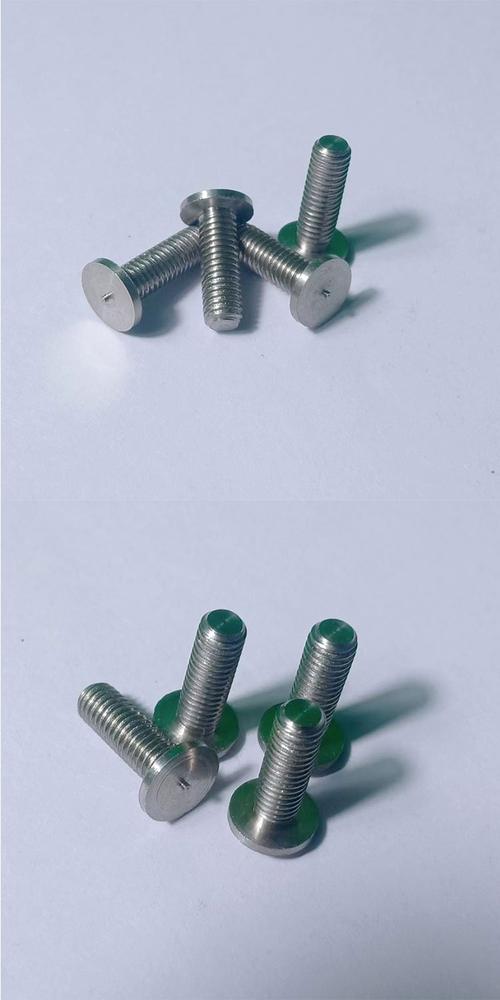
Cylindrical head welding nail steel structure shear connector arc bolt welding special fastener
Category:
hardware/Fasteners, connectors/nail
Model:
19*100
Brand:
Henglijia
Execution Standard:
GB/T 10433-2002
Material:
ML15Al/Low Carbon Alloy Steel
Diameter Range:
13mm-25mm
Length range:
40mm-300mm
tensile strength:
≥400MPa
yield strength:
≥320MPa
elongation:
≥15%
bending performance:
Bending 15 ° without cracks
Surface Treatment:
Black skin/galvanized
Applicable process:
Arc stud welding
Retail Price
10,000,000.00USD
重量
kg
- Product Description
-
Execution Standard GB/T 10433-2002
Material ML15Al/Low Carbon Alloy Steel
Diameter Range 13mm-25mm
Length range 40mm-300mm
tensile strength ≥400MPa
yield strength ≥320MPa
elongation ≥15%
bending performance Bending 15 ° without cracks
Surface Treatment Black skin/galvanized
Applicable process Arc stud welding
Description :
Welding nails, also known as shear nails or cylindrical head welding nails for arc stud welding, are key fasteners used in steel structure engineering to connect steel beams and concrete floor slabs. Its core function is to firmly bond steel components with concrete through arc stud welding technology, forming a composite structure, effectively transmitting shear forces, and improving the overall load-bearing capacity and seismic performance of the structure. This product is widely used in the construction of steel-concrete composite floor systems in high-rise buildings, bridges, power plants, and large industrial plants, solving the problems of traditional bolt connection construction being cumbersome and uneven in stress. It is an indispensable basic connection component for modern prefabricated buildings and heavy-duty steel structures.
This welding stud is usually made of low-carbon alloy steel and complies with the national standard GB/T 10433-2002 "Cylindrical Head Welding Studs for Arc Stud Welding". The common specifications range from 13mm to 25mm in diameter and from 40mm to 300mm in length, and can be customized according to engineering needs. The head is cylindrical with an arc starting end at the top, and the rod is smooth without threads, ensuring uniform penetration during welding. The product needs to undergo strict mechanical performance testing, including tensile testing, bending testing (15 degrees without cracks), and welding strength testing. Surface treatment is usually black skin or galvanized to meet the anti-corrosion requirements in different environments, ensuring stable physical properties and connection strength even under harsh working conditions.
When selecting, special consideration should be given to the design shear force value, concrete grade, and steel plate thickness. Diameter 16mm, 19mm, and 22mm are commonly used specifications, suitable for most conventional floor loads; A large diameter of 25mm is used for heavy-duty areas or bridge engineering. It should be noted that welding nails are only suitable for flat welding positions and are not suitable for overhead or vertical welding scenarios. They also have high requirements for the cleanliness of the base material surface, and rust, oil stains, and coatings need to be removed. Unlike ordinary bolts, welding nails are fixed by one-time welding and cannot be disassembled, so precise positioning is required before installation. If the working conditions involve dynamic loads or extremely high fatigue stress, it is necessary to use high toughness welding nails that have undergone special heat treatment, and to cooperate with ceramic ring protection welding technology to ensure the quality of the weld seam.
The installation adopts a dedicated stud welding machine, which melts the bottom of the stud and the surface of the steel plate through an instant high-temperature arc, and then cools and forms it under pressure. Before construction, welding process evaluation is required to determine the optimal current, time, and lifting height parameters. Daily maintenance mainly focuses on the storage of materials before construction, which needs to be moisture-proof and rust proof to avoid welding nails getting damp and causing porosity during welding. Common faults include virtual welding, undercutting, or incomplete welding feet, which are often caused by unstable current or unclean surface of the base material. The qualification rate needs to be determined through destructive sampling or non-destructive tapping inspection. During use, the welding nails themselves do not require additional maintenance, but regular inspections of the surrounding concrete for cracking are necessary to ensure the long-term stability of the composite structure.
AfterSalesService :
包捡Key words: