
Direct supply of sulfur free Ophiopogon japonicus, plump yellow white Chinese medicinal herbs, soup and tea ingredients from Sichuan origin
Category:
Seedlings/Ground cover perennial root/Ophiopogon japonicus
Model:
500g
Brand:
Renshou Huiren Hall
Place of Origin:
Sichuan/Hubei
trait:
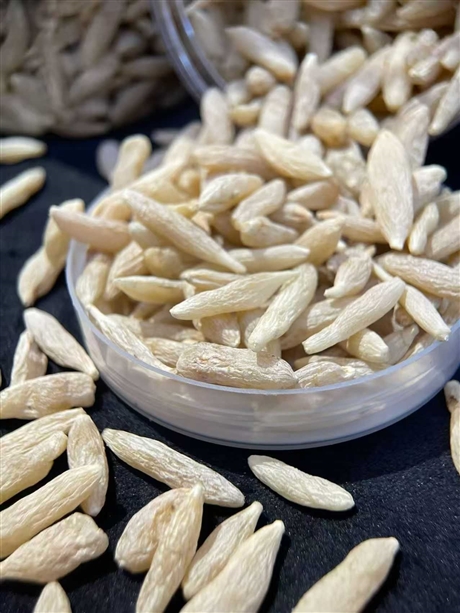
Spindle shaped, light yellow
odor:
Slightly fragrant aroma, sweet and slightly bitter taste
Moisture:
≤18.0%
Total ash:
≤4.0%
Leachate:
≥60.0%
Packaging method:
Carton/woven bag lined with plastic bag
Storage conditions:
Store in a cool and dry place, moisture-proof and insect proof
Shelf life:
12 months
main ingredients:
Steroid saponins, polysaccharides, amino acids
Retail Price
10,000,000.00USD
重量
kg
- Product Description
-
Place of Origin Sichuan/Hubei
trait Spindle shaped, light yellow
odor Slightly fragrant aroma, sweet and slightly bitter taste
Moisture ≤18.0%
Total ash ≤4.0%
Leachate ≥60.0%
Packaging method Carton/woven bag lined with plastic bag
Storage conditions Store in a cool and dry place, moisture-proof and insect proof
Shelf life 12 months
main ingredients Steroid saponins, polysaccharides, amino acids
Description :
Ophiopogon japonicus is a dried root tuber of the lily family plant Ophiopogon japonicus, which belongs to the traditional medicinal and edible category of Chinese medicinal materials. Its core efficacy lies in nourishing yin and generating fluids, moistening the lungs and clearing the heart. It is commonly used to solve problems such as lung dryness, cough due to fatigue, thirst due to fluid damage, and restlessness and insomnia. In traditional Chinese medicine clinical practice and daily health preservation, Ophiopogon japonicus is often used in combination with sand ginseng, jade bamboo, etc., suitable for long-term conditioning of people with yin deficiency constitution. As a large variety of traditional Chinese medicine, Ophiopogon japonicus is widely used in the feeding of traditional Chinese medicine decoction pieces, the production of traditional Chinese patent medicines and simple preparations, and the compatibility of nourishing soup packs in the catering industry. The market demand is stable and the consumption is huge.
High quality Ophiopogon japonicus has a spindle shaped appearance, with slightly pointed ends, a light yellow or grayish yellow surface, fine longitudinal lines, a flexible texture, a yellow white cross-section, semi transparent, and a small central column. The scent is slightly fragrant, with a sweet and slightly bitter taste. During the processing, it needs to be washed, repeatedly exposed to sunlight or dried to 70-80% dryness, and then dried after removing the roots. Modern processing techniques emphasize low-temperature slow drying to preserve polysaccharide components and avoid high-temperature damage to medicinal properties. The implementation standards usually refer to the 2020 edition of the Chinese Pharmacopoeia, which requires that the moisture content should not exceed 18.0%, the total ash content should not exceed 4.0%, the acid insoluble ash content should not exceed 2.0%, and the extract should not be less than 60.0%, to ensure that the purity and effective ingredient content of the medicinal materials meet the standards.
When choosing Ophiopogon japonicus, it is necessary to distinguish between Sichuan Ophiopogon and Hangzhou Ophiopogon japonicus. Sichuan Ophiopogon japonicus is large, plump, yellow white in color, sweet in taste, and of better quality; Hangmaidong is slightly smaller and has a pale yellow color. The key to identification lies in observing whether sulfur is smoked. Sulfur free Ophiopogon japonicus naturally has a dark yellow color, no pungent sour taste when smelled, and a sweet and slightly bitter taste when tasted; Smoked sulfur products have a bright white color and a sour and astringent sensation. When purchasing, attention should be paid to particle uniformity, the presence of blackheads (uncleaned roots), and mold growth. For industrial feeding users, it is necessary to clarify the grade standards. For example, first grade products require large and uniform particles without impurities, while second grade products allow for a small amount of broken particles. The price differences of Ophiopogon japonicus from different origins and grades are significant, and the selection should match the corresponding specifications according to the final product positioning.
Ophiopogon japonicus should be stored in a ventilated and dry place, moisture-proof and insect proof. Due to its high sugar content, it is prone to moisture regain, stickiness or insect infestation in summer. It is recommended to store it in a sealed and refrigerated place. Before use, rinse quickly with clean water and avoid prolonged soaking to prevent polysaccharide loss. Typical uses include decocting (6-12g), making tea instead of drinking, or cooking Congee with japonica rice. Common collocation such as Ophiopogon japonicus schisandra tea is used to replenish qi and astringe sweat, and Ophiopogon japonicus Broth of white fungus is used to nourish yin and moisturize skin. If white mycelium or odor is found on the surface of Ophiopogon japonicus, it indicates that it has become moldy and is not edible. In daily maintenance, regularly check the humidity of inventory to avoid direct sunlight that can cause darkening of color and hardening of texture, affecting sensory quality and drug efficacy release.
AfterSalesService :
Key words: