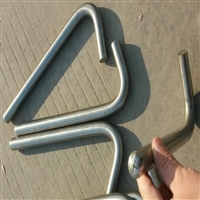
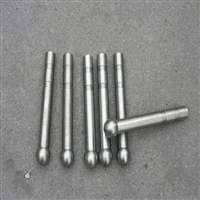


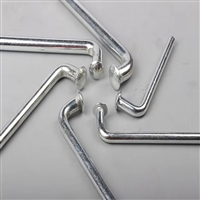

The method of settlement observation by the manufacturer of Suihua observation elevation iron settlement observation markers
Category:
metallurgy/Stainless steel material/Stainless steel bars
Model:
Brand:
Cangzhou Shuntian
grade:
Observation standard
cross-sectional shape:
round bar
surface treatment:
glossy surface
Processing Technology:
Forging
tensile strength:
370MPa~480MPa
Processing Service:
deep processing
execution standard:
National Standard
quality grade:
A-level
Processing & Customization:
yes
Is it imported:
No
weight:
one
Scope of application:
rail transit
delivery service:
Can be delivered to the factory
Type of goods sales:
spot
Item Number:
twenty thousand one hundred and twenty
warehouse address:
Cangzhou, Hebei
warehouse phone:
fifteen billion one hundred and three million three hundred and seventy-two thousand six hundred and sixty-seven
manufacturer:
Cangzhou Shuntian Steel Pipe Co., Ltd
Retail Price
5.00USD
重量
kg
- Product Description
-
grade Observation standard
cross-sectional shape round bar
surface treatment glossy surface
Processing Technology Forging
tensile strength 370MPa~480MPa
Processing Service deep processing
execution standard National Standard
quality grade A-level
Processing & Customization yes
Is it imported No
weight one
Scope of application rail transit
delivery service Can be delivered to the factory
Type of goods sales spot
Item Number twenty thousand one hundred and twenty
warehouse address Cangzhou, Hebei
warehouse phone fifteen billion one hundred and three million three hundred and seventy-two thousand six hundred and sixty-seven
manufacturer Cangzhou Shuntian Steel Pipe Co., Ltd
Description :
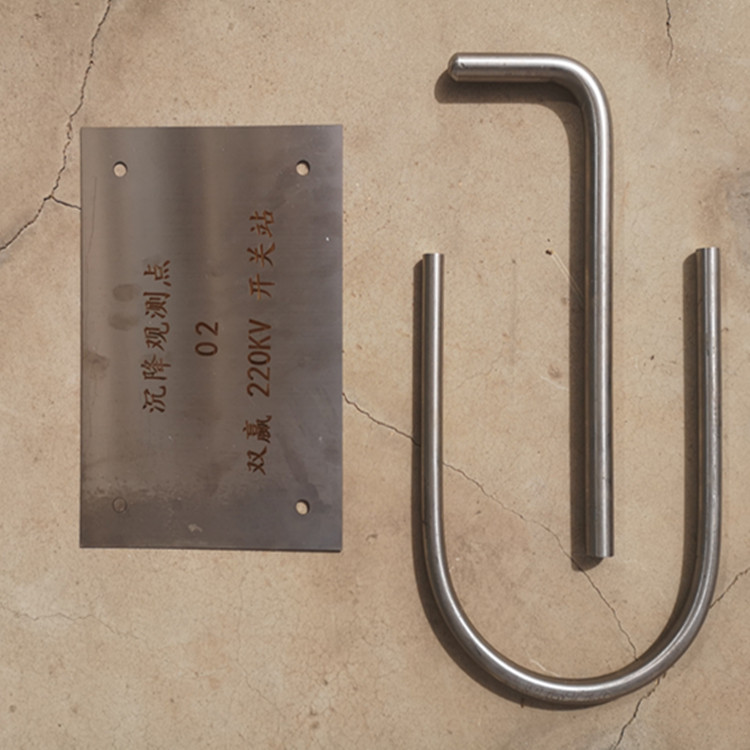
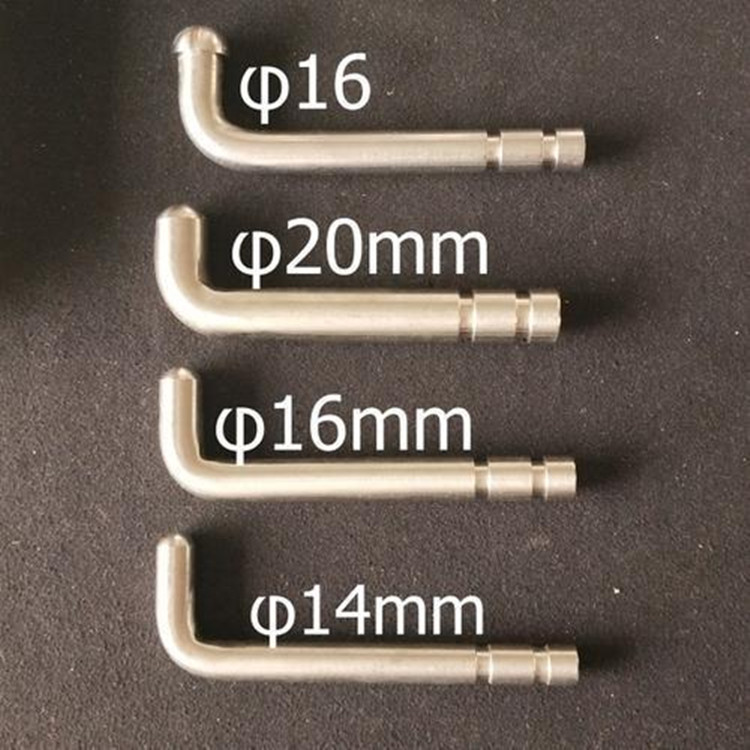
Whether settlement has entered a stable stage should be determined by the relationship curve between settlement amount and time. For a first level project, if the settlement in each of the three observation cycles is not greater than times the measurement error, it can be considered as entering a stable stage. For other levels of observation projects, if the settlement rate is less than 0.01-0.04mm/d, it can be considered as entering the stable stage. The specific value should be determined according to the compressibility of the foundation soil in each region. The observation method and technical requirements for settlement observation points should comply with the following regulations: 1. For second and third level observation points, except for the main deformation characteristic points such as building corner points, junction points, and boundary points, the inter view method can be used for observation, but the length of the line of sight should not exceed the length specified for the corresponding level. During observation, instruments should be avoided from being placed in areas affected by vibrations such as air compressors, mixers, and winches, and stations should not be set up near construction machinery such as tower cranes. Each observation should record various factors that affect settlement changes and anomalies, such as construction progress, increased load capacity, warehouse inventory tonnage, building inclination cracks, etc.

From the crude steel daily production in November, it has been lower than the same period in 2019 for four consecutive months, and it continues to maintain the daily production value since 2018, indicating that under the background of policy induced production pressure, the capacity release of domestic steel production enterprises has been suppressed at a relatively low level.
Crude steel production will remain low in December
In December, the domestic steel market officially entered the traditional off-season of demand, and the actual downstream procurement demand significantly weakened. Against the backdrop of policy induced production pressure, the release of output by steel production enterprises was significantly constrained. According to research data from Lange Steel Network, the blast furnace operating rate of 100 small and medium-sized steel enterprises in China in the first two weeks of December 2021 was 70.7%, a decrease of 1.1 percentage points from November.
From the perspective of crude steel production in key large and medium-sized steel enterprises, the daily average crude steel production of large and medium-sized steel enterprises shows an initial increase followed by a decrease, but the cumulative production is still in a downward trend. According to statistics from the China Iron and Steel Industry Association, the cumulative daily crude steel production of key steel enterprises in November 2021 was 1.7325 million tons, a month on month decrease of 5.18% and a year-on-year decrease of 18.25%.
At present, the off-season effect of the domestic steel market is becoming apparent, and the impact of cold weather on project progress is becoming more apparent. The impact on building materials demand is also more significant, and the demand for manufacturing steel has slightly improved driven by the recovery of export orders. The regional production restrictions for autumn and winter have been implemented, and the release of production capacity in northern regions is significantly restricted. However, in southern regions, the relaxation of power restriction policies and the driving force of regional demand have increased the release of production capacity. At the same time, due to the significant decline in coke prices in the early stage, the profits of steel mills have improved and their willingness to release production capacity has been strengthened. Therefore, steel production at the end of the year will remain low and may increase compared to the previous period, while the year-on-year decline is still significant. According to estimates from the Lange Steel Research Center, the daily crude steel production in China in December 2021 may be around 2.4 million tons, with key large and medium-sized steel enterprises expected to maintain a crude steel production of around 1.8 million tons.
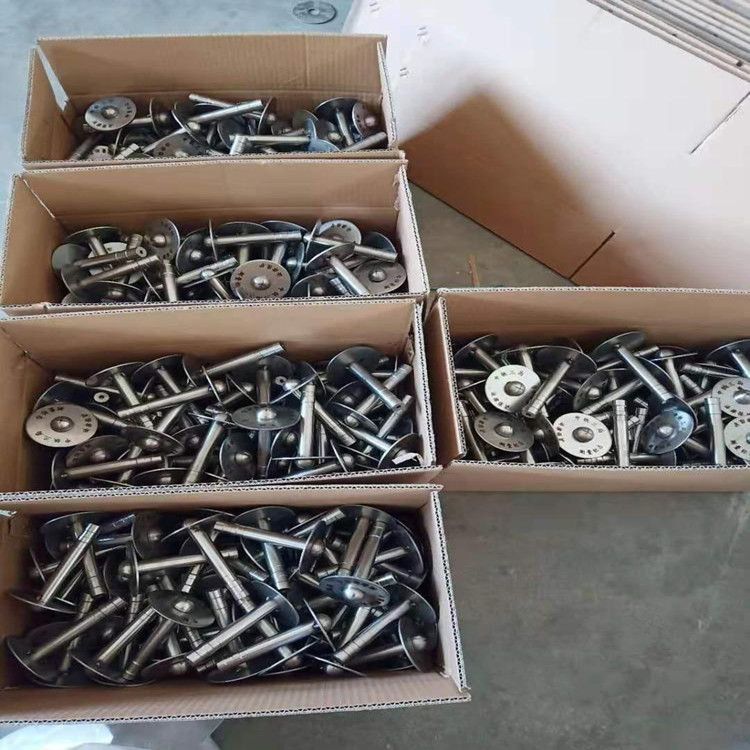


According to the prepared settlement measurement plan and the determined observation period, observation should be carried out in a timely manner after the observation point is stable. Generally, high-rise buildings have one or several underground structures, and observation should start from the foundation. Settlement observation points (temporary) should be buried at the designed positions on the longitudinal and transverse axes of the foundation (foundation edge). Observation can only be carried out after the temporary observation points are stable. The elevation values of the settlement observation points observed are the basis for comparison in future observations, and their accuracy requirements are very high. N2 level precision leveling instruments are generally used for measurement, and each observation point elevation should be observed twice during the same period. Comparing the observation results, if the height difference between the same observation points does not exceed ± 0.5mm, we can consider the observed data to be reliable. As the structure rises one level, temporary observation points are moved up one level and observed until+0.00, and then observation points are buried according to regulations (for ease of observation, observation points can be set at+500mm). Then, every layer of construction is retested until completion.
When conducting settlement observations during the stages of pile driving, excavation of foundation pits, and continuous layering of the upper part after the completion of the foundation, it is necessary to record various factors that affect settlement changes and anomalies, such as the construction progress, increased load capacity, warehouse loading and unloading tonnage, building inclination cracks, etc., for each observation. After weekly observation, the observation data should be promptly organized to calculate the settlement amount, settlement difference, average settlement amount and settlement velocity of the observation point for the current period. If there is an abnormal change in the amount of change, the client should be immediately notified to provide a basis for taking preventive measures, and the number of observations should be appropriately increased.
On the other hand, observations of different periods should follow the principle of "five determinations". The so-called "five determinations" refer to the benchmark points, base points, and settlement observation points on the observed object that are commonly used as the basis for settlement observation, and the points should be stable; The instruments and equipment used should be stable; Observers need to be stable; The environmental conditions during observation should be basically consistent; The observation route, mirror position, program, and method should be fixed. The above measures objectively ensure that the subjective uncertainty of observation errors is minimized as much as possible, so that the measured results have a unified tendency; Can ensure the comparability between each retest result and the observation result, making the observed settlement more accurate.
AfterSalesService :
Key words:- Suihua Observation Standard
More Products