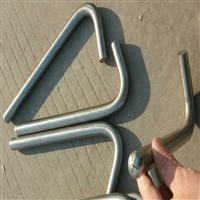
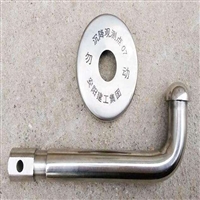
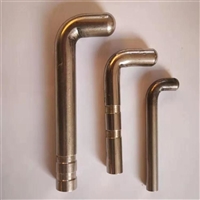
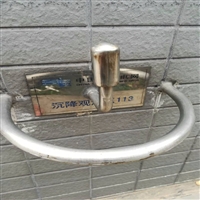

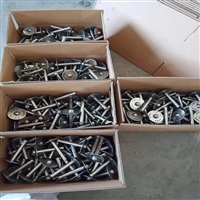
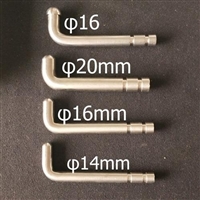
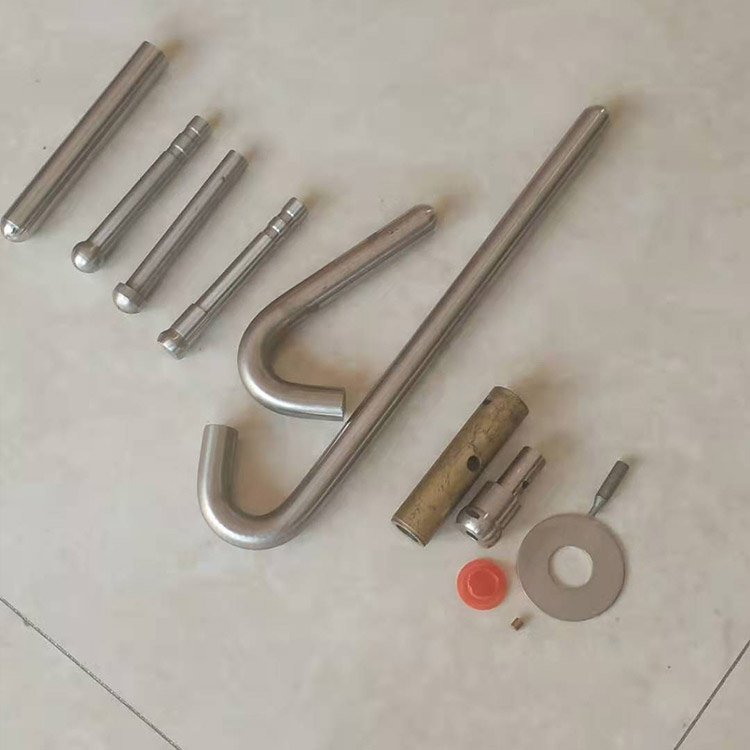
Huizhou Observation Standard Railway High speed Railway 316 Stainless Steel Observation Standard Six piece Set Customized Observation Standard
Category:
metallurgy/Stainless steel material/Stainless steel bars
Model:
Brand:
Cangzhou Shuntian
grade:
Observation standard
cross-sectional shape:
round bar
surface treatment:
glossy surface
Processing Technology:
Forging
tensile strength:
370MPa~480MPa
Processing Service:
deep processing
execution standard:
National Standard
quality grade:
A-level
Processing & Customization:
yes
Is it imported:
No
weight:
one
Scope of application:
rail transit
delivery service:
Can be delivered to the factory
Type of goods sales:
spot
Item Number:
twenty thousand one hundred and twenty
warehouse address:
Cangzhou, Hebei
warehouse phone:
fifteen billion one hundred and three million three hundred and seventy-two thousand six hundred and sixty-seven
manufacturer:
Cangzhou Shuntian Steel Pipe Co., Ltd
Retail Price
12.00USD
重量
kg
- Product Description
-
grade Observation standard
cross-sectional shape round bar
surface treatment glossy surface
Processing Technology Forging
tensile strength 370MPa~480MPa
Processing Service deep processing
execution standard National Standard
quality grade A-level
Processing & Customization yes
Is it imported No
weight one
Scope of application rail transit
delivery service Can be delivered to the factory
Type of goods sales spot
Item Number twenty thousand one hundred and twenty
warehouse address Cangzhou, Hebei
warehouse phone fifteen billion one hundred and three million three hundred and seventy-two thousand six hundred and sixty-seven
manufacturer Cangzhou Shuntian Steel Pipe Co., Ltd
Description :
Huizhou Observation Standard Railway High speed Railway 316 Stainless Steel Observation Standard Six piece Set Customized Observation Standard
meaning
It should be recognized that settlement observation is a necessary task, which is a responsibility taken by the construction party, the construction party, and the ultimate building users
Ensuring safety is a task. Especially in areas where the foundation is weak or unstable, or where the upper load and self weight of the building are large, the specific operation needs to be carefully carried out according to the requirements of the specifications. Firstly, the architectural design department must strictly adhere to the design specifications, and secondly, the construction party must clearly state the requirements. During the construction process, the construction unit must carefully operate and strictly control according to the specifications and design requirements.

reason
internal factors
The construction form of the building itself causes uneven load distribution, resulting in uneven settlement of the building, which will tend to stabilize over time. In addition, deformation caused by construction differences is also an internal factor. Due to construction differences, the load distribution does not match the expected distribution, resulting in building deformation. This deformation is generally small for the local area, but when considering the mutual influence between cumulative deformation from the bottom to the top, it is an important factor for buildings to reach dangerous deformation.

external factors
There are many external factors that can cause building settlement, such as uneven geological structure of the building foundation, different physical properties of the soil, changes in atmospheric temperature, plastic deformation of the foundation, seasonal and periodic changes in groundwater level, the load of the building itself, the structure and dynamic load of the building, and a large amount of excavation around the building, all of which can cause building settlement.

method
Observation of building settlement
Observation of building settlement
(1) To carry out this type of work, it is necessary to first set up observation points to observe whether settlement has occurred. Moreover, such observation points should be arranged in locations that are most sensitive to changes in the building's foundation, taking into account factors such as the building's own conditions such as regular or irregular shapes, other structural forms such as frames, frame shear walls, or cylindrical structures, geological conditions such as soft soil or composite foundations, and pile layout. For buildings in the southwestern region, they are generally located at the corners of the building, in areas with significant differential settlement, in sections with significantly different geological conditions, and on two sides of settlement joints. When burying, it is necessary to ensure a reliable connection between the observation point and the interior of the building through welding or other methods, so that the changes in the observation point and the changes in the building can be synchronized as much as possible.

(2) The time interval for observing changes is also known as the selection of the period for settlement observation. Through practice, it has been found that if the observation interval is chosen appropriately, it can reflect the settlement and deformation laws of buildings in more detail. Therefore, this type of settlement observation has strict limitations on the selection of time. It is necessary to ensure that the observation must be carried out on time when the foundation has already borne a small amount of load and the load is limited. Otherwise, the initial data obtained from settlement observation will be incomplete or incomplete, resulting in incomplete observation results and inability to reflect in detail the deformation of the foundation during the increase of the load. The measurement work in other stages must be carried out at regular intervals according to the progress of the project, without missing or supplementing measurements. Only in this way can accurate settlement conditions or patterns be obtained, and a better understanding of the stability of the building be gained. It is generally believed that buildings built on sandy soil layers,
 During the construction process, most of the settlement and rebound have been completed. However, for buildings built on clay soil layers, the settlement is only a part of the entire settlement during the construction period. After topping out or completion, a certain number of observations are still required, but the observation period should be extended or changed. Based on work experience, during the construction phase, the frequency of observation should be higher, and the observation period should be determined according to the increase in the number of layers or the increase in load. Whether the settlement has entered a stable stage should be determined by the relationship curve between settlement amount and time. For this type of observation in general engineering, if the settlement velocity is less than a specific value, such as less than 0.01-0.04 mm/d, it can be considered to have entered the stable stage, and the specific value should be determined based on the compressibility of the foundation soil in each region.
(3) It is necessary to mention the accuracy of settlement observation. Generally, it is implemented according to the requirements of national second-class leveling measurement.

AfterSalesService :
Key words:- Huizhou Observation Standard
More Products