
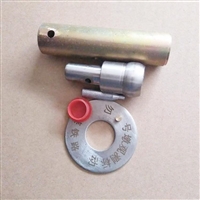
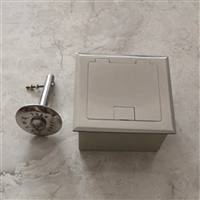
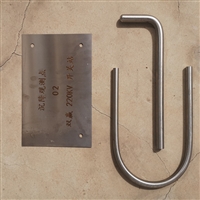
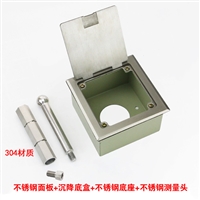
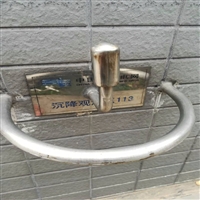
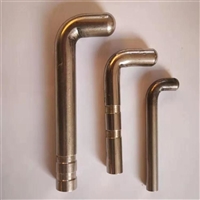

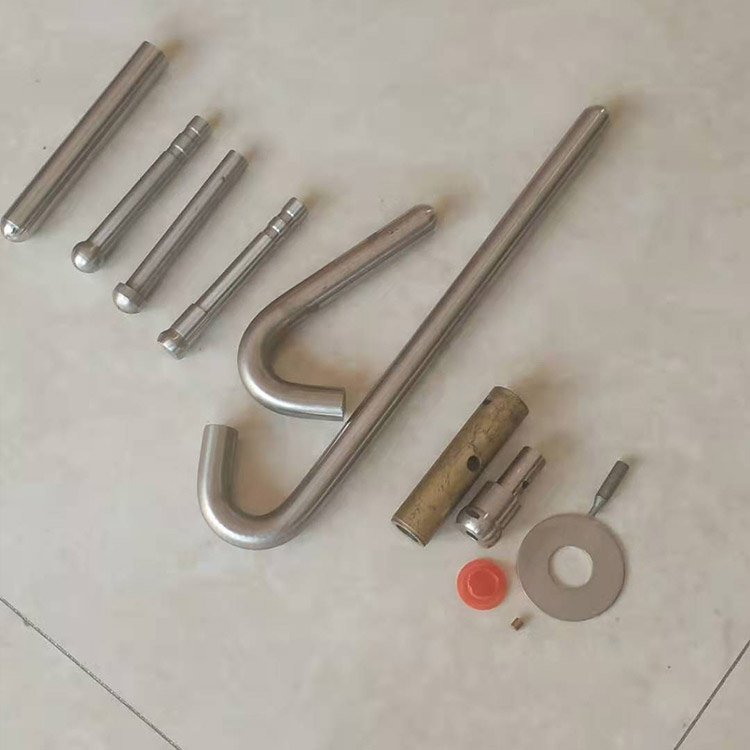
Haikou Observation Point Directly Buried Stainless Steel Settlement Observation Point Bridge Pier Observation Positioning Measurement Point
Category:
metallurgy/Stainless steel material/Stainless steel bars
Model:
Brand:
Cangzhou Shuntian
grade:
Observation standard
cross-sectional shape:
round bar
surface treatment:
glossy surface
Processing Technology:
Forging
tensile strength:
370MPa~480MPa
Processing Service:
deep processing
execution standard:
National Standard
quality grade:
A-level
Processing & Customization:
yes
Is it imported:
No
weight:
one
Scope of application:
rail transit
delivery service:
Can be delivered to the factory
Type of goods sales:
spot
Item Number:
twenty thousand one hundred and twenty
warehouse address:
Cangzhou, Hebei
warehouse phone:
fifteen billion one hundred and three million three hundred and seventy-two thousand six hundred and sixty-seven
manufacturer:
Cangzhou Shuntian Steel Pipe Co., Ltd
Retail Price
12.00USD
重量
kg
- Product Description
-
grade Observation standard
cross-sectional shape round bar
surface treatment glossy surface
Processing Technology Forging
tensile strength 370MPa~480MPa
Processing Service deep processing
execution standard National Standard
quality grade A-level
Processing & Customization yes
Is it imported No
weight one
Scope of application rail transit
delivery service Can be delivered to the factory
Type of goods sales spot
Item Number twenty thousand one hundred and twenty
warehouse address Cangzhou, Hebei
warehouse phone fifteen billion one hundred and three million three hundred and seventy-two thousand six hundred and sixty-seven
manufacturer Cangzhou Shuntian Steel Pipe Co., Ltd
Description :
Observation points should be arranged at the boundaries of mapping units, lithological and lithological changes, fault lines, fold axes, marker layers, important fossil points, ore bearing layers and mineralized outcrops, joint and foliation measurement and statistics offices, well springs, important sample collection sites, and other meaningful geological phenomena (such as landforms, adverse geological processes, cultural relics excavation sites, etc.).
According to the function of observation points, they can be divided into control points and descriptive points. Control points are lithological observation points arranged to control mapping units with exposed widths greater than the spacing between geological points. They mainly record point locations, point characteristics, detailed and accurate rock names, special structures, and structural features. The description points are arranged at important or typical geological phenomena, such as unconformities, intrusive contacts, important top and bottom structures, facies markers, fold axes, faults, etc. The interface (line) exposed points should be observed, studied, described, recorded, sampled, sketched, and photographed in detail.
The spacing between observation points should be based on task requirements, in order to effectively control and collect sufficient geological, structural, mineral, and other geological data to meet the requirements for mapping and report writing. All mapping units (formal and informal stratigraphic units), fault lines, fold axes, and other important geological phenomena should have sufficient observation points for control. Generally arranged according to the mapping scale, the point spacing on various geological boundaries is about 1 cm on the map (1:50000 point spacing is about 500m), but for large areas of Quaternary distribution with a single genetic type and age, the point spacing (and line spacing) can be reduced by about twice. Geological bodies with a distance equal to or greater than the route spacing, and closed geological bodies with a distance greater than lcm on the map should be controlled by at least two observation points.



Ye Zhenxing, Secretary of the Party Group of Hainan Provincial Department of Science and Technology, and other relevant leaders attended the evaluation meeting. Ye Zhenxing pointed out that the establishment of the Hainan Key Laboratory of Earth Observation has expanded the scientific research field in Hainan Province, provided an important platform for the development of science and technology in Hainan Province, introduced talents, funds, and technology, promoted scientific research development, and provided strategic support for decision-making. He hopes that the key laboratory will face the national marine strategy in the future and provide technological support for the economic and social development of Hainan.
The main research areas of the Hainan Key Laboratory of Earth Observation fully consider the regional characteristics of Hainan Province, and are aimed at important national and local needs such as the construction of the Maritime Silk Road and the Hainan International Tourism Island. In response to the practical needs of natural disaster monitoring, ecological environment monitoring, and digital Hainan construction in Hainan, research is conducted on the unique technical issues of Earth observation in tropical and subtropical cloudy and rainy areas, achieving the integration of multidisciplinary talents and providing services for the economic and social development of Hainan Province.
The establishment of this key laboratory in the local area is an active attempt by the Remote Sensing Earth Institute to continuously explore technological system innovation, promote the integration of industry, academia, and research, and support economic development models with technology. It has become a new platform for the Remote Sensing Earth Institute to directly serve the economic and social development of Hainan Province, marking new progress in the construction of the Remote Sensing Earth Institute's regional research center. So far, the Institute of Remote Sensing Earth has added a provincial key laboratory for regional economic and social development needs on the basis of eight key laboratories of remote sensing science, including the State Key Laboratory of Remote Sensing Science and the Key Laboratory of the Institute of Digital Earth, as well as institute level laboratories and research centers.
AfterSalesService :
Key words:- Haikou Observation Standard
More Products