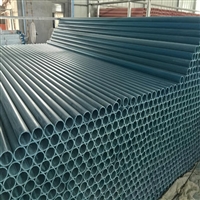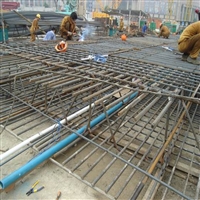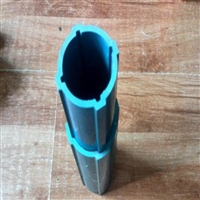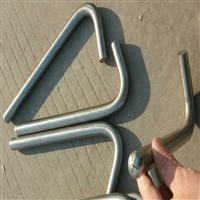
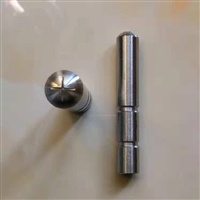
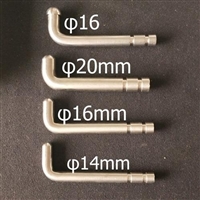
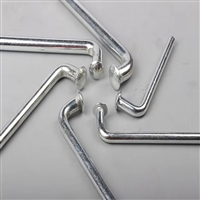
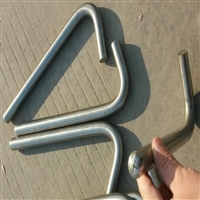
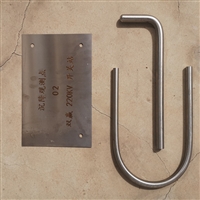
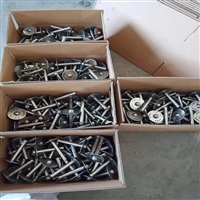
Nanchong Production Observation Standard Observation Point L-type Straight Type Specification Model Full
Category:
metallurgy/Stainless steel material/Stainless steel bars
Model:
Brand:
Cangzhou Shuntian
grade:
Observation standard
cross-sectional shape:
round bar
surface treatment:
glossy surface
Processing Technology:
Forging
tensile strength:
370MPa~480MPa
Processing Service:
deep processing
execution standard:
National Standard
quality grade:
A-level
Processing & Customization:
yes
Is it imported:
No
weight:
one
Scope of application:
rail transit
delivery service:
Can be delivered to the factory
Type of goods sales:
spot
Item Number:
twenty thousand one hundred and twenty
warehouse address:
Cangzhou, Hebei
warehouse phone:
fifteen billion one hundred and three million three hundred and seventy-two thousand six hundred and sixty-seven
manufacturer:
Cangzhou Shuntian Steel Pipe Co., Ltd
Retail Price
12.00USD
重量
kg
- Product Description
-
grade Observation standard
cross-sectional shape round bar
surface treatment glossy surface
Processing Technology Forging
tensile strength 370MPa~480MPa
Processing Service deep processing
execution standard National Standard
quality grade A-level
Processing & Customization yes
Is it imported No
weight one
Scope of application rail transit
delivery service Can be delivered to the factory
Type of goods sales spot
Item Number twenty thousand one hundred and twenty
warehouse address Cangzhou, Hebei
warehouse phone fifteen billion one hundred and three million three hundred and seventy-two thousand six hundred and sixty-seven
manufacturer Cangzhou Shuntian Steel Pipe Co., Ltd
Description :
Nanchong Production Observation Standard Observation Point L-type Straight Type Specification Model Full
Manufacturers can customize various observation markers, observation points, observation piles, settlement protection boxes, settlement pipes, inclinometers, pore pressure gauges, and guardrail support specifications - Manager Wei can provide the drawings
Why is the surface water environment quality so good in Panzhihua? According to Wang Tianwu, Chief Engineer of the Ecological Environment Bureau of Panzhihua City, since 2021, the water quality of the Yalong River estuary, Baizhi, and Luoguo sections in Panzhihua City has reached Class I, and the water quality of the Wantan Power Station and Dawanzi sections has reached Class II; The surface water environmental quality ranks 27th in the country and the whole province.
In 2021, the Ecological Environment Bureau of Panzhihua City aims to improve the ecological environment, strengthen environmental supervision and social supervision, urge timely, high-quality, and efficient handling of letters and visits, investigate and punish illegal activities in the ecological environment in accordance with the law, solve prominent environmental problems around the masses, and fight the battle against pollution prevention and control, playing a supporting and guaranteeing role in continuously improving the quality of the ecological environment.
Wang Tianwu stated that in the next step, the Ecological Environment Bureau of Panzhihua City will focus on the goal of building an "iron army" for ecological environment law enforcement, further consolidate and improve the quality of the city's ecological environment, ensure ecological environment safety, highlight law enforcement, serve high-quality economic development, solve prominent environmental problems of concern to the masses, and provide ecological environment protection for the construction of the "three circles" economic geographic space in Panzhihua City.
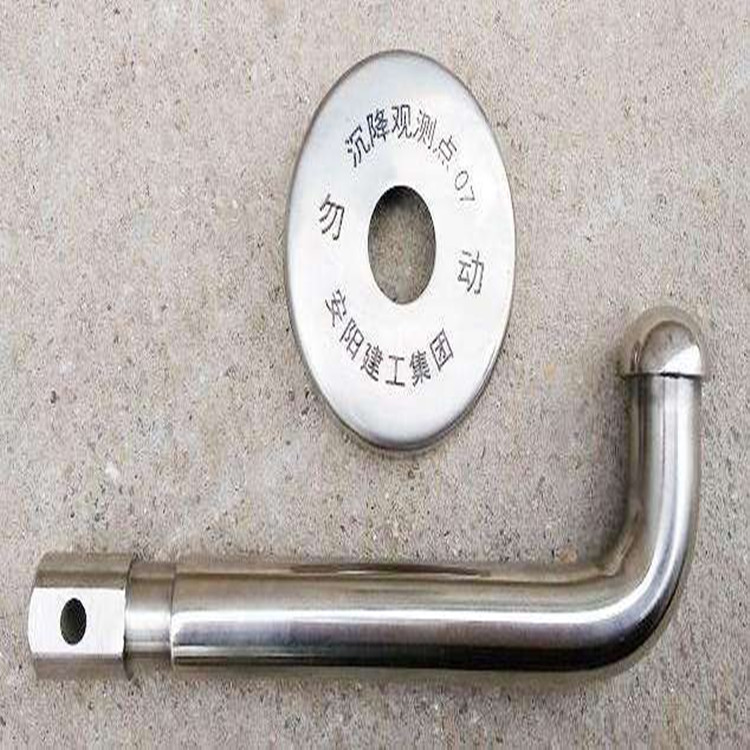
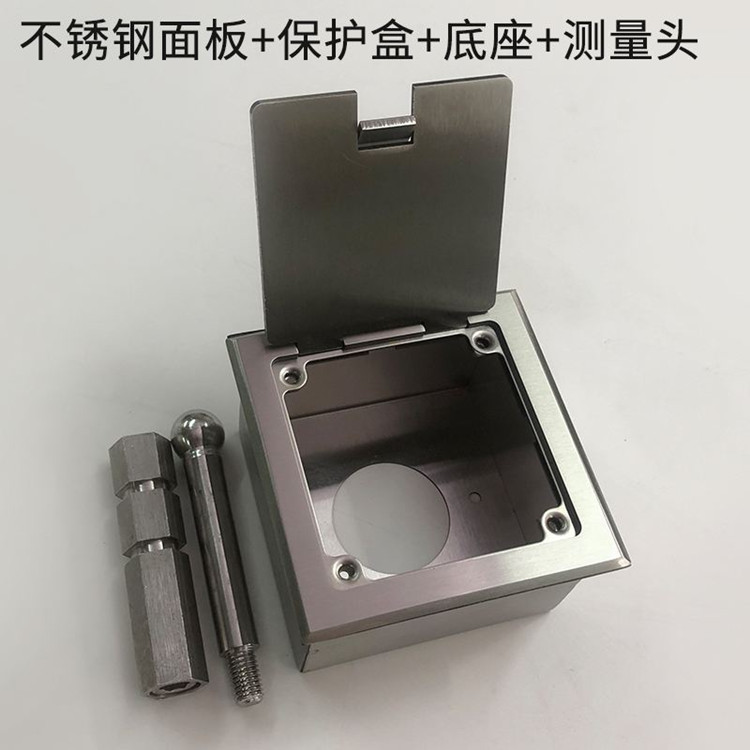
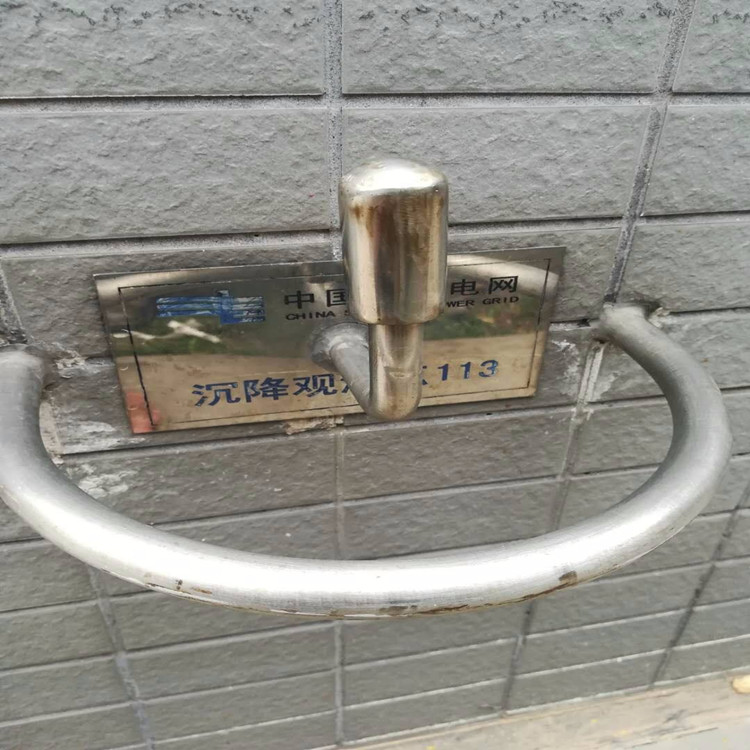


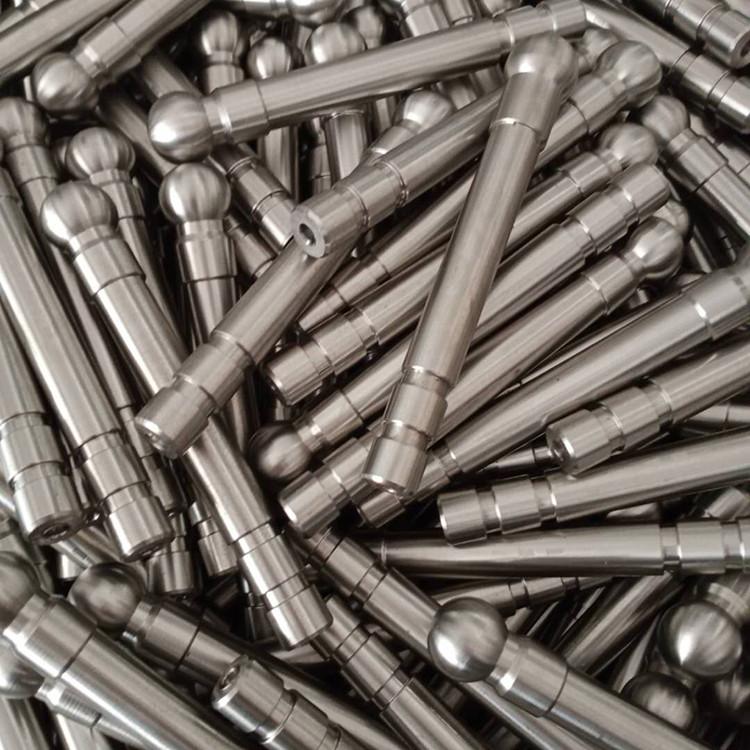
The layout of settlement observation points should comprehensively reflect the deformation characteristics of the building's foundation, and be determined based on geological conditions and building structural features. The layout of settlement observation points should meet the following requirements: 1. The location of settlement observation points: (1) at the four corners of the building, the four corners of the core tube, large corners, and every 10-20 meters along the outer wall or every 2-3 column bases. (2) On both sides of the intersection of high and low rise buildings, old and new buildings, and vertical and horizontal walls. (3) On both sides of building cracks, post pouring strips, and settlement joints, at locations where there is a significant difference in foundation burial depth, at the boundary between artificial and natural foundations, at the boundary between different structures, and at the boundary between filling and excavation. (4) Buildings with a width greater than or equal to 15 meters or less and in geologically complex and expansive soil areas should have interior wall points in the middle of the load-bearing interior partition wall and floor points in the center and surrounding areas of the indoor floor. (5) Adjacent to heavy objects, areas significantly affected by vibration, and underground trenches under the foundation. (6) On each or part of the column foundation or longitudinal and transverse axis of the frame structure building. (7) Four corners and middle position of raft foundation, box foundation bottom plate or structure part close to the foundation. (8) The corners of heavy equipment foundations and power equipment foundations, changes in foundation form or burial depth, and changes in geological conditions on both sides. (9) High rise buildings such as TV towers, chimneys, water towers, oil tanks, oil refining towers, blast furnaces, etc. should be located at symmetrical positions intersecting with the foundation axis along the periphery, with no less than 4 points. 2. The burial form of settlement observation points. The signs for settlement observation can be in the form of wall (column) signs, foundation signs, and concealed signs (used for high-end buildings such as hotels) according to different types of building structures and building materials. The upright parts of various signs should be processed into a hemisphere shape or have obvious protruding points, and coated with anti-corrosion agents. The burial location of the sign should avoid obstacles that may hinder the installation and observation of the sign (such as rainwater pipes, window sills, radiators, warm water pipes, electrical switches, etc.), and should be kept at a certain distance from the wall (column) surface and ground as required by the ruler.
AfterSalesService :
Key words:- Nanchong Production Observation Standard
More Products