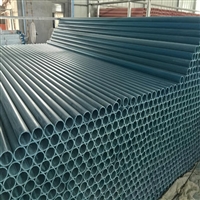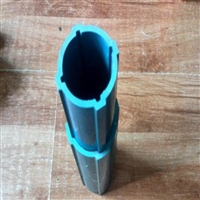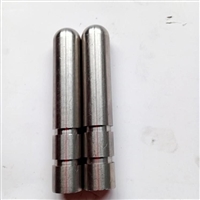
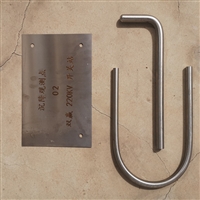
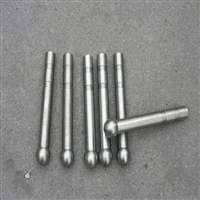
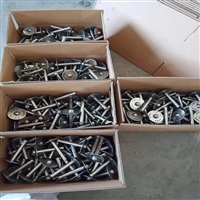

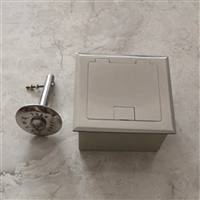
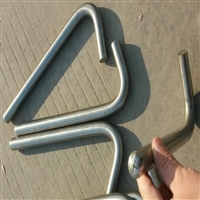
Luoyang Observation Standard Stainless Steel Observation Standard Current Sales Price
Category:
metallurgy/Stainless steel material/Stainless steel bars
Model:
Brand:
Cangzhou Shuntian
grade:
Observation standard
cross-sectional shape:
round bar
surface treatment:
glossy surface
Processing Technology:
Forging
tensile strength:
370MPa~480MPa
Processing Service:
deep processing
execution standard:
National Standard
quality grade:
A-level
Processing & Customization:
yes
Is it imported:
No
weight:
one
Scope of application:
rail transit
delivery service:
Can be delivered to the factory
Type of goods sales:
spot
Item Number:
twenty thousand one hundred and twenty
warehouse address:
Cangzhou, Hebei
warehouse phone:
fifteen billion one hundred and three million three hundred and seventy-two thousand six hundred and sixty-seven
manufacturer:
Cangzhou Shuntian Steel Pipe Co., Ltd
Retail Price
12.00USD
重量
kg
- Product Description
-
grade Observation standard
cross-sectional shape round bar
surface treatment glossy surface
Processing Technology Forging
tensile strength 370MPa~480MPa
Processing Service deep processing
execution standard National Standard
quality grade A-level
Processing & Customization yes
Is it imported No
weight one
Scope of application rail transit
delivery service Can be delivered to the factory
Type of goods sales spot
Item Number twenty thousand one hundred and twenty
warehouse address Cangzhou, Hebei
warehouse phone fifteen billion one hundred and three million three hundred and seventy-two thousand six hundred and sixty-seven
manufacturer Cangzhou Shuntian Steel Pipe Co., Ltd
Description :
The steel industry has achieved the target of reducing production capacity by 150 million tons in the 13th Five Year Plan two years ahead of schedule. The demonstration application of intelligent manufacturing is accelerating. As of June 2020, the penetration rate of digital R&D design tools and the CNC rate of key processes in key manufacturing enterprises were 71.5% and 51.1%, respectively, higher than 14.8 and 3.8 percentage points in 2015. The added value of high-tech manufacturing and equipment manufacturing accounted for 14.4% and 32.5% of the added value of industrial enterprises above designated size, respectively, an increase of 2.6 and 0.7 percentage points from 2015, becoming the main driving force for the development of the manufacturing industry.
The general manufacturing industry is gradually opening up in an orderly manner, and the stock ratio restrictions in the fields of automobiles, ships, and airplanes are gradually being lifted. High speed railways, nuclear power, satellites, and other industries are systematically going abroad. In 2019, China's industrial product exports covered nearly 200 countries and regions, accounting for 71% and 21% of China's total exports and global demand, respectively, and occupying a key position in the global industrial and supply chains. As of the end of 2019, we have signed production capacity cooperation agreements with more than 30 countries along the Belt and Road, and established over 70 overseas economic and trade cooperation zones.
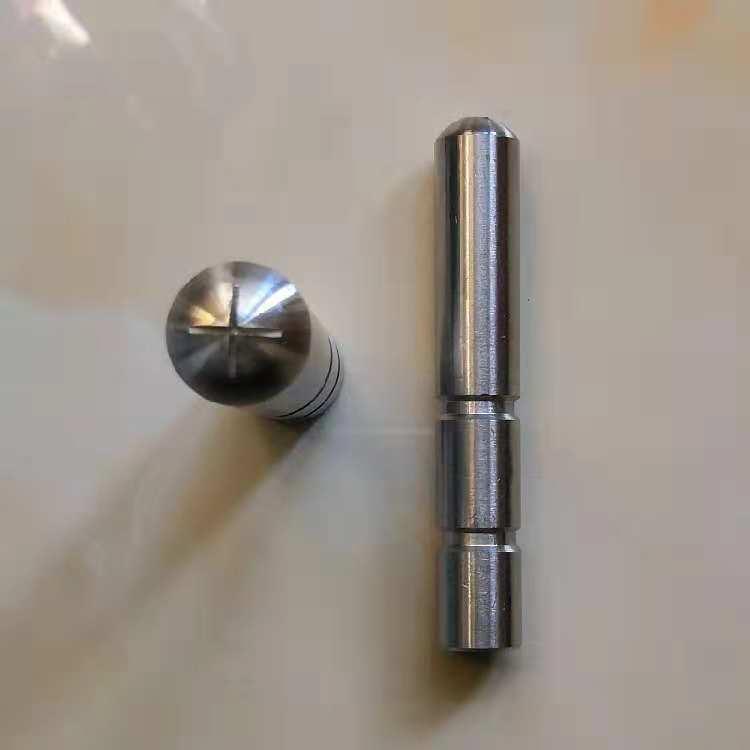


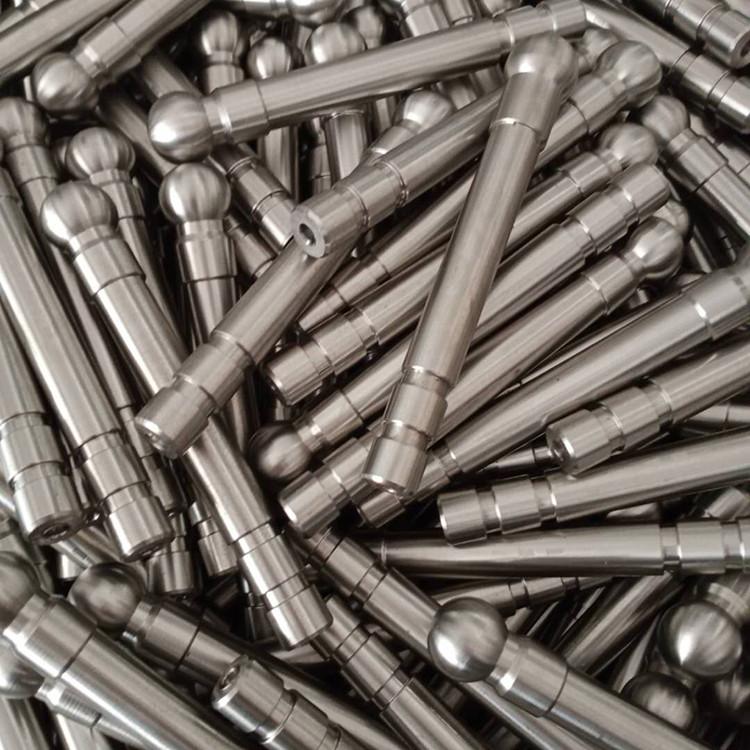
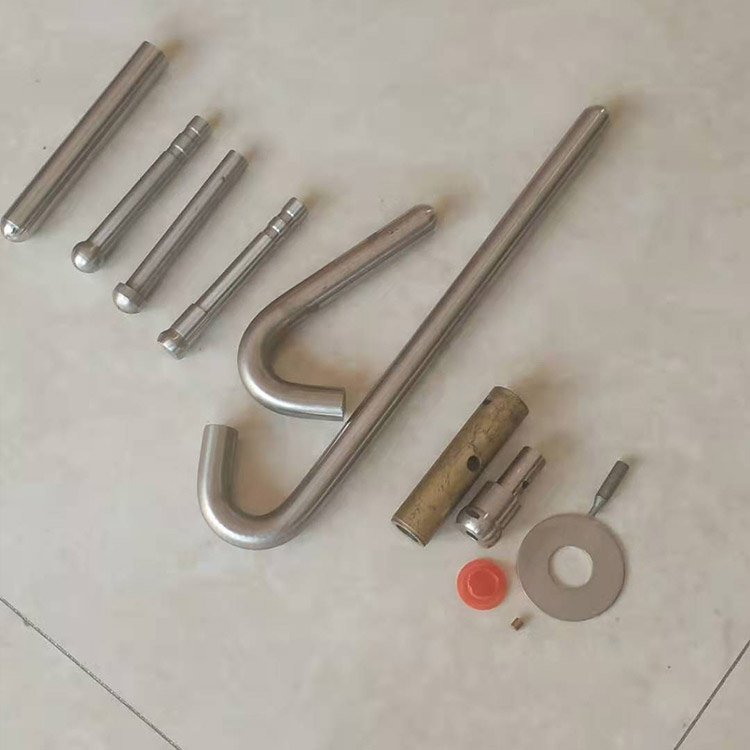

1. Requirements for instrument equipment and personnel quality
According to the high precision requirements for settlement observation, in order to accurately reflect the settlement of buildings (structures) under continuous loading, it is generally stipulated that the measurement error should be less than 1/10 to 1/20 of the deformation value. Therefore, precision level gauges (S1 or S05 level) should be used for settlement observation, and high-precision indium alloy level gauges that are less affected by environmental and temperature changes should also be used for level gauges. In the absence of an indium alloy level ruler, it is recommended to use a segment ruler instead of a regular tower ruler. Homework personnel must receive learning and skill training, proficiently master the operating procedures of instruments, be familiar with measurement theory, be able to adopt different observation methods and procedures according to the characteristics and specific situations of different projects, analyze the causes of problems that arise during implementation, and correctly apply error theory for adjustment calculation, completing each observation task on time, quickly, and efficiently.
2. Requirements for observation time
The settlement observation of buildings (structures) has strict time constraints, especially the observation must be carried out on time. The re measurement of other stages must be carried out at regular intervals according to the progress of the project, and no missing or supplementary measurements are allowed. Only in this way can accurate settlement conditions or patterns be obtained. The two adjacent time intervals are called an observation period. Generally, the settlement observation of high-rise buildings is carried out on time according to a certain period of time (such as 30 days/time) or according to the loading situation of the building, every rise of one (or several) floors is considered as an observation period. Regardless of the method used, it must be carried out on time according to the observation period specified in the construction plan.
3. Requirements for observation points
In order to accurately reflect the settlement of buildings (structures), settlement observation points should be buried in the most reflective and easy to observe locations that best reflect settlement characteristics. It is generally required that the settlement observation points set up on buildings should be symmetrical in the longitudinal and transverse directions, and the spacing between adjacent points should be 15-30 meters, evenly distributed around the building. Usually, there is a dedicated layout of settlement observation points on building design drawings. In addition, the buried settlement observation points should meet the observation requirements of each construction stage, especially considering whether the observation points will be damaged or covered up due to the construction of wall or column finishes during the decoration stage, and whether they will lose their observation significance due to continuous observation.
4. Settlement observation should follow the principle of "five determinations" from beginning to end
The "Five Determinations" refer to the reference points, working points, and settlement observation points of the observed object, which should be stable in position; The instruments and equipment used should be stable; Observers need to be stable; The environmental conditions during observation are basically the same; The observation route, mirror position, program, and method should be fixed. The above measures objectively minimize the uncertainty of observation errors, ensure that the measured results have a unified trend, ensure that the comparability between each retest result and the observed results is more consistent, and make the observed settlement more accurate.
5. Testing requirements
The operation methods and observation procedures of instruments and equipment should be familiar and correct. Before observation, all indicators of the instruments used should be tested and calibrated, and if necessary, measured by the measuring unit. Re calibrate the instruments and equipment used after 3-6 months of continuous use.
During the observation process, operators should cooperate with each other, coordinate their work in a consistent manner, be careful and meticulous, and achieve step-by-step verification.
AfterSalesService :
Key words:- Luoyang Observation Standard

More Products