
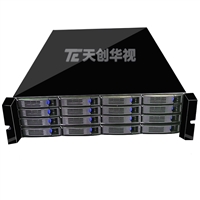
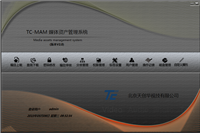
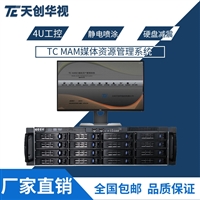
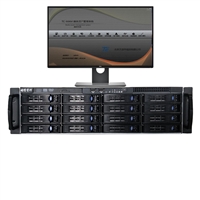
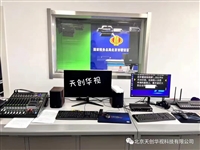
AI intelligent media asset management system video automatic cataloging, retrieval and storage solution
Category:
Digital computer/software/management software
Model:
TC MAM series
Brand:
Tianchuang Huashi
System Architecture:
B/S browser access
AI function:
Facial recognition/speech transcription/scene detection
Supported formats:
H. 264/H.265/MP4/MOV, etc
Storage Expansion:
Support PB level distributed storage
Deployment method:
Localized private deployment
Applicable Industries:
Radio and Television/Integrated Media/Education/Enterprise
retrieval method:
Keywords/visual content/audio content
safety:
Multi level permission management/operation log audit
Retail Price
10,000,000.00USD
重量
kg
- Product Description
-
System Architecture B/S browser access
AI function Facial recognition/speech transcription/scene detection
Supported formats H. 264/H.265/MP4/MOV, etc
Storage Expansion Support PB level distributed storage
Deployment method Localized private deployment
Applicable Industries Radio and Television/Integrated Media/Education/Enterprise
retrieval method Keywords/visual content/audio content
safety Multi level permission management/operation log audit
Description :
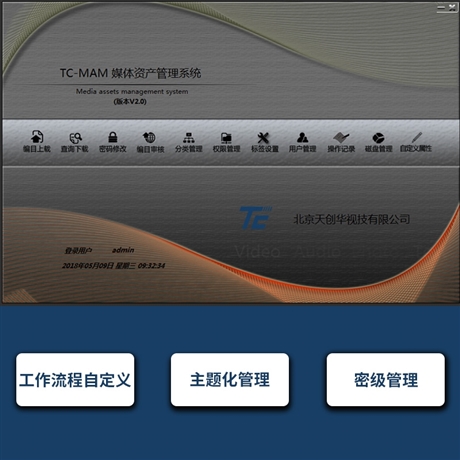
AI intelligent recognition management system
AI Media Asset Solution
For more information on Tianchuang Huashi AI media assets, please contact us
AI Media Asset Management System/Media Asset Management System is a digital content management platform designed specifically for broadcasting, new media, and enterprises and institutions. The core of this system solves the problems of chaotic storage, difficult retrieval, and low reuse rate of massive audio and video materials. By introducing AI intelligent recognition technology, automated processing and structured storage of unstructured video data can be achieved. Typical working conditions include daily program archiving in television stations, multi platform distribution management in integrated media centers, and construction of curriculum resource libraries in educational institutions. The system supports high concurrency access, ensuring stable operation when multiple people upload or download materials simultaneously, helping users build a secure, efficient, and traceable digital asset center, and improving content production and management efficiency.
The system is designed with a B/S architecture and supports mainstream operating systems and database environments. The core functional modules include material collection, intelligent cataloging, content review, transcoding distribution, and permission management. The AI engine supports facial recognition, speech to text (ASR), scene detection, and object recognition, automatically extracting keyframes and metadata labels. At the storage level, it supports distributed file systems, is compatible with SAN/NAS storage architecture, and has PB level scalability. The execution standards comply with relevant data specifications in the broadcasting and television industry, and support multiple encoding formats such as H.264/H.265. The system is equipped with multiple backup mechanisms and log auditing functions to ensure data integrity and operational traceability, meeting enterprise level information security requirements.
When selecting, it is important to consider the business scale and AI functional requirements. Suitable for units that require long-term preservation of a large amount of historical video data and have high requirements for retrieval speed. If only simple file sharing is needed, regular NAS can meet it without deploying this system; If real-time live streaming processing is involved, a dedicated live streaming recording module is required. Compared with ordinary cloud storage, the media asset management system has professional video preview, online rough cutting, and copyright protection functions. For small studios, the basic version can be chosen to focus on storage and simple classification; Large media conglomerates should choose advanced versions that support cluster deployment and have deep AI analysis capabilities to cope with complex multi departmental collaboration processes.
It is recommended to use a dedicated server cluster for installation and deployment to ensure that CPU and GPU resources are fully charged to support AI computing. Daily maintenance requires regular checks on storage space usage and setting up automatic cleaning strategies to handle temporary files. It is recommended to establish a standardized material naming and storage process, and cooperate with the system's automatic labeling to further improve retrieval accuracy. Common faults are often caused by slow uploads due to network bandwidth bottlenecks, and it is necessary to optimize the LAN structure. Regularly update the AI model library to improve recognition accuracy, and perform regular backup and index optimization on the system database to ensure that the system maintains a fast response state even under long-term high load operation, extending the software service lifecycle.
AfterSalesService :
线上,现场上门Key words:
More Products