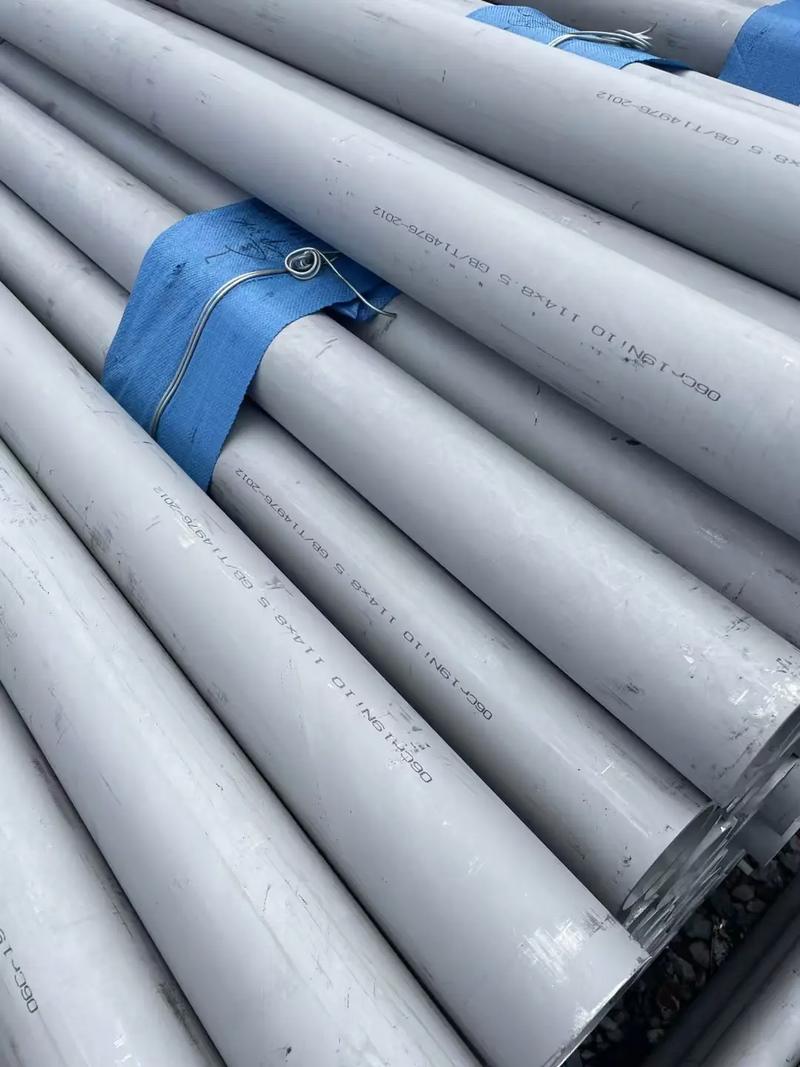

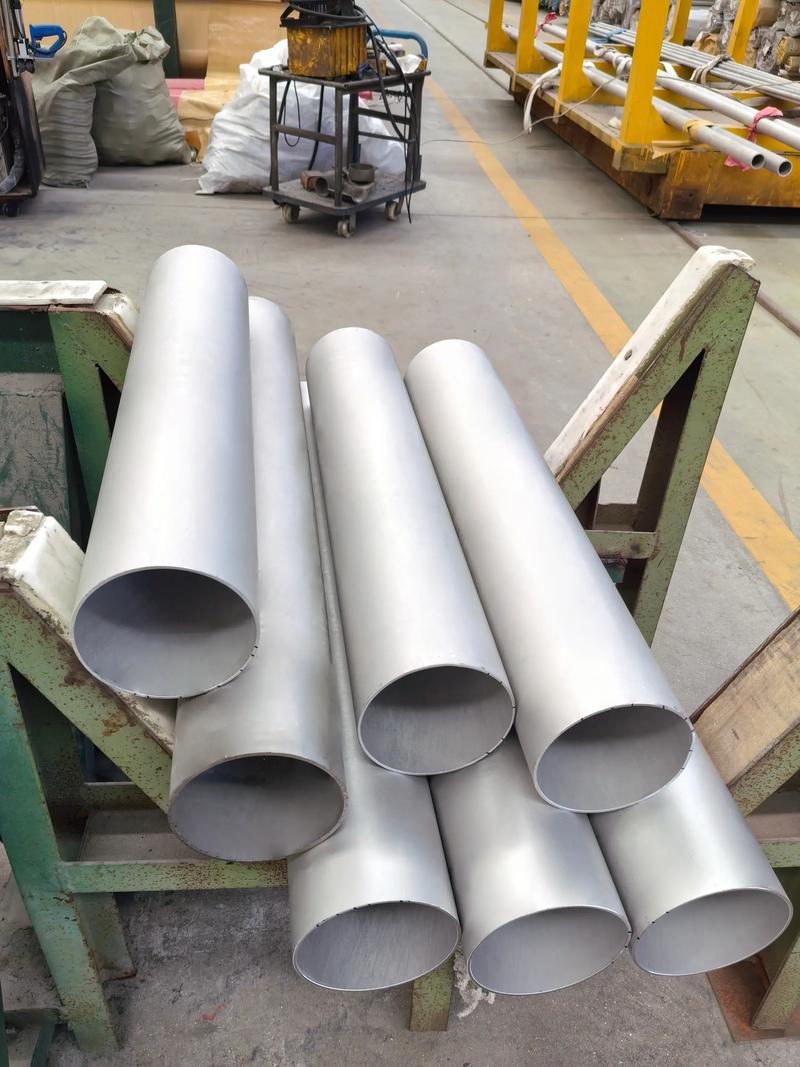
304/316L stainless steel seamless pipe, corrosion-resistant high-pressure steel pipe for industrial fluid transportation
Category:
metallurgy/Stainless steel pipes/Stainless steel hot-rolled seamless pipe
Model:
twenty-five
Brand:
Yun Xun
Material:
304/316L/321
production process:
Hot rolling/cold drawing
Execution Standard:
GB/T 14976-2012
Outer diameter range:
Φ6-Φ630mm
Wall thickness range:
1-50mm
Surface Treatment:
Acid washing/polishing
Application Fields:
Chemical/Petroleum/Electricity
Corrosion resistance:
excellent
Retail Price
10,000,000.00USD
重量
kg
- Product Description
-
Material 304/316L/321
production process Hot rolling/cold drawing
Execution Standard GB/T 14976-2012
Outer diameter range Φ6-Φ630mm
Wall thickness range 1-50mm
Surface Treatment Acid washing/polishing
Application Fields Chemical/Petroleum/Electricity
Corrosion resistance excellent
Description :
Stainless steel seamless pipe is a long strip of steel with a hollow cross-section and no seams around it, mainly used for transporting fluid pipelines such as oil, natural gas, coal gas, water, and certain solid materials. Compared to welded steel pipes, stainless steel seamless pipes have significant advantages in withstanding pressure and can adapt to harsh working conditions such as high temperature, high pressure, and strong corrosiveness. This product is widely used in the fields of chemical, petroleum, power, boiler, machinery manufacturing, and building decoration. It is a key basic material to ensure the safe and stable operation of industrial systems, effectively solving the problems of leakage and uneven strength at the weld seam of traditional welded pipes.
This stainless steel seamless tube is usually made of high-quality stainless steel round steel as the billet, and is processed by perforation, hot rolling or cold drawing. Common materials include austenitic stainless steel such as 304, 304L, 316, 316L, 321, as well as heat-resistant steel such as 310S. The implementation standards cover international universal standards such as GB/T 14976-2012 "Seamless Stainless Steel Tubes for Fluid Transport", GB/T 13296-2013 "Seamless Stainless Steel Tubes for Boilers and Heat Exchangers", and ASTM A312. The conventional outer diameter range is from Φ 6mm to Φ 630mm, with wall thickness ranging from 1mm to 50mm. The surface condition can be divided into acid washed, polished or sandblasted surfaces, ensuring smooth inner walls and no cracks, folds or scars on outer walls, meeting strict non-destructive testing requirements.
When selecting, it is necessary to choose suitable materials and specifications based on the corrosiveness of the medium, working temperature, and pressure level. 304 material is suitable for general weakly corrosive environments and normal temperature fluid transportation, with high cost-effectiveness; 316L has better resistance to pitting corrosion due to the addition of molybdenum element, making it suitable for marine environments or chloride containing ion media; The 310S is specifically designed for extreme heat-resistant scenarios such as high-temperature furnace tubes. It should be noted that seamless pipes are not suitable for non critical occasions that are extremely cost sensitive and have low pressure and room temperature. In this case, welded pipes can be considered as a substitute. In addition, hot rolling process is preferred for large-diameter thick walled pipes, while cold drawing process is preferred for small-diameter thin-walled pipes to ensure dimensional accuracy and surface smoothness.
When installing stainless steel seamless pipes, specialized welding processes such as argon arc welding or plasma welding should be used, and solution treatment should be carried out to restore corrosion resistance. In daily maintenance, it is necessary to regularly inspect the surface of pipelines for intergranular corrosion, stress corrosion cracking, or pitting, especially in the heat affected zone of welds and bends. For pipelines transporting flammable, explosive, or toxic media, a strict system of regular thickness measurement and flaw detection should be established. During storage, direct contact with carbon steel should be avoided to prevent iron ion contamination, and ventilation and dryness should be maintained to prevent dust or acidic substances from adhering to the surface, thereby extending the service life of stainless steel seamless pipes and maintaining their excellent mechanical properties.
AfterSalesService :
Key words: