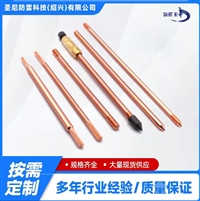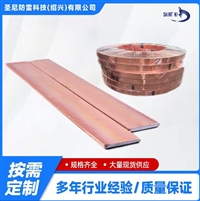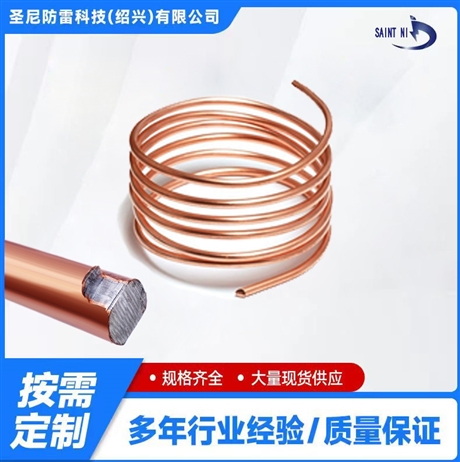

Copper clad steel round wire, copper plated round wire, copper coated steel round wire, grounding wire
Category:
Security/Lightning protection and lightning protection products/Lightning protection and lightning protection products
Model:
12/14/16/18/20
Brand:
SAINT NI
Conductor structure:
copper-clad steel
Copper layer thickness:
0.25mm-0.8mm
tensile strength:
≥500N/mm²
conductivity:
≥20% IACS
Execution Standard:
GB/T 21698-2008
Surface Treatment:
Bright/Tin Plated
bending performance:
Repeatedly bending without breaking
Operating temperature:
-40 ℃ to+80 ℃
Retail Price
10,000,000.00USD
重量
kg
- Product Description
-
Conductor structure copper-clad steel
Copper layer thickness 0.25mm-0.8mm
tensile strength ≥500N/mm²
conductivity ≥20% IACS
Execution Standard GB/T 21698-2008
Surface Treatment Bright/Tin Plated
bending performance Repeatedly bending without breaking
Operating temperature -40 ℃ to+80 ℃
Description :
Copper clad steel round wire is a composite metal material that wraps a high-purity electrolytic copper layer on the surface of a low-carbon steel core through a special process. It mainly solves the problems of high cost, low strength, easy corrosion, and poor conductivity of traditional pure copper grounding materials. This copper coated steel round wire combines the excellent conductivity of copper with the high mechanical strength of steel. Typical working conditions include grounding grids in power system substations, lightning protection grounding in communication base stations, anti-static grounding in petrochemical facilities, and lightning protection down conductors in buildings. Its core advantage lies in the metallurgical bonding between the surface copper layer and the steel core, ensuring no delamination or cracking under high current impact, enabling long-term stable operation, effectively reducing grounding resistance, and ensuring the safety of electrical equipment.
The specifications of this product usually cover a diameter range from 8mm to 14mm, and common standard lengths include 100 meters per roll or customized lengths. The thickness of the copper layer is generally controlled between 0.25mm and 0.8mm, depending on the application level requirements. The implementation standards refer to GB/T 21698-2008 "Copper Clad Steel Grounding Materials" or IEEE Std 80 related specifications. In terms of material, the steel core is made of low-carbon hot-rolled wire rod, with a tensile strength usually greater than 500N/mm ², and a copper layer purity of over 99.9%, ensuring good ductility and conductivity. The production process adopts horizontal continuous casting or electroplating coating technology to ensure a firm bond between copper and steel interfaces. After bending tests, torsion tests, and salt spray corrosion tests, it meets weather resistance requirements and is suitable for various complex soil environments.
When selecting, specific specifications should be determined based on the short-circuit current capacity, corrosion environment level, and mechanical strength requirements of the grounding system. For highly corrosive soil areas, it is recommended to choose models with thicker copper layers to extend their service life; For overhead grounding down conductors that require significant mechanical tension, attention should be paid to the tensile strength index of the steel core. Compared with pure copper stranded wire, copper-clad steel round wire has lower cost and higher strength, making it suitable for long-distance laying; Compared with galvanized steel, it has better conductivity and does not require regular maintenance for corrosion prevention. Not suitable for internal connections of precision instruments with extremely high requirements for high-frequency signal transmission, and not recommended for extreme chemical environments with strong acidity and no protective measures. In this case, additional anti-corrosion measures or the use of special alloy materials should be considered.
During the installation process, copper coated steel round wires can be connected using exothermic welding, hydraulic clamp crimping, or specialized grounding fixtures. Direct tapping or severe bending is strictly prohibited to avoid damaging the copper layer. The typical service life can reach over 30 years, depending on soil corrosiveness and load conditions. It is recommended to regularly check the grounding resistance value and observe whether there is physical damage or abnormal corrosion in the exposed parts for daily maintenance. Common fault diagnosis includes increased contact resistance caused by loose connection points, exposed and rusted steel cores due to damaged surface copper skin, etc. If such problems are found, they should be repaired or replaced in a timely manner to ensure the continuity and reliability of the grounding system and avoid lightning damage or equipment leakage accidents caused by poor grounding.
AfterSalesService :
Key words: