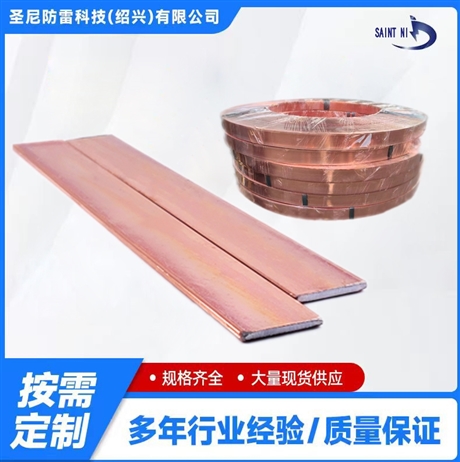

Copper clad steel flat steel, copper coated steel flat steel, copper plated flat steel grounding wire
Category:
metallurgy/Profile/Flat steel
Model:
25*3/40*4/50*5
Brand:
SAINT NI
Material:
copper-clad steel
shape:
flat steel
Copper layer thickness:
0.254mm-1.0mm
conductivity:
≥20% IACS
tensile strength:
≥420 N/mm²
Surface Treatment:
Bright/Tin Plated
Execution Standard:
GB/T 21697-2008
Operating temperature:
-40℃~+80℃
Retail Price
10,000,000.00USD
重量
kg
- Product Description
-
Material copper-clad steel
shape flat steel
Copper layer thickness 0.254mm-1.0mm
conductivity ≥20% IACS
tensile strength ≥420 N/mm²
Surface Treatment Bright/Tin Plated
Execution Standard GB/T 21697-2008
Operating temperature -40℃~+80℃
Description :
Copper clad steel flat steel is a composite metal material in which a high conductivity pure copper layer is coated on the surface of a low carbon steel core through a special process. It mainly solves the problems of corrosion and short service life of traditional galvanized steel grounding bodies, as well as high cost and low strength of pure copper grounding bodies. This material combines the excellent conductivity of copper with the high mechanical strength of steel. Typical working conditions include substation grounding networks, communication base station lightning protection grounding, petrochemical facility anti-static grounding, and high-rise building lightning protection down conductors. Copper clad steel flat steel performs particularly well in environments with high soil resistivity or strong corrosiveness, significantly reducing grounding resistance, ensuring rapid leakage of lightning or fault currents into the ground, and ensuring the safety of electrical equipment and personnel.
The specification parameters of copper-clad steel flat steel usually include key indicators such as thickness, width, and copper layer thickness. Common specifications include 30mm × 3mm, 40mm × 4mm, 50mm × 5mm, etc. The thickness of the copper layer is generally between 0.254mm and 1.0mm, and can be customized according to industry standards or customer needs. The manufacturing process often adopts horizontal continuous casting or electroplating methods to ensure intermolecular bonding between the copper layer and the steel core, without interface gaps, thereby ensuring good conductivity continuity and tensile strength. Refer to relevant international and domestic standards such as GB/T 21697-2008 "Copper Clad Steel Flat Wire" or IEEE Std 80 for implementation standards. The surface of the material should be smooth and flat, without defects such as cracks, peeling, burrs, etc. The copper layer should be uniform and dense, and should not crack or fall off after bending test.
When selecting copper-clad steel flat steel, it is important to consider the corrosion level of the operating environment, the required current carrying capacity, and mechanical strength requirements. Suitable for strongly corrosive soil, high salt spray areas, and places with long-term requirements for grounding life, such as coastal power facilities, chemical plant areas, etc. If the environmental corrosiveness is extremely low and the budget is limited, hot-dip galvanized flat steel can be considered; If there is an extreme requirement for conductivity and it is not limited by cost, pure copper bars can be used. Compared with pure copper, copper-clad steel flat steel has higher tensile strength, is less prone to deformation, and is suitable for direct burial laying; Compared with galvanized steel, its corrosion resistance life can reach more than 30 years and the maintenance free period is long. When selecting, attention should also be paid to the connection method. It is recommended to use exothermic welding or specialized copper wire clamps to ensure stable and reliable contact resistance.
When installing copper-clad steel flat steel, it should be laid along the grounding trench, kept straight, and avoid sharp bends. The turning radius should not be too small to prevent the copper layer from breaking. The connection must be handled properly, and during exothermic welding, the mold must be dried and cleaned to ensure that the welding points are full and free of pores. In daily maintenance, regularly check whether there is oxidation, looseness or mechanical damage to the grounding outlet and connection parts, especially before and after thunderstorm season. If partial damage to the copper layer is found, anti-corrosion repair should be carried out in a timely manner to prevent accelerated corrosion of the steel core after exposure. Common faults include abnormally high grounding resistance, often caused by poor connections or dry soil. They can be eliminated by watering to reduce resistance or checking the connection points. Reasonable construction and maintenance can ensure the long-term stable operation of copper-clad steel flat steel.
AfterSalesService :
Key words: