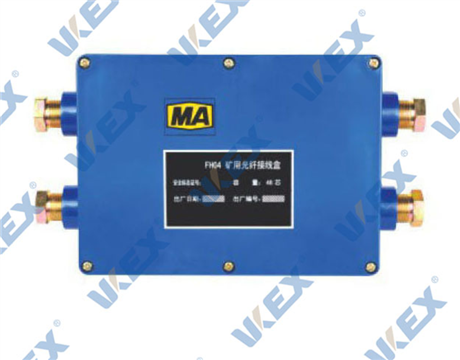

JHH series mining intrinsic safety circuit junction box 2/3/4 way explosion-proof connection
Category:
Electrical Engineering/Explosion proof electrical appliances/Explosion proof junction box
Model:
JHH-2A/JHH-3A/JHH-4A
Brand:
Weiken
Applicable Environment:
Flammable and explosive places underground in coal mines
Explosion-proof type:
intrinsically safe
Shell material:
Engineering plastics/alloys
Protection rating:
IP54
wiring method:
terminal crimping
Number of inlet ports:
2/3/4 communication
Operating temperature:
-20℃~+40℃
relative humidity:
≤95%
Retail Price
10,000,000.00USD
重量
kg
- Product Description
-
Applicable Environment Flammable and explosive places underground in coal mines
Explosion-proof type intrinsically safe
Shell material Engineering plastics/alloys
Protection rating IP54
wiring method terminal crimping
Number of inlet ports 2/3/4 communication
Operating temperature -20℃~+40℃
relative humidity ≤95%
Description :
The JHH series mining intrinsic safety circuit junction box is a signal and power connection device designed specifically for flammable and explosive environments in coal mines. This device is mainly used for the branching, merging, and switching of intrinsically safe circuits, solving the problem of complex line branching in underground communication, monitoring, and control systems. By standardizing the wiring terminal structure, it ensures stable transmission of multiple signals in narrow spaces, suitable for electrical connection requirements in dangerous working conditions such as gas and coal dust, and guarantees the continuous operation of mine automation systems.
The outer shell of the junction box is usually made of high-strength engineering plastic or lightweight alloy material, which has excellent impact resistance, corrosion resistance, and anti-static performance. The execution standard complies with the MT/T related specifications for electrical equipment used in coal mines, with a protection level usually reaching IP54 or above, and is suitable for humid and dusty environments underground. The internal wiring terminals adopt copper tin plating process, with low contact resistance and stable conductivity. The structural design is compact, and the sealing gasket is made of anti-aging rubber to ensure the sealing of the shell after closure, prevent external dust and water vapor from entering the internal circuit, and meet the strict technical requirements of intrinsically safe mining equipment.
When selecting, the corresponding model should be chosen based on the actual number of connections: JHH-2A is suitable for two-way branches, JHH-3A is suitable for three-way branches, and JHH-4A is suitable for four-way branches. Purchasing personnel should confirm whether the input voltage level and current load are within the range indicated on the nameplate, and overloading is strictly prohibited. Compared with ordinary junction boxes, intrinsic safety circuit junction boxes focus on limiting circuit energy and preventing the generation of electrical sparks that can ignite explosive gases. Therefore, they cannot be mixed with non intrinsic safety equipment. If high-power power cables need to be connected, explosion-proof junction boxes should be selected instead of such intrinsically safe distribution boxes.
During installation, it is necessary to ensure that the inlet and outlet sealing rings are intact, and the outer diameter of the cable should match the aperture of the sealing ring. Tighten the compression nut to achieve effective sealing. During daily maintenance, it is necessary to regularly check whether the shell has cracks or deformations, whether the fasteners are loose, and whether the grounding terminal is reliably connected. Common faults include poor contact caused by oxidation of wiring terminals, aging of sealing rings leading to water ingress, etc. If abnormalities are found, corresponding components should be replaced in a timely manner. When cleaning, use a dry cloth to wipe and avoid using chemical solvents to corrode the casing. Keep the markings clear and ensure accurate identification of the route during the mine maintenance cycle.
AfterSalesService :
Key words:
More Products