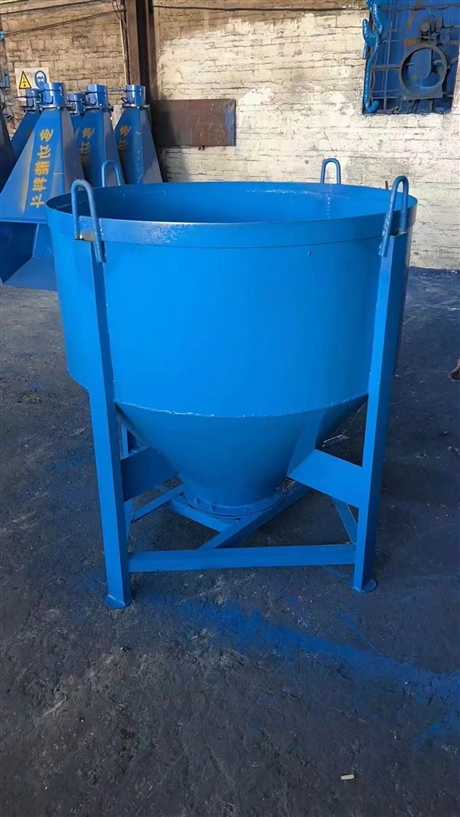

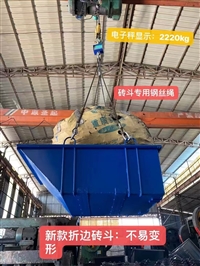
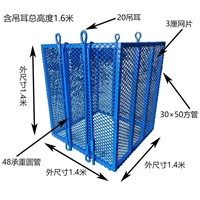
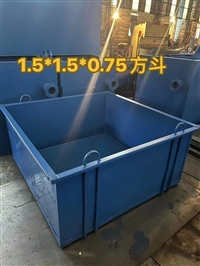
Construction site specific thickened steel plate hopper square hopper supports customized size and durability
Category:
building materials/Construction materials/Other construction materials
Model:
01
Brand:
Suicheng Metal
Material:
Q235B carbon structural steel
workmanship:
Welding forming/spray coating treatment
Applicable Scenarios:
Construction site/mixing plant/warehouse
Product Type:
Square bucket/funnel/hopper
Surface Treatment:
Rust proof spray paint
structural characteristics:
Thickened base plate/reinforced rib support
customized service:
Support size customization
connection method:
Lifting ear/bottom flange
Retail Price
10,000,000.00USD
重量
kg
- Product Description
-
Material Q235B carbon structural steel
workmanship Welding forming/spray coating treatment
Applicable Scenarios Construction site/mixing plant/warehouse
Product Type Square bucket/funnel/hopper
Surface Treatment Rust proof spray paint
structural characteristics Thickened base plate/reinforced rib support
customized service Support size customization
connection method Lifting ear/bottom flange
Description :
Hopper is a common material transfer and temporary storage equipment in construction sites, concrete mixing plants, and warehousing logistics. It is mainly used for vertical or horizontal transportation and transfer of bulk materials such as sand, cement, and aggregates. This category of products uses gravity or mechanical assistance to transport loose materials from high places into lower containers or transportation vehicles, effectively solving problems such as low manual handling efficiency, high dust pollution, and material scattering waste. Typical working conditions include floor fabric distribution with tower crane coordination, buffering at the loading port of the mixing plant, and bulk cargo sorting in the warehouse. This product covers various forms such as square buckets and funnels, adapting to different site spatial layouts and material flow characteristics, ensuring continuous and stable construction processes, and is a key auxiliary tool for improving the level of on-site mechanized operations.
This series of hoppers usually use high-quality carbon structural steel of Q235B and above grade as the main material, and the thickness of the plate is usually selected between 3mm and 8mm according to the volume size to ensure structural integrity under high-strength impact loads. The production process involves laser cutting, bending forming, and carbon dioxide gas shielded welding. The weld seam is required to be full and uniform, without slag inclusion or porosity. Key stress areas are reinforced with welding ribs to resist deformation. After sandblasting and rust removal treatment, the surface is sprayed with anti rust primer and wear-resistant topcoat to enhance corrosion resistance and service life. Refer to the JB/T relevant specifications for mining or construction machinery components, and undergo full load static load testing before leaving the factory to ensure that there is no permanent plastic deformation at the rated capacity, meeting the long-term use requirements in harsh environments on construction sites.
When selecting, the effective volume and opening size of the hopper should be determined based on the specific material particle size, density, and daily throughput. For fine sand cement with good fluidity, a funnel design with a larger cone angle can be used to prevent material blockage; For large stones or construction waste, a square bucket structure with a spacious bottom opening and steep side wall angles should be selected. If the on-site space is limited, non-standard sizes need to be customized to adapt to specific mechanical equipment interfaces. Compared to ordinary plastic buckets or simple metal boxes, metal hoppers have higher impact resistance and high temperature resistance, making them suitable for scenarios involving welding sparks or high-temperature materials. Not applicable scenarios include long-term storage of strong acid and strong alkali corrosive liquids, which require the use of special hoppers made of stainless steel or lined with anti-corrosion coatings. Ordinary carbon steel materials are prone to rapid corrosion perforation.
During installation, it is necessary to ensure that the hopper base is firmly connected to the supporting structure, and spring washers should be installed on the anchor bolts to prevent vibration and loosening. During use, it is recommended to avoid overloading and directly impacting the center of the bucket bottom with sharp heavy objects. It is suggested to install buffer pads or grilles to disperse the impact force. The focus of daily maintenance is to regularly check whether there are signs of cracking in the welds, especially in the stress concentration area around the bottom discharge port. If any damage to the paint surface is found, it should be repaired in a timely manner to prevent rusting and expansion. Common faults include blockage of the discharge port, which can be solved by installing vibration motors or air cannon devices; If structural deformation occurs, it should be immediately stopped from use and corrected or replaced. It is strictly prohibited to operate with defects to avoid overturning accidents. Regular cleaning of accumulated materials can maintain the best working condition of the equipment.
AfterSalesService :
Key words: