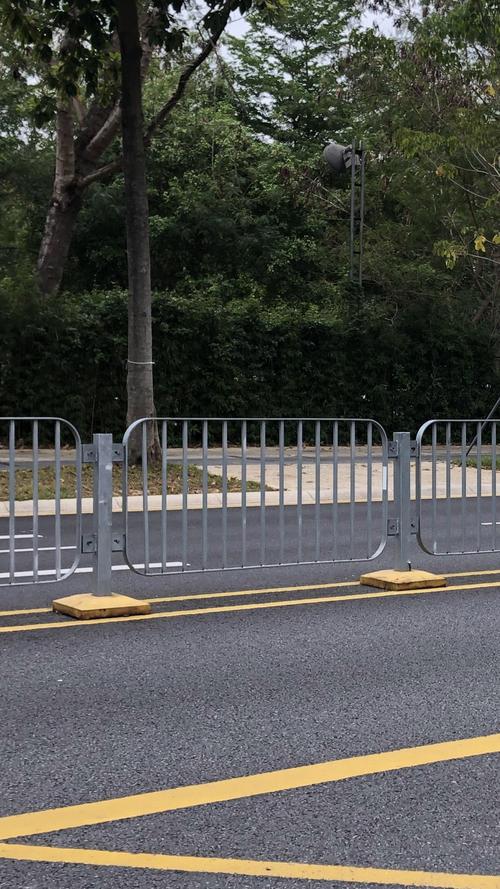

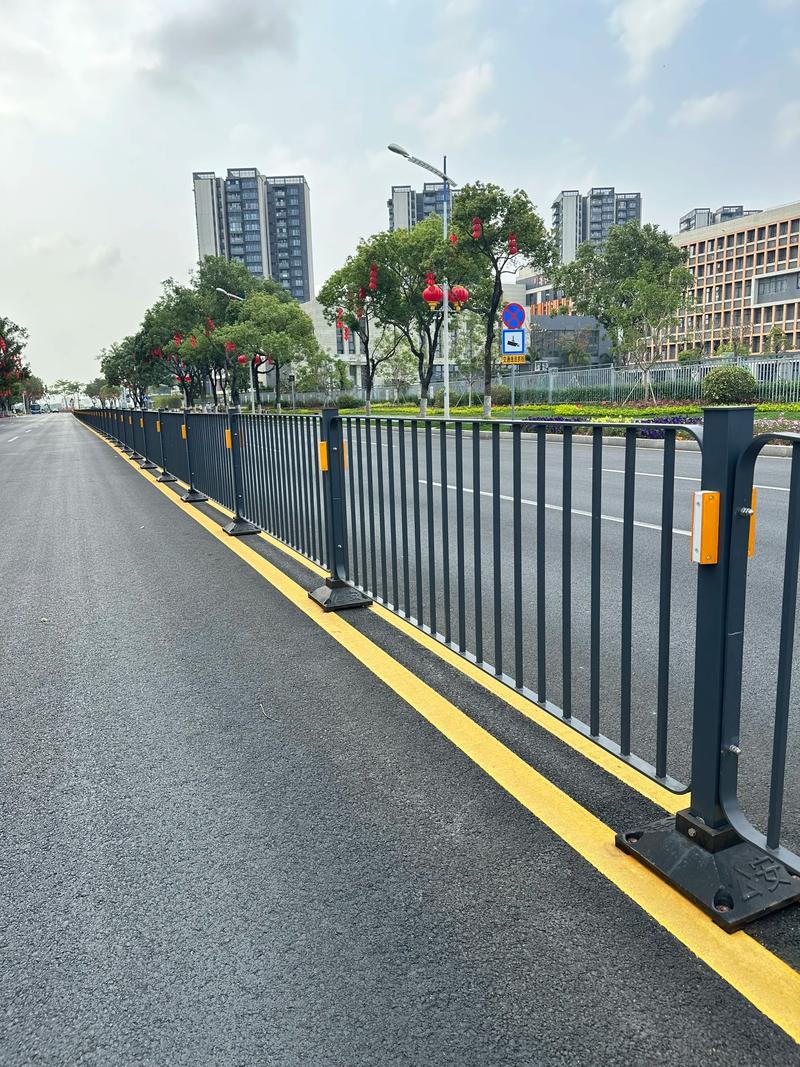
Hong Kong style guardrails, municipal road barriers, hot-dip galvanized spray painted anti-collision fences
Category:
Security/Traffic safety equipment/Guardrail and guardrail net
Model:
01
Brand:
Suicheng
Material:
Q235 steel pipe
Surface Treatment:
Hot dip galvanizing+electrostatic spraying
Column specifications:
80*80*3.0mm
Beam specifications:
80*40*2.5mm
color:
White/Blue/Yellow
Anti corrosion period:
Over 10 years
Installation Method:
Flange fixing/pre embedded
Scope of Application:
Municipal roads/highways
Retail Price
10,000,000.00USD
重量
kg
- Product Description
-
Material Q235 steel pipe
Surface Treatment Hot dip galvanizing+electrostatic spraying
Column specifications 80*80*3.0mm
Beam specifications 80*40*2.5mm
color White/Blue/Yellow
Anti corrosion period Over 10 years
Installation Method Flange fixing/pre embedded
Scope of Application Municipal roads/highways
Description :
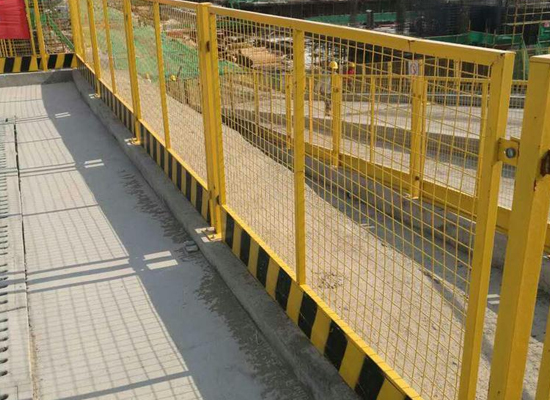
Port style guardrails are metal isolation facilities widely used in urban road traffic management, mainly for separating motor vehicle lanes from non motor vehicle lanes, protecting central median strips, and guiding traffic at intersections. Its core design draws on the structural characteristics of traffic barriers in Hong Kong, with advantages such as stable structure, good transparency, and minimal visual interference. It can effectively regulate driving order, prevent vehicles from turning around or crossing at will, and ensure pedestrian safety. This category is usually installed on urban main roads, expressways, and highway sections, adapting to various complex climate conditions, and is an important component of modern smart city transportation infrastructure construction.
The specifications and parameters of Hong Kong style guardrails are usually customized according to national standards or local traffic facility specifications. Common columns are made of square or circular steel pipes, with a wall thickness generally between 2.0mm and 3.0mm. Horizontal beams are often made of elliptical or rectangular pipes, fixed with specialized connectors. The mainstream surface treatment process is hot-dip galvanizing and electrostatic spraying. The thickness of the galvanized layer needs to reach 60 μ m or more to ensure anti-corrosion performance. The spraying color is mostly white, blue or yellow, which meets the requirements of traffic reflective signs. Some high-end products may be equipped with contour labels or attached reflective films, which have a significant reflective effect at night. The overall structure needs to undergo impact resistance testing to ensure that it does not undergo severe deformation or fracture under minor vehicle collisions.
When selecting harbor style guardrails, it is important to consider road grade, traffic speed, and installation environment. For high-speed sections, reinforced columns and thickened crossbeams should be selected to improve the collision resistance level; For ordinary roads in urban areas, standard types can be selected to balance aesthetics and cost. Attention should be paid to the differences between Hong Kong style guardrails, Beijing style guardrails, and American style guardrails: Hong Kong style guardrails place more emphasis on horizontal continuity and bottom closure, and have better anti climbing effects. Not applicable scenarios include temporary construction enclosures (mobile water horses are recommended) or landscape areas with high transparency requirements. When purchasing, it is necessary to clarify details such as column spacing, number of crossbeams, and whether the base is included to avoid dimensional deviations during installation.
The installation of Hong Kong style guardrails is usually fixed with flange bolts or welded with embedded parts. Before construction, it is necessary to ensure that the strength of the foundation concrete meets the standard. In daily maintenance, surface dust and stains should be regularly cleaned to maintain clear and visible reflective markings. If coating peeling or component deformation is found, it should be repaired or replaced in a timely manner to prevent corrosion from spreading and affecting the structural strength. In typhoon or rainy areas, it is necessary to check the fastening of the base bolts to prevent loosening. Common faults include loose connectors, detached reflective film, etc. It is recommended to conduct a comprehensive inspection every six months to ensure that transportation facilities are always in good working condition and extend their service life.
AfterSalesService :
Key words: