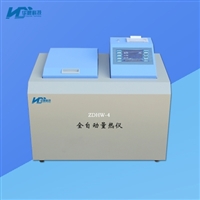

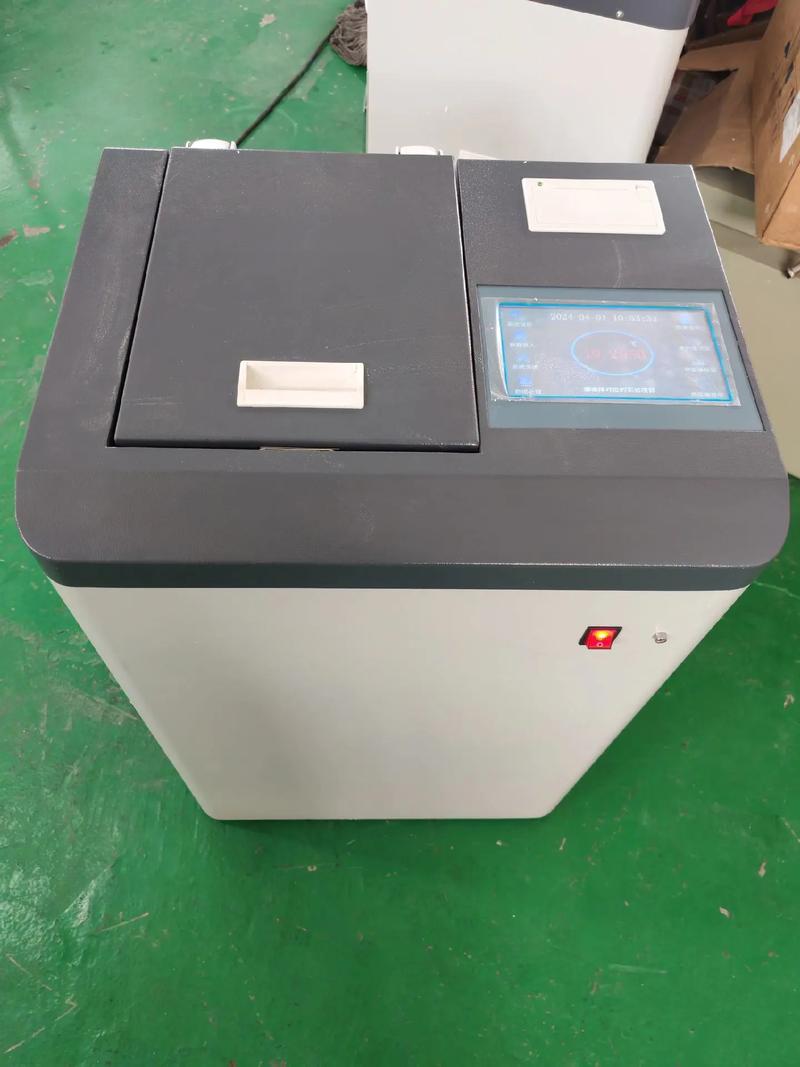
High precision microcomputer fully automatic calorimeter for detecting the calorific value of coal and petroleum
Category:
Instrumentation/Analytical instruments/Calorimeter
Model:
HCHW-6
Brand:
Huachen Technology
Temperature measurement range:
0-50℃
Temperature Resolution:
0.0001℃
Precision of heat capacity:
≤0.20%
Test time:
10-15 minutes per session
Oxygenation pressure:
2.8-3.0MPa
power supply voltage:
AC 220V±10% 50Hz
Ignition voltage:
DC 12-24V
Execution Standard:
GB/T213-2008
Retail Price
10,000,000.00USD
重量
kg
- Product Description
-
Temperature measurement range 0-50℃
Temperature Resolution 0.0001℃
Precision of heat capacity ≤0.20%
Test time 10-15 minutes per session
Oxygenation pressure 2.8-3.0MPa
power supply voltage AC 220V±10% 50Hz
Ignition voltage DC 12-24V
Execution Standard GB/T213-2008
Description :
A calorimeter is a professional laboratory instrument used to determine the calorific value of solid or liquid fuel combustion, mainly solving the problem of accurate measurement of the calorific value of energy substances such as coal, coke, petroleum, biomass, etc. Typical operating conditions include acceptance of incoming coal from thermal power plants, quality control of coal powder in cement plants, issuance of reports by third-party testing agencies, and research on thermal performance of materials by scientific research institutions. This device uses the oxygen bomb combustion method to completely burn the sample in a high-pressure oxygen environment, absorbs and releases heat using a calorimeter system, and calculates the temperature rise to obtain high-level and low-level heat generation. It is an important basis for energy trading settlement and quality grading.
In terms of specifications, calorimeter usually adopts stainless steel double-layer water jacket or single cylinder structure, equipped with high-precision platinum resistance temperature sensor, with a temperature measurement resolution of up to 0.0001 ℃. The implementation standards comply with international standards such as GB/T213-2008 "Method for determination of calorific value of coal" and ASTM D5865. The relative standard deviation of common heat capacity tests is ≤ 0.20%, and the single test time is usually around 10-15 minutes (fast method) or longer (classical method). The ignition voltage is generally 12V-24V, and the oxygenation pressure is stable between 2.8MPa-3.0MPa. The host is often equipped with a microcomputer control system, which supports automatic water injection, automatic mixing, automatic ignition, and automatic data correction. Some high-end models have automatic printing and online uploading functions.
When selecting, it is necessary to specify the type of test sample, such as anthracite, bituminous coal, brown coal, heavy oil, or solid waste. Different samples have subtle requirements for the material of the oxygen bomb and the amount of water in the inner cylinder. If the sulfur content of the sample is high, it is necessary to confirm whether it is equipped with a desulfurization device or a correction algorithm. For power plants or coal mines with a large daily testing volume, it is recommended to choose a fully automatic calorimeter with dual or multiple parallel testing barrels to improve efficiency; For small laboratories or occasional testing, semi-automatic or manual calorimeters are more cost-effective. Attention should be paid to the difference between calorimeter and industrial analyzer. The former focuses on calorific value, while the latter covers moisture, ash, and volatile matter. When purchasing, avoid confusion. In addition, it is necessary to consider the temperature stability of the laboratory environment, preferably equipped with a constant temperature chamber or air conditioning to ensure that the baseline temperature fluctuation is less than 1 ℃.
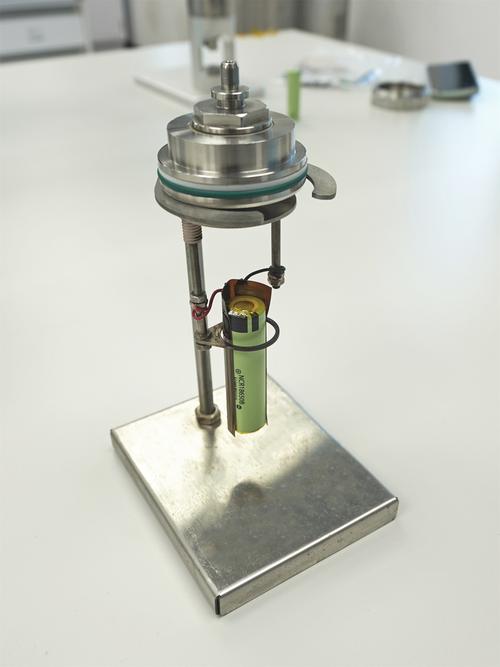
When installing the calorimeter, it should be placed on a test bench without direct sunlight or strong airflow interference, ensuring good power grounding. The focus of daily maintenance is on the cleaning and sealing inspection of the oxygen bomb. After each test, the oxygen bomb cup and electrode need to be cleaned, and the sealing ring needs to be replaced regularly to prevent air leakage. The connection status of the mixing motor and ignition wire should be regularly checked to avoid poor contact that may cause test failure. Distilled or deionized water should be used for the inner cylinder water to prevent scaling from affecting the thermal conductivity efficiency. Common faults include ignition failure, abnormal temperature rise, or large result deviation, often caused by insufficient oxygen pressure, sample weighing errors, or temperature sensor drift. Calibration and maintenance should be carried out according to the operating manual to ensure long-term stable operation of the calorimeter.
AfterSalesService :
Key words: