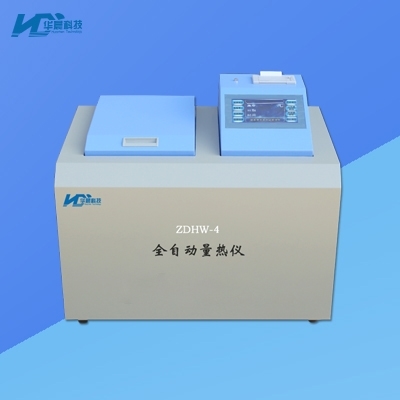

Fully automatic intelligent calorimeter, high-precision coal calorific value detection instrument
Category:
Instrumentation/Analytical instruments/Calorimeter
Model:
HCHW-6
Brand:
Huachen Technology
Temperature measurement range:
0-50℃
Temperature measurement resolution:
0.0001℃
Precision of heat capacity:
≤0.1%
Test time:
10-15 minutes/sample
Oxygen bomb capacity:
300ml
Oxygenation pressure:
2.8-3.0MPa
power supply voltage:
AC 220V±10% 50Hz
Total machine power:
≤100W
Execution Standard:
GB/T 213-2008
Retail Price
10,000,000.00USD
重量
kg
- Product Description
-
Temperature measurement range 0-50℃
Temperature measurement resolution 0.0001℃
Precision of heat capacity ≤0.1%
Test time 10-15 minutes/sample
Oxygen bomb capacity 300ml
Oxygenation pressure 2.8-3.0MPa
power supply voltage AC 220V±10% 50Hz
Total machine power ≤100W
Execution Standard GB/T 213-2008
Description :
A calorimeter is a specialized analytical instrument used to determine the calorific value of solid or liquid fuel combustion, mainly solving the problem of accurate measurement of the calorific value of energy substances such as coal, coke, and petroleum. This equipment is typically used in thermal power plants, coal mining enterprises, cement plants, and third-party testing laboratories. It converts the chemical energy of the sample into thermal energy through oxygen bomb combustion method, and captures the temperature rise changes with high-precision temperature sensors to calculate the high and low heating values. It is the core testing equipment for energy trade settlement and quality control.
Calorimeters usually adopt a double-layer water jacket or constant temperature structure design to ensure the balance between the inner cylinder water temperature and the ambient temperature, reducing heat exchange errors. The core components include stainless steel oxygen bombs, precision Beckman thermometers or high-resolution digital temperature probes, automatic oxygenation devices, and stirring systems. The implementation standards follow international standards such as GB/T 213-2008 "Method for determination of calorific value of coal" and ASTM D5865. The typical testing accuracy can reach within 0.1%, the repeatability error is less than 120J/g, the temperature measurement resolution is usually 0.0001 ℃, and it has automatic ignition, automatic mixing, automatic calculation and printing functions. Some high-end models support networked data management.
When selecting, attention should be paid to the degree of automation and testing efficiency. The semi-automatic calorimeter requires manual water injection and sample weighing, making it suitable for small-scale laboratories; The fully automatic calorimeter has automatic water injection, drainage, and temperature control functions, suitable for large-scale sample testing. If the sample has a high sulfur content, a corrosion-resistant oxygen bomb should be selected. Compared with industrial analyzers, calorimeters specialize in calorific value indicators and do not include the determination of moisture, ash content, and volatile matter. If full element analysis is required, it is recommended to use them in conjunction with industrial analyzers. When purchasing, it should be confirmed whether standard benzoic acid is used to calibrate the heat capacity, and whether the software supports custom formula correction.
The installation of the calorimeter should be placed in a separate room without strong airflow, direct sunlight, and small temperature fluctuations. The room temperature should be controlled between 15-30 ℃. The focus of daily maintenance is on checking the airtightness of the oxygen bomb. After each test, the oxygen bomb cup and electrode need to be cleaned to prevent corrosion. Regularly replace the inner cylinder water, keep the water quality clean, and avoid microbial growth that affects heat conduction. Common faults include ignition failure and abnormal temperature rise, often caused by poor contact of the ignition wire or leakage of oxygen bombs. It is necessary to regularly check the aging of the sealing ring. When the instrument is not in use for a long time, the water circuit should be emptied and kept dry to extend its service life.
AfterSalesService :
Key words: