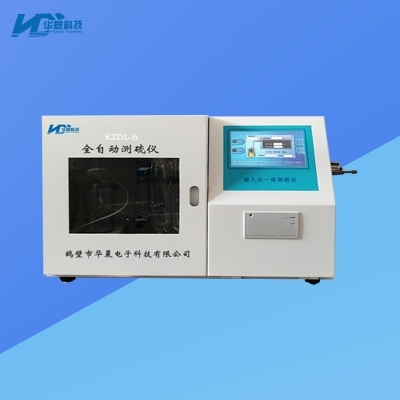

Automatic sulfur analyzer Coulombic titration method for detecting sulfur content in coal coke
Category:
Instrumentation/Analytical instruments/Sulfur analyzer
Model:
HCDL-6
Brand:
Huachen Technology
Measurement principle:
Coulombic titration method
Temperature control range:
Room temperature -1300 ℃
Temperature measurement accuracy:
±5℃
Sulfur determination range:
0.01%-10%
Test time:
3-5 minutes/sample
Carrier gas flow rate:
1000mL/min
power supply voltage:
AC 220V±10% 50Hz
Total machine power:
≤2000W
Execution Standard:
GB/T 214-2007
Retail Price
10,000,000.00USD
重量
kg
- Product Description
-
Measurement principle Coulombic titration method
Temperature control range Room temperature -1300 ℃
Temperature measurement accuracy ±5℃
Sulfur determination range 0.01%-10%
Test time 3-5 minutes/sample
Carrier gas flow rate 1000mL/min
power supply voltage AC 220V±10% 50Hz
Total machine power ≤2000W
Execution Standard GB/T 214-2007
Description :
A sulfur analyzer is a specialized analytical instrument used to determine the total sulfur content in solid fuels such as coal, coke, and petroleum coke. This device mainly solves the problems of cumbersome and time-consuming operation in traditional chemical analysis methods. By combining high-temperature combustion with Coulomb titration, it achieves rapid quantitative detection of sulfur elements in samples. Typical operating conditions include coal quality monitoring for thermal power plants, product quality inspection for coking plants, routine testing by third-party testing agencies, and material analysis by research institutes. The sulfur analyzer can adapt to sample testing with different sulfur content ranges, ensuring accurate and reliable data. It provides key data support for combustion efficiency calculation, environmental emission assessment, and trade settlement, and is an indispensable basic testing equipment in fuel quality management.
The core specifications of the sulfur analyzer involve temperature control of the high-temperature cracking furnace, electrolytic cell capacity, and gas flow stability. The usual operating temperature is set between 1150 ℃ and 1250 ℃ to ensure complete conversion of sulfides in the sample to sulfur dioxide. Refer to relevant international standards such as GB/T 214-2007 "Determination of Total Sulfur in Coal" or ASTM D4239 for the execution of standards. The equipment is equipped with a high-precision electronic balance interface, with a weighing accuracy of up to 0.1mg, an electrolytic current measurement range covering 0-100mA, and a resolution of 0.1 μ A. The gas system adopts corrosion-resistant materials and the flow rate is controlled at around 1000mL/min to ensure that the sulfur dioxide generated by combustion is fully absorbed and participates in the electrolysis reaction. The overall power consumption of the machine is usually within 2kW, and the power requirement is AC 220V ± 10%, 50Hz. It has over temperature protection and gas cut-off alarm functions to ensure long-term stable operation in the laboratory environment.
When selecting a sulfur analyzer, it is necessary to clarify the sample type and testing frequency. For high or low sulfur samples such as coal and coke, a coulometric titration sulfur analyzer with a wide linear range and strong automatic calibration function should be selected; If you need to handle a large number of daily samples, prioritize fully automatic models with automatic sample delivery, automatic mixing, and automatic endpoint judgment to reduce manual intervention errors. Not applicable to special samples containing a large amount of halogen or heavy metal interference substances, which require pre-treatment or other analytical methods. Compared with infrared sulfur measurement method, Coulomb sulfur analyzer has lower initial investment, controllable maintenance cost, and is suitable for conventional industrial laboratories; The high-frequency infrared method is more suitable for rapid screening of ultra trace sulfur. The purchaser should pay attention to the convenience of cleaning the electrolytic cell, the lifespan of the temperature control module, and whether the software data export format meets the LIMS system docking requirements.
The installation of the sulfur analyzer should be placed on a well ventilated experimental platform without strong magnetic field interference. The exhaust pipe should be independently connected to the outdoor or purification device to avoid the harm of residual sulfur dioxide to personnel health. The focus of daily maintenance is on regular replacement of electrolyte and cleaning of electrode pads. It is recommended to check the color and pH value of the electrolyte after testing 50-100 samples, and replace it promptly if turbidity or failure is found. Common faults include slow heating rate, low results or drift, usually caused by thermocouple aging, gas path leakage or electrolytic electrode contamination. Regular temperature curve calibration and blank test verification are required. When not in use for a long time, the accumulated water in the air path should be drained, the power should be disconnected, and the electrolytic cell should be cleaned, dried, and stored to extend the overall service life of the sulfur analyzer and maintain the repeatability and accuracy of the detection data.
AfterSalesService :
Key words: