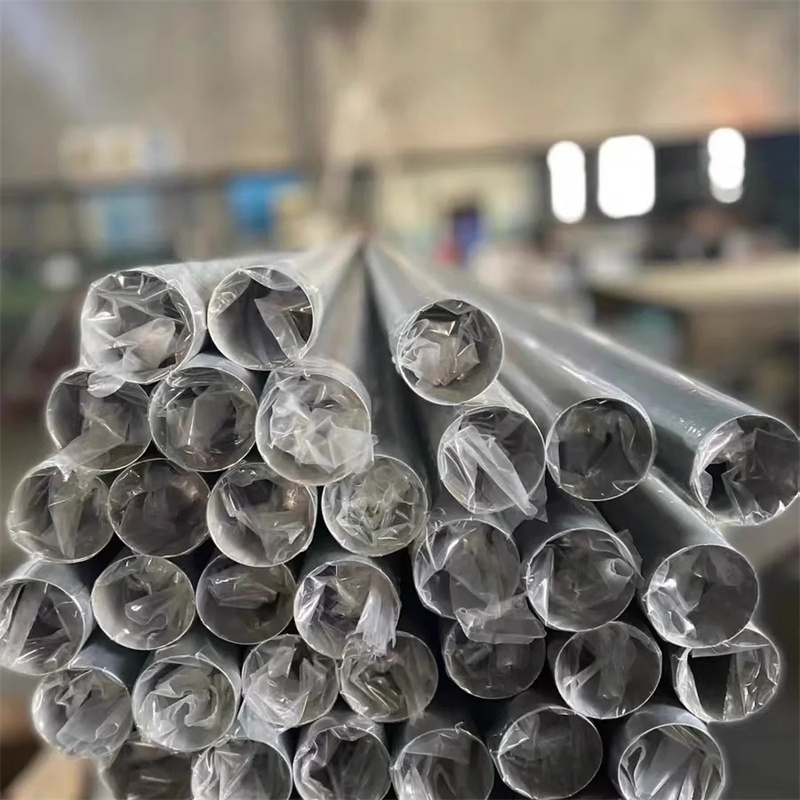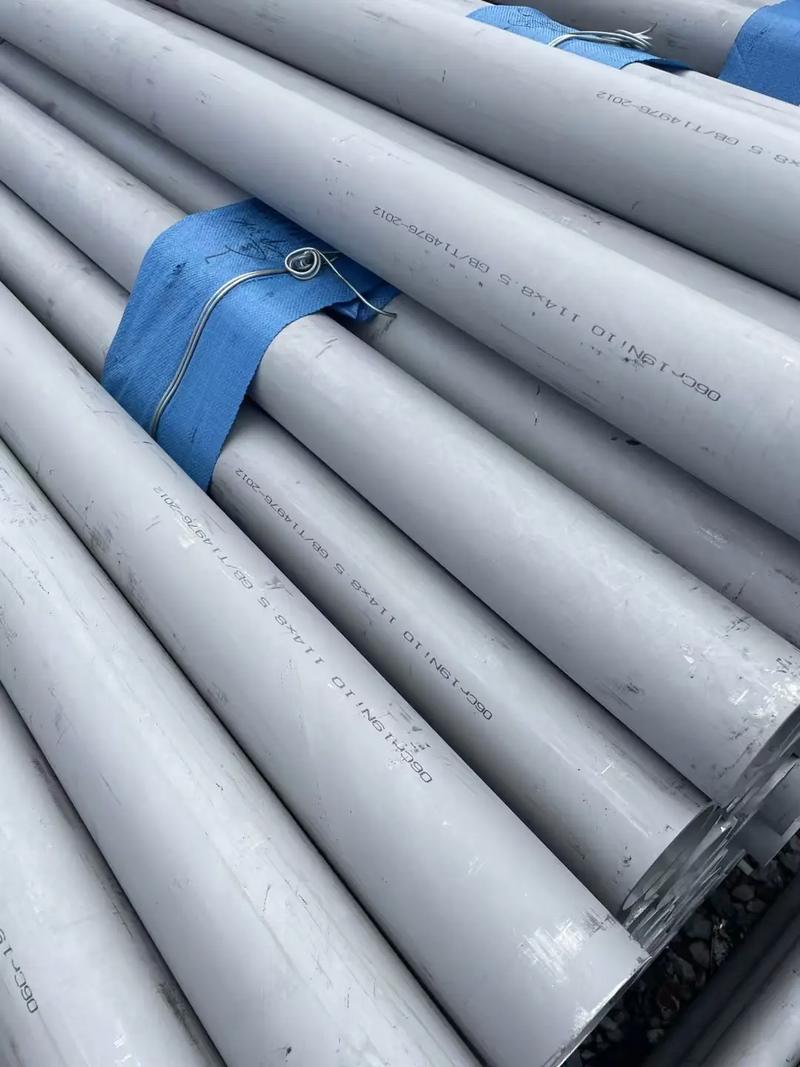

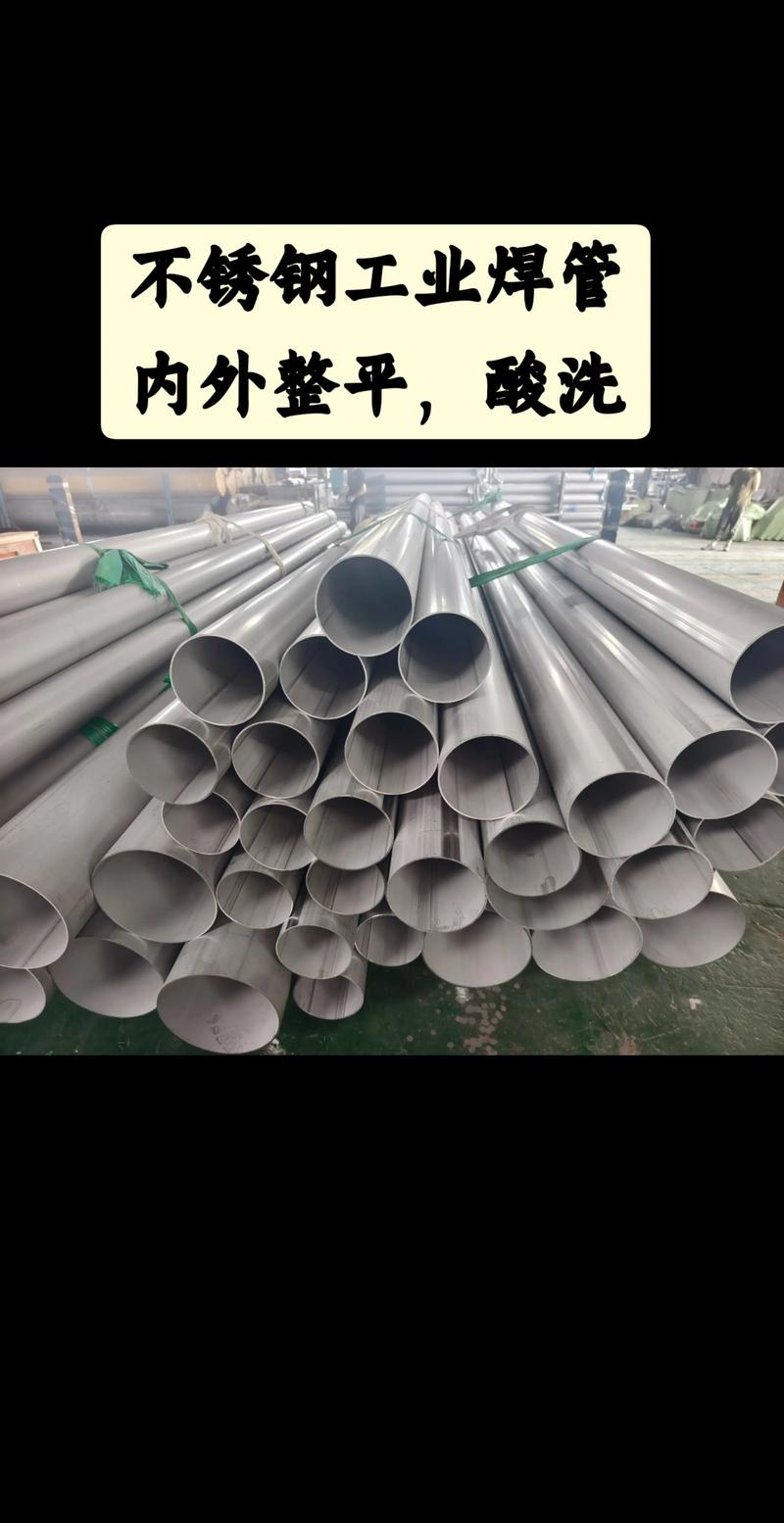
304 stainless steel industrial welded pipe, corrosion-resistant and high-temperature fluid transportation pipeline
Category:
metallurgy/Stainless steel pipes/Stainless steel straight seam welded pipe
Model:
01
Brand:
Shuo Kai
Material:
304/316L/201/2205/2507
Execution Standard:
GB/T 12771-2019
Outer diameter range:
Φ6-Φ630mm
Wall thickness range:
0.5-20mm
Surface Treatment:
Acid washing/polishing
connection method:
Welding/Flanges
Operating temperature:
-196℃~800℃
Retail Price
10,000,000.00USD
重量
kg
- Product Description
-
Material 304/316L/201/2205/2507
Execution Standard GB/T 12771-2019
Outer diameter range Φ6-Φ630mm
Wall thickness range 0.5-20mm
Surface Treatment Acid washing/polishing
connection method Welding/Flanges
Operating temperature -196℃~800℃
Description :
Stainless steel industrial welded pipe is a hollow long strip steel made by forming and welding stainless steel coils or strips. It is mainly used for fluid transportation and structural support in industries such as petroleum, chemical, natural gas, papermaking, food, and pharmaceuticals. This product solves the problems of corrosion, short service life, and high maintenance costs of traditional carbon steel pipelines, and is particularly suitable for working environments with high requirements for medium purity, corrosion resistance, and hygiene levels. As a modern industrial basic material, stainless steel industrial welded pipes have become a key link connecting various process equipment due to their excellent mechanical properties and chemical stability. They are widely used in complex pipeline systems ranging from room temperature to medium high temperature, and from atmospheric pressure to medium high pressure.
The specification range of stainless steel industrial welded pipes is wide, with common outer diameters ranging from 6mm to 630mm, and wall thicknesses typically between 0.5mm and 20mm. Specific dimensions can be customized according to national standards such as GB/T 12771-2019 "Stainless Steel Welded Steel Pipes for Fluid Transport" or GB/T 18704-2018 "Stainless Steel Composite Pipes for Structural Use". In terms of material, the mainstream choice is austenitic stainless steel such as 304, 304L, 316, 316L, and some special working conditions can also use heat-resistant steel grades such as 321 and 310S. The production process includes coil forming, automatic argon arc welding or plasma welding, online solution treatment, acid pickling and passivation, etc., to ensure that the weld quality is consistent with the properties of the base material. The surface condition can be divided into industrial surface, polished surface (such as 180 #, 320 #, 600 #), and BA surface. The standards are strictly enforced and require water pressure testing, eddy current testing, or X-ray inspection to ensure no leakage or defects.
When selecting stainless steel industrial welded pipes, it is important to consider the characteristics of the medium, working temperature, pressure rating, and installation environment. For general corrosive media and ambient temperature environments, 304 material can meet the requirements and has high cost-effectiveness; If the medium contains chloride ions or is in a marine atmospheric environment, it is recommended to use 316L material with better resistance to pitting corrosion. It should be noted that stainless steel industrial welded pipes have slightly lower wall thickness uniformity compared to seamless pipes, but they have a price advantage and are suitable for medium and low pressure fluid transportation; If ultra-high pressure or extreme low temperature conditions are involved, seamless pipes or special alloy pipes should be prioritized for evaluation. In addition, it is necessary to confirm the connection method of the pipeline (such as welding, flanges, clamps) to ensure compatibility with the existing pipeline system and avoid increased renovation costs due to improper selection.
The installation of stainless steel industrial welded pipes should use argon arc welding as the base and manual arc welding as the cover welding process, or use specialized clamping and groove type pipe fittings for connection. It is strictly prohibited to directly contact with ordinary carbon steel supports, and rubber pads or stainless steel isolation plates should be installed to prevent electrochemical corrosion. In daily maintenance, the surface of the pipeline should be regularly inspected for scratches, rust spots, or signs of medium leakage, especially at welds and bends. If slight corrosion is found on the surface, stainless steel specific cleaning agents or passivation paste can be used for treatment to restore its passivation film protective layer. When using cleaning agents containing chloride ions for long-term shutdown or pipeline cleaning, they should be avoided to prevent stress corrosion cracking. Proper installation and standardized maintenance can significantly extend the service life of stainless steel industrial welded pipes and ensure the safe and stable operation of the production system.
AfterSalesService :
Key words:
More Products