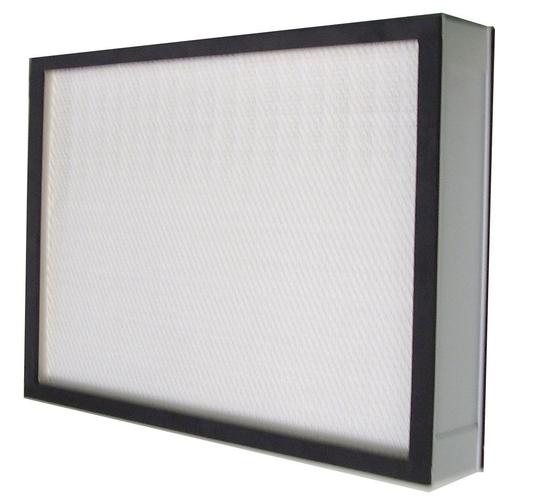

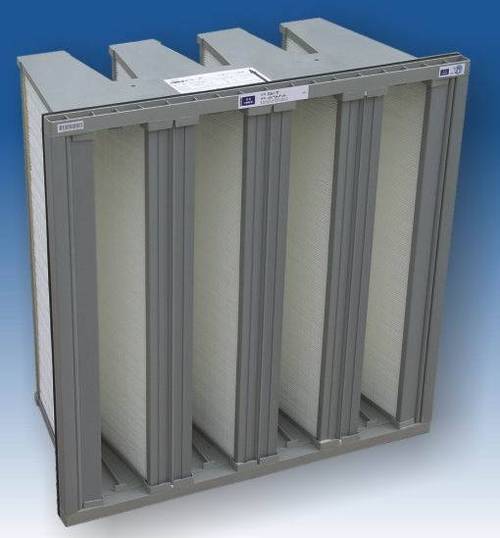
Hunan Changsha High Efficiency Filter Hunan Changsha Ultra fine Fiberglass High Efficiency Filter Hunan Changsha H13H14 Hundred level High Efficiency Filter
Category:
Environmental Protection/Filter material/Filter screen
Model:
H13/H14
Brand:
Chengjing High Tech
filtration efficiency:
H13:≥99.99% @0.3μm / H14:≥99.995% @0.3μm
filter material :
Ultra fine glass fiber filter paper
frame material:
Aluminum alloy/galvanized sheet/stainless steel
field delimiter :
Hot melt adhesive/aluminum foil separation
Temperature resistance:
≤80℃
Humidity resistance:
≤80% RH
Execution Standard:
GB/T 13554-2020
Detection method:
Scan leak detection one by one (PAO/DOP)
Initial Resistance:
≤ 220Pa (@ rated air volume)
Suggest replacing the resistance:
≤450Pa
Retail Price
10,000,000.00USD
重量
kg
- Product Description
-
filtration efficiency H13:≥99.99% @0.3μm / H14:≥99.995% @0.3μm
filter material Ultra fine glass fiber filter paper
frame material Aluminum alloy/galvanized sheet/stainless steel
field delimiter Hot melt adhesive/aluminum foil separation
Temperature resistance ≤80℃
Humidity resistance ≤80% RH
Execution Standard GB/T 13554-2020
Detection method Scan leak detection one by one (PAO/DOP)
Initial Resistance ≤ 220Pa (@ rated air volume)
Suggest replacing the resistance ≤450Pa
Description :
The high-efficiency filter is the core end filtration component in air purification systems, mainly used to capture tiny particles of 0.3 microns and above, such as dust, bacteria, viruses, and aerosols. This product is designed specifically for high cleanliness environments such as Class 100 and Class 1000. Through physical interception and diffusion, it ensures that the cleanliness of the air sent out meets strict standards. In working conditions such as pharmaceutical manufacturing, electronic chip production, operating rooms, and precision instrument laboratories that require extremely high air quality, high-efficiency filters play a decisive barrier role, effectively preventing cross contamination, ensuring the stability of production processes, and the qualification rate of products.
This series of high-efficiency filters usually uses ultra-fine glass fiber filter paper as the filtering medium, combined with hot melt adhesive or sealant for separation and folding, to increase the filtering area and reduce operating resistance. The frame material is commonly aluminum alloy, galvanized steel plate or stainless steel, which has good structural strength and corrosion resistance. In terms of implementing standards, it is necessary to comply with mainstream international and domestic standards such as GB/T 13554-2020 "High Efficiency Air Filters" or EN 1822. The filtration efficiency of H13 grade for 0.3 μ m particles is not less than 99.99%, while H14 grade is not less than 99.995%. Before leaving the factory, each unit needs to undergo a scanning leak test (PAO/DOP test) to ensure that there are no leakage points, and the air volume usually maintains a stable pressure drop at the rated wind speed.
When selecting, the specific specifications should be determined based on the design air volume, static pressure box size, and installation method of the clean room on site. H13 is suitable for end filtration in most cleanrooms ranging from Class 100 to Class 10000, while H14 is used in critical process areas with stricter cleanliness requirements, such as sterile filling lines or lithography rooms. If the humidity on site is high, it is recommended to choose hydrophobic filter paper or a model that has undergone special moisture-proof treatment. Compared with ordinary medium efficiency filters, high-efficiency filters have higher resistance and require corresponding power fan systems. For environments with chemically corrosive gases, it is necessary to confirm the tolerance of the frame sealing material to avoid leakage caused by aging of the sealant, which may affect the overall purification effect.
When installing an efficient filter, it is necessary to ensure a tight seal between the frame and the air supply outlet. Common methods include liquid tank sealing or gasket compression. After installation, on-site leak detection must be carried out again. In daily maintenance, the initial and final resistance of the filter should be regularly monitored. When the resistance reaches 1.5-2 times the initial resistance, it should be replaced in a timely manner to avoid insufficient air flow affecting cleanliness. It is strictly prohibited to use compressed air for reverse blowing and cleaning, as this will damage the structure of the fiberglass filter paper. When storing, it should be placed in a dry and ventilated place to avoid moisture or mechanical damage. The typical service life is affected by the front-end pre filtering effect and operating time. It is generally recommended that the service life can reach 1-3 years with good maintenance of the front-end medium efficiency filter.
AfterSalesService :
Key words:
More Products