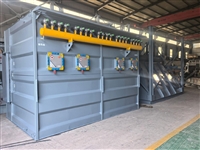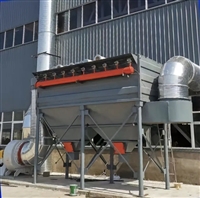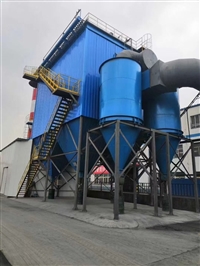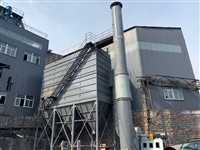
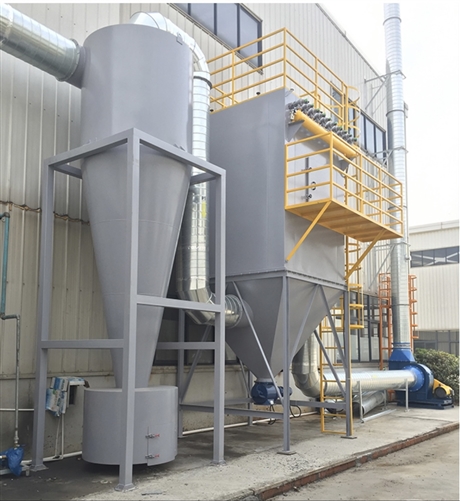

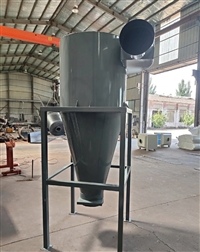
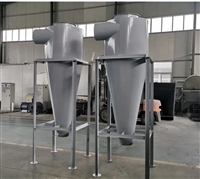
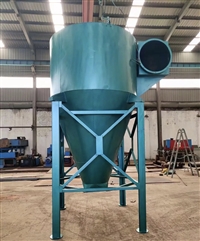
Cyclone dust collector Shakron dust collector
Category:
Environmental Protection/Filtering equipment/Demister
Model:
MCR-3000 type
Brand:
Yiguang
Retail Price
9,000,000.00USD
重量
kg
- Product Description
-
Description :
The cyclone dust collector is divided into suction type X-type and press in type Y-type. X-type and Y-type are further divided into N-type (left turn) and S-type (right turn) according to the rotation direction of the volute. When ordering, the inlet wind speed should be specified as 12-27/s.
Working principle of cyclone dust collector:
After the dust containing gas enters tangentially from the inlet, the gas undergoes rotational motion and the airflow is divided into upper and lower parts, forming a double vortex motion. The dust generates a strong separation effect at the bottom of the exhaust, which is the boundary between the double vortices. Finer and lighter dust particles are carried by the upper vortex airflow to the upper part, forming a strong rotating ash ring under the top cover, causing the aggregation of dust particles, and being led out from the upper opening of the specially designed bypass separation chamber. They are then introduced into the lower part of the dust collector cylinder through the spiral groove at the lower part of the bypass separation chamber, and converge with the internal airflow from the outer wall return air outlet of the dust collector. The dust is separated and falls into the ash hopper. The other part of the coarser and heavier dust particles are driven by the lower vortex airflow and undergo a similar process as the upper vortex airflow along the lower section of the dust collector, separating the dust and entering the ash hopper.
Selection of cyclone dust collector:
The basis for a cyclone dust collector is production capacity (gas flow rate), allowable pressure drop, dust properties, and required separation efficiency. When selecting, a balance should be made between low resistance and low resistance. Generally speaking, equipment with a large length to diameter ratio and small inlet and outlet cross-sections has high efficiency but high resistance, while equipment with a smaller length to diameter ratio has lower efficiency but lower resistance.
The size of dust removal equipment can be determined based on the gas processing capacity. By specifying the inlet gas velocity, the size of the cyclone dust collector inlet can be calculated, and its diameter can be determined proportionally. When there is a performance table, the applicable model can also be directly found based on the gas processing capacity. However, it should be noted that the larger the size within the same type, the lower the efficiency. Therefore, the separation performance of the equipment should be estimated based on its diameter D. If it does not meet the requirements, smaller diameter equipment should be used, and two or more devices should be operated in parallel;
In addition, the resistance and dust removal efficiency of the cyclone dust collector should be calculated, and the overall efficiency should be calculated based on the particle size efficiency curve of the type of dust removal equipment, as well as the particle size distribution and density data of the processed particulate materials. When the data is incomplete, it is necessary to estimate based on similar experimental results or actual production conditions.
When the amount of gas introduced into the cyclone dust collector is significantly reduced compared to the normal amount, its separation efficiency also decreases significantly due to the decrease in centrifugal force. Therefore, when arranging gas pipelines for cyclone separators operated in parallel, attention should be paid to ensuring that the amount of gas sent to each device is equal; Many small diameter cyclone dust collectors are connected in parallel to form a whole, installed in a shell called a cyclone dust collector group. Its separation effect is obviously better than that of a large cyclone dust collector that processes the same amount of gas. However, due to the difficulty in achieving uniform distribution of airflow and the tendency for ash discharge ports to communicate with each other, the efficiency cannot reach the level that a small device can achieve when used alone.
Generally, cyclone separators have low separation efficiency for particles below 5m, and can be separated by bag filters or wet dust removal devices.
AfterSalesService :
Key words:
More Products