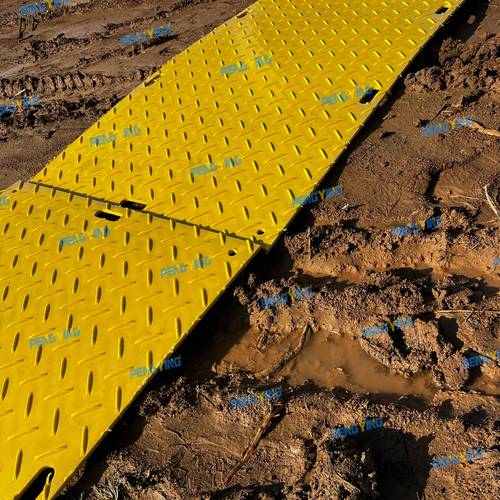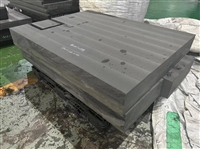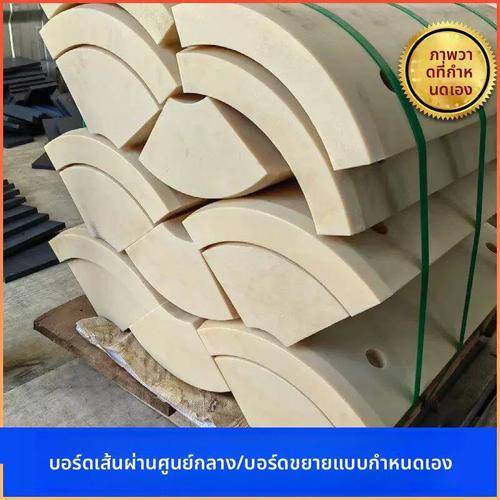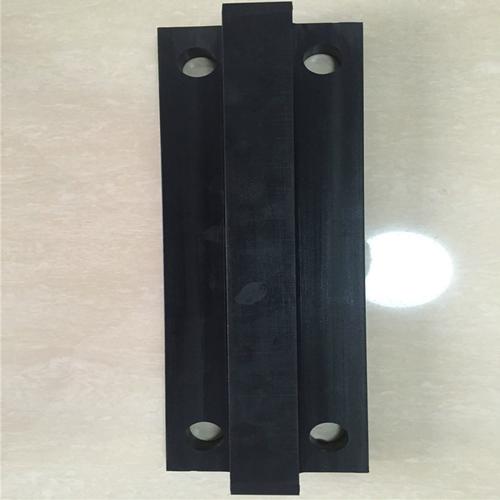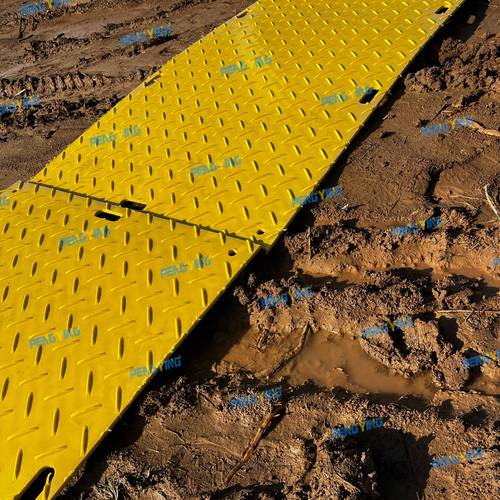

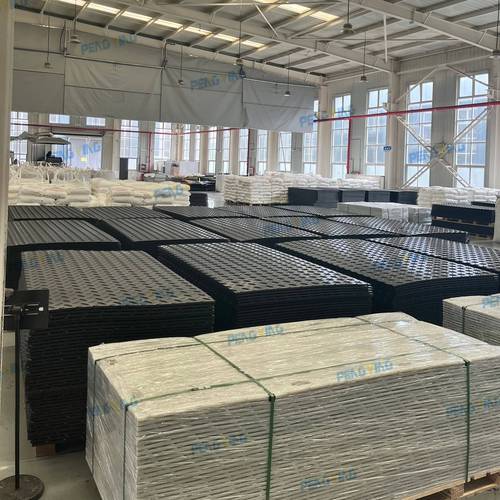
High strength polyethylene paving board, temporary road subgrade, wear-resistant and anti-skid engineering pad
Category:
Rubber and plastic/Plastic board/PE plastic board
Model:
1.22*2.44*10/1.22*2.44*15/1.22*2.44*20/1.22*2.44*25/1.22*2.44*30/1.22*2.44*35/1.22*2.44*40
Brand:
Shandong Huaqing Fuheng Plastic Industry Technolog
Material:
High molecular weight polyethylene (HDPE)
Common sizes:
1220*2440
thickness range:
10mm-40mm
density:
0.93-0.97g/cm³
Operating temperature:
-50 ℃ to 80 ℃
surface process:
Anti slip texture treatment
compressive strength:
≥20MPa
color:
Black/Green/Orange (customizable)
Retail Price
10,000,000.00USD
重量
kg
- Product Description
-
Material High molecular weight polyethylene (HDPE)
Common sizes 1220*2440
thickness range 10mm-40mm
density 0.93-0.97g/cm³
Operating temperature -50 ℃ to 80 ℃
surface process Anti slip texture treatment
compressive strength ≥20MPa
color Black/Green/Orange (customizable)
Description :
Polyethylene paving board is a heavy-duty temporary road paving board made of high molecular weight polyethylene material through molding or extrusion technology, mainly used to solve the problem of difficult passage for heavy vehicles on soft ground, muddy wetlands or complex terrain. It is widely used in construction sites, oil drilling platforms, temporary parking lots, and large event venues, which can effectively disperse vehicle loads, prevent wheel sinking, and protect the original ground structure from damage. As an indispensable auxiliary material for roadbed in modern engineering construction, polyethylene paving board significantly reduces construction costs and time investment due to its lightweight, high strength, corrosion resistance, and reusability, making it an ideal choice to replace traditional steel plate paving.
This substrate usually has a standard rectangular size, commonly measuring 1.22 meters * * 2.44 meters, with a thickness generally between 10mm and 40mm, and can be customized according to load-bearing requirements. The surface of the material has undergone special anti slip texture treatment, with a high friction coefficient, ensuring the safe driving of vehicles in rainy and snowy weather. Polyethylene paving boards adhere to strict industrial standards and possess excellent impact resistance, maintaining stable physical properties within an ambient temperature range of -50 ℃ to 80 ℃. Its density is about 0.93-0.97g/cm ³, much lower than steel, making it easy to manually transport and quickly lay. The product has passed multiple abrasion tests and its compressive strength can reach tens of megapascals, meeting the frequent rolling needs of heavy trucks and construction machinery. It is a representative of high-quality engineering pads.
When selecting polyethylene paving boards, it is important to consider the ground bearing capacity requirements and frequency of use. For long-term heavy-duty areas, it is recommended to choose high molecular weight polyethylene materials with a thickness of 20mm or more; For short-term light vehicle traffic, ordinary polyethylene road substrates with a thickness of 10-15mm can meet the demand. Compared with traditional steel pavement boards, polyethylene pavement boards weigh only one seventh of steel, can be installed without lifting equipment, and will not rust or corrode, with extremely low maintenance costs. But it is not recommended to use it in scenarios where it comes into direct contact with extremely high temperature heat sources to avoid deformation. When purchasing, attention should be paid to the proportion of recycled materials for the board. Polyethylene paving boards produced from new materials have better toughness and longer service life, avoiding the use of brittle and inferior recycled materials.
The installation of polyethylene paving boards is extremely simple. Simply level and clean the ground before laying it directly. The boards can be fixed together through their own connecting holes or specialized connectors to form a continuous overall road surface. In daily maintenance, it is only necessary to regularly remove the soil, sand, and gravel stored on the surface of the board. If local damage is found, a specific roadbed can be replaced separately without the need for overall renovation. After the end of its service life, polyethylene paving boards can be easily recycled and transported to the next construction site, with a reuse rate of up to hundreds of times. Common faults are often caused by local cracks or broken connections due to overloading. In this case, it is necessary to promptly check whether the vehicle's load exceeds the standard and reinforce the connection parts. Proper maintenance can significantly extend the service life of engineering pads and ensure a continuous and efficient construction experience.
AfterSalesService :
Key words:
More Products