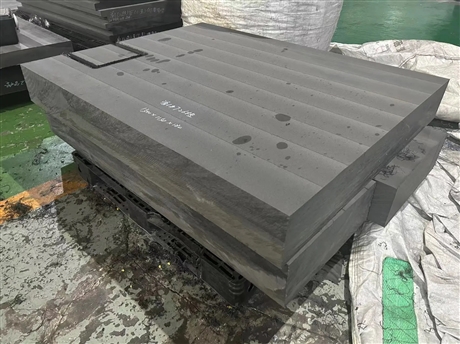

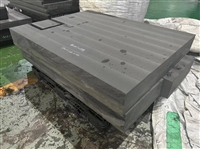
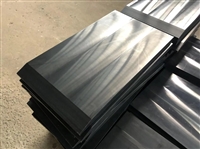
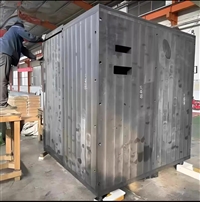
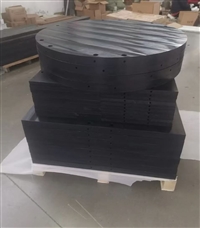
Boron containing steel plate radiation shielding material for nuclear power plant reactors with high neutron absorption rate
Category:
chemical industry/inorganic salt/Boron compounds and borate
Model:
HQFH
Brand:
Shandong Huaqing Fuheng Plastic Industry Technolog
Boron content:
0.5%-2.0%
Substrate grade:
Q235B/Q345B
thickness range:
10-200mm
tensile strength:
≥370 MPa
yield strength:
≥235 MPa
elongation:
≥26%
Execution Standard:
GB/T 700/NB/T 20000
Testing grade:
GB/T 2970 Level II
surface state:
Hot rolling/shot blasting rust removal
main purpose:
Neutron radiation shielding
Retail Price
10,000,000.00USD
重量
kg
- Product Description
-
Boron content 0.5%-2.0%
Substrate grade Q235B/Q345B
thickness range 10-200mm
tensile strength ≥370 MPa
yield strength ≥235 MPa
elongation ≥26%
Execution Standard GB/T 700/NB/T 20000
Testing grade GB/T 2970 Level II
surface state Hot rolling/shot blasting rust removal
main purpose Neutron radiation shielding
Description :
Boron containing plate is a special type of steel specifically used for neutron radiation shielding, mainly solving the problem of neutron leakage protection in nuclear reactors, medical radiation rooms, and industrial testing scenarios. By uniformly adding boron element (usually in the form of boron carbide or elemental boron) to the low-carbon steel matrix, the high thermal neutron absorption cross section of boron-10 isotope is utilized to effectively attenuate and capture high-energy neutrons, thereby reducing the radiation dose rate. This material is typically used in the biological shielding layer of nuclear power plants, spent fuel storage containers, accelerator shielding walls, and protective structures of nuclear medical equipment. It is a key structural material to ensure the safety of operators and environmental compliance, and is suitable for working conditions that require both structural strength and radiation protection functions.
The specifications of boron containing plates strictly follow the nuclear grade material standards, with a common thickness range of 10mm to 200mm, a width of up to 2500mm, and a length that can be customized according to engineering needs. The boron content is usually controlled between 0.5% and 2.0%, and the specific value is determined based on the design shielding equivalent. The material is mostly made of Q235B, Q345B or specialized nuclear grade steel matrix to ensure good welding performance and machinability. The execution standards refer to GB/T 700, GB/T 1591, and the nuclear industry standard NB/T 20000 series. Some exported products must meet ASTM A36 or ASME specifications. The surface quality of the board requires no cracks or slag inclusions, and the interior needs to undergo ultrasonic testing to ensure uniform boron distribution and avoid local shielding failure. Chemical composition analysis reports and mechanical performance test data must be provided for each batch.
When selecting, it is necessary to clarify the neutron flux density, energy spectrum, and spatial limitations to determine the optimal boron content and plate thickness combination. Although high boron content improves shielding efficiency, it may affect welding processability and require the use of specialized welding materials and preheating measures. Compared with ordinary lead plates, boron containing plates have better neutron shielding effect and no secondary gamma ray generation problems, but the cost is higher; Compared with concrete shielding, boron containing panels have a smaller volume and lighter weight, making them suitable for space constrained environments. If the working conditions only involve gamma rays and no neutron radiation, there is no need to use boron containing plates. Ordinary lead plates or concrete can meet the requirements. When purchasing, it is necessary to confirm whether subsequent heat treatment is required to eliminate stress, and whether specific flatness tolerances are required to ensure installation fit.
When installing boron containing plates, attention should be paid to the treatment of joint gaps. Overlapping or labyrinth structures are usually used to avoid neutron leakage, and non-destructive testing of welds is required to ensure sealing. During daily maintenance, the integrity of the surface anti-corrosion coating should be regularly checked to prevent corrosion of the substrate steel caused by humid environments, which may affect structural stability. In strong radiation environments, it is necessary to monitor the changes in mechanical properties of materials caused by radiation damage. It is recommended to conduct a comprehensive evaluation every 5-10 years. Common faults include cracks in the welding heat affected zone and insufficient local shielding caused by boron segregation, which can be prevented by optimizing welding process parameters and strengthening raw material uniformity testing. Scrap disposal must follow the regulations for radioactive waste management. Even if the material itself is not radioactive, it may still carry trace amounts of radioactivity due to activation, and professional institutions need to recycle and dispose of it.
AfterSalesService :
Key words:
More Products