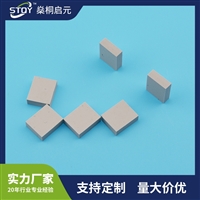

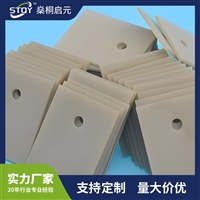
High thermal conductivity aluminum nitride ceramic substrate electronic packaging insulation heat sink
Category:
electron/Electronic materials and components/Electronic ceramic materials
Model:
STQY-TC-DH180
Brand:
Shentong Qiyuan
thermal conductivity:
170-230 W/(m·K)
Volume Resistivity:
≥10^14 Ω·cm
dielectric constant:
8-9 (1 MHz)
density:
3.3 g/cm³
bending strength:
300-400 MPa
Operating temperature:
-55℃ ~ +1500℃
color:
off-white
main ingredients:
AlN
Retail Price
10,000,000.00USD
重量
kg
- Product Description
-
thermal conductivity 170-230 W/(m·K)
Volume Resistivity ≥10^14 Ω·cm
dielectric constant 8-9 (1 MHz)
density 3.3 g/cm³
bending strength 300-400 MPa
Operating temperature -55℃ ~ +1500℃
color off-white
main ingredients AlN
Description :
Aluminum nitride ceramic is a high-performance advanced ceramic material mainly composed of aluminum nitride, which mainly solves the heat dissipation and insulation problems of high-power electronic components in high-density integration. It has extremely high thermal conductivity, far exceeding traditional alumina ceramics and approaching the level of metallic aluminum, while maintaining excellent electrical insulation. Typical operating conditions include high-power LED lighting, laser diodes, semiconductor power modules, and substrates and packaging shells for high-frequency microwave devices. This material can effectively reduce junction temperature, improve device stability and service life, and is an indispensable key basic material in modern electronic industry.
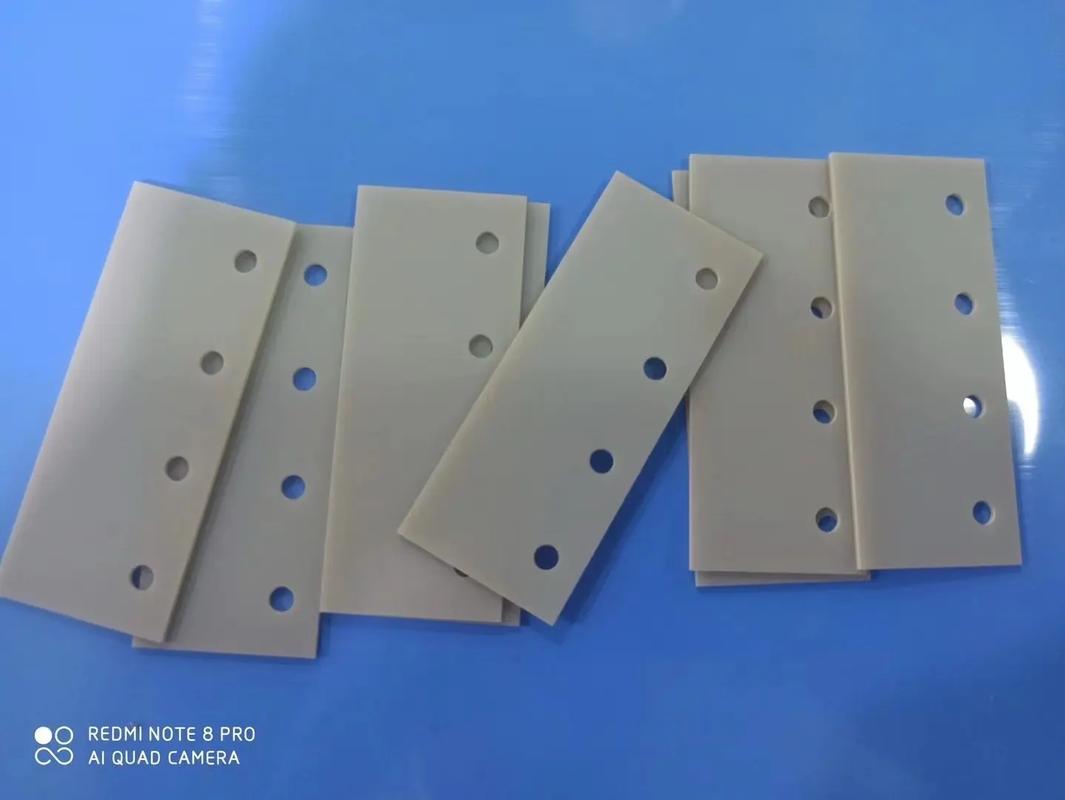
The typical thermal conductivity of aluminum nitride ceramics is between 170-230 W/(m · K), depending on the preparation process and purity. Its volume resistivity is usually greater than 10 ^ 14 Ω· cm, with a dielectric constant of around 8-9 and low dielectric loss. The material density is about 3.3 g/cm ³, and the bending strength can reach 300-400 MPa. The implementation standards usually refer to GB/T or IPC related electronic ceramic material specifications. The surface smoothness can reach mirror or specific roughness according to processing requirements, and the dimensional accuracy can be controlled at the micrometer level. The common color is gray white or light gray, with no pores or cracks, a dense structure, and good high-temperature stability. It can maintain stable physical and chemical properties in high-temperature environments.
When selecting, it is important to consider the balance between thermal conductivity and cost, as well as specific requirements for dielectric properties. Suitable for scenarios that require efficient heat dissipation and electrical insulation, such as IGBT modules and CPU/GPU heat dissipation substrates. Not suitable for ordinary consumer electronics that are extremely cost sensitive and have low heat dissipation requirements, aluminum oxide ceramics are more cost-effective in this case. Compared with beryllium oxide ceramics, aluminum nitride is non-toxic and environmentally friendly, and complies with the RoHS directive; Compared with metal substrates, it has better high-frequency characteristics and insulation reliability. The purchaser should specify the application power density and operating frequency to determine the appropriate thickness and area specifications, avoiding over design or insufficient performance.
Aluminum nitride ceramics have high brittleness, and mechanical impact and stress concentration should be avoided during installation. It is recommended to use flexible thermal interface materials for bonding. The typical usage cycle is long, but attention should be paid to maintaining the adhesion of the surface metallization layer in high temperature and high humidity environments. Daily maintenance mainly involves keeping the surface clean and preventing dust and oil stains from affecting heat dissipation efficiency. Common faults include cracking caused by mismatched thermal expansion coefficients, or poor contact caused by detachment of the metallization layer. Diamond tools are required for processing and cutting, and drastic temperature changes are strictly prohibited to prevent thermal shock damage. Proper installation and maintenance can ensure long-term stable operation under harsh working conditions.
AfterSalesService :
Key words:
More Products