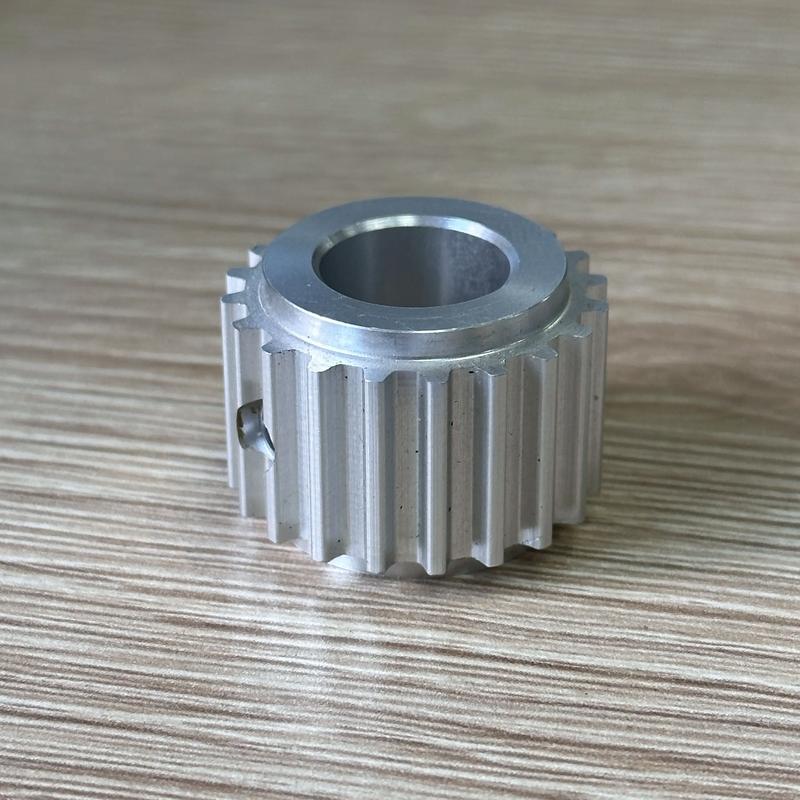

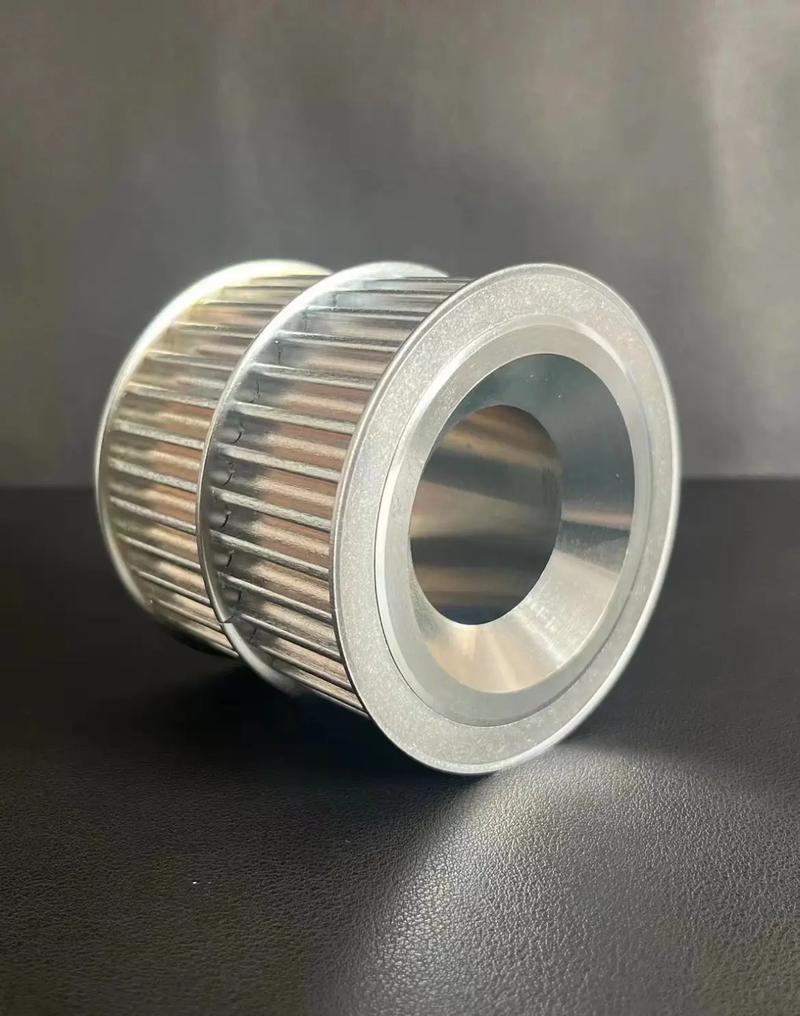
Industrial grade synchronous pulley precision transmission with multiple specifications to choose from, suitable for automation equipment
Category:
mechanical equipment/Transmission components/Pulley
Model:
Conventional+non-standard customization
Brand:
Jianxiang Transmission
Material:
Aluminum alloy/45 # steel, etc
Surface Treatment:
Anodizing/Blackening
Tooth profile standard:
Metric/Imperial
accuracy class:
DIN ISO Level 7
Applicable belt type:
Various types of belts
Processing Technology:
CNC Precision Machining
Retail Price
10,000,000.00USD
重量
kg
- Product Description
-
Material Aluminum alloy/45 # steel, etc
Surface Treatment Anodizing/Blackening
Tooth profile standard Metric/Imperial
accuracy class DIN ISO Level 7
Applicable belt type Various types of belts
Processing Technology CNC Precision Machining
Description :
Synchronous belt pulley is a key component in mechanical transmission systems, mainly used to cooperate with synchronous belts to achieve precise power transmission and motion control. It eliminates sliding through tooth meshing, ensuring synchronization between the driving wheel and the driven wheel, and is widely used in working conditions such as CNC machine tools, packaging machinery, textile equipment, and automated assembly lines. This product solves the problems of slipping and unstable transmission ratio in traditional belt drives, and can withstand high loads while maintaining long-term positioning accuracy. It is an indispensable basic transmission component in the field of modern industrial automation.
The synchronous belt pulley is usually made of high-quality aluminum alloy, carbon steel, or stainless steel materials, and is precision CNC machined to form a tooth profile that meets international standards (such as the imperial series of MXL, XL, L, H, XH, XXH, or metric series of T5, T10, AT5, AT10, etc.). The surface has undergone anodizing, blackening or galvanizing treatment, and has good corrosion resistance and wear resistance. The product strictly adheres to ISO and DIN manufacturing standards, with small tooth pitch errors and high concentricity, ensuring smooth transmission and low noise characteristics. The common aperture range covers 6mm to 50mm, and keyway or top screw holes can be customized according to the shaft diameter requirements to meet the size requirements of different installation environments.
When selecting, the number of teeth, pitch, and width of the pulley should be determined based on the transmission power, speed ratio, center distance, and space constraints. It is recommended to choose steel or large pitch models for high torque working conditions, and aluminum alloy materials are preferred for high-speed and light load situations to reduce rotational inertia. Attention should be paid to distinguishing the application scenarios of trapezoidal teeth and circular teeth (such as HTD, STS), as circular teeth have stronger load-bearing capacity and lower noise. If the installation space is compact, a thin pulley design should be considered; If the environment is harsh, it is necessary to confirm whether the surface treatment meets the anti-corrosion requirements. Avoid using beyond the rated linear speed or temperature range to prevent material fatigue or deformation from affecting transmission accuracy.
When installing the synchronous belt pulley, it is necessary to ensure that the axis of the two pulleys is parallel, and use a tension meter to adjust the synchronous belt to the appropriate tension. If it is too tight, it will increase the bearing load, and if it is too loose, it will cause tooth skipping. In daily maintenance, it is necessary to regularly check the wear and tear of the tooth surface and whether there are cracks, clean the attached oil and dust, and prevent foreign objects from entering the meshing area. If abnormal increase in transmission noise or positioning deviation is found, the concentricity of the pulley and whether the fixing screws are loose should be checked in a timely manner. Properly lubricating the bearing parts rather than the tooth surface can significantly extend the service life of the synchronous belt pulley and matching synchronous belt, ensuring long-term stable operation of the equipment.
AfterSalesService :
质保一年Key words:
More Products