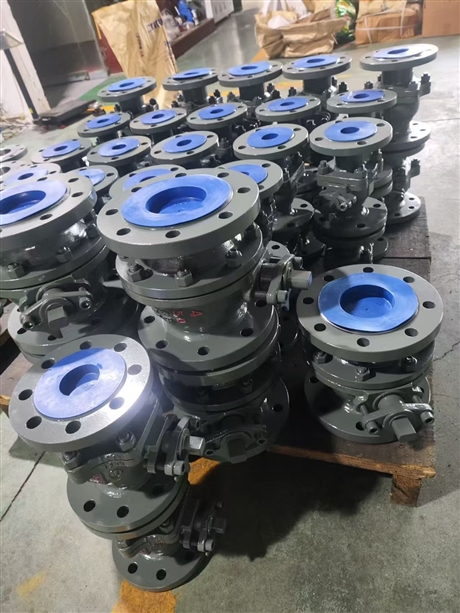

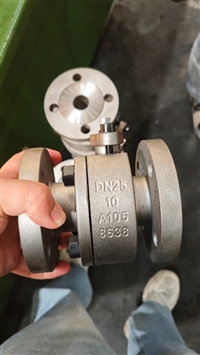
Industrial universal ball valves have good high pressure resistance and sealing performance, and are suitable for controlling water, oil, and gas pipelines
Category:
Instrumentation/valve/ball valve
Model:
Q41F/H
Brand:
Haisheng Fluid
Nominal pressure:
PN1.6-PN6.4
Operating temperature:
-20℃~180℃
Main material:
Carbon steel/stainless steel
Sealing Material:
Polytetrafluoroethylene (PTFE)
connection method:
Flanges/Threads
Drive Type:
Manual/Pneumatic/Electric
Execution Standard:
GB/T 12237
Retail Price
10,000,000.00USD
重量
kg
- Product Description
-
Nominal pressure PN1.6-PN6.4
Operating temperature -20℃~180℃
Main material Carbon steel/stainless steel
Sealing Material Polytetrafluoroethylene (PTFE)
connection method Flanges/Threads
Drive Type Manual/Pneumatic/Electric
Execution Standard GB/T 12237
Description :
A ball valve is a type of valve that controls the flow of a medium by rotating a ball with a circular channel. When the spherical channel is parallel to the pipeline axis, the valve is fully opened; After rotating 90 degrees, the channel is perpendicular to the axis and the valve closes. This type of valve with a simple structure and quick operation is widely used in pipeline systems in industries such as petroleum, chemical, power, and water treatment. It is used to cut off or connect the flow of media, solve the opening and closing requirements in fluid control, and is particularly suitable for working environments that require quick opening and closing and have certain requirements for sealing.
Common ball valve body materials include carbon steel, stainless steel (such as 304, 316L), cast iron, etc. The valve seat sealing material is mostly polytetrafluoroethylene (PTFE) or reinforced PTFE, which has good corrosion resistance and low friction coefficient. The implementation of standards usually follows international and domestic specifications such as GB/T 12237, API 6D, or ISO 5211. The nominal pressure range is generally between PN1.6 and PN6.4, and some high-pressure models can reach PN10.0 or above. The working temperature range depends on the sealing material. Soft sealed ball valves are usually between -20 ℃ and 180 ℃, while hard seals can adapt to higher temperatures. The connection methods include flange connection, threaded connection, and clamp type connection, which need to be selected according to the specific interface of the pipeline.
When selecting, it is necessary to clarify the type of medium (water, oil, gas, corrosive liquids, etc.), working pressure, temperature range, and pipeline diameter. For cleaning media, soft sealed ball valves have high cost-effectiveness and good sealing effect; If the medium contains particulate impurities or high temperature and high pressure, it is recommended to use hard sealed ball valves or V-shaped ball valves to prevent wear and leakage. Not suitable for slurries or easily crystallizable media unless specially designed. Compared with gate valves, ball valves open and close faster and have lower flow resistance, but they are not suitable for regulating flow; Compared with butterfly valves, ball valves have more reliable sealing under high-pressure and small-diameter conditions, but the cost is relatively high. The purchaser needs to balance performance and cost based on actual working conditions.
Before installation, the debris inside the pipeline should be cleaned to ensure that there are no foreign objects damaging the sealing surface inside the valve body. Ball valves are usually recommended to be installed horizontally, with the handle or actuator facing upwards or sideways, to avoid water accumulation or inconvenient operation when facing downwards. Daily maintenance mainly involves checking for leaks in the packing box and regularly adding lubricating grease to maintain the flexibility of the valve stem rotation. If internal leakage is found, it may be due to worn sealing surfaces or impurities stuck, and the valve seat needs to be disassembled, cleaned or replaced; External leakage is mostly caused by loose packing, and the packing gland can be appropriately tightened. When not in use for a long time, it should be in the fully open or fully closed position to avoid partial erosion and damage to the sealing surface caused by the half open state.
AfterSalesService :
Key words:
More Products