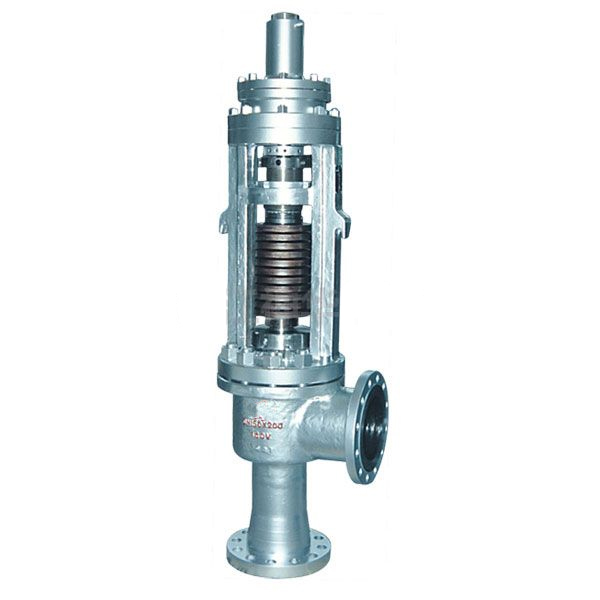

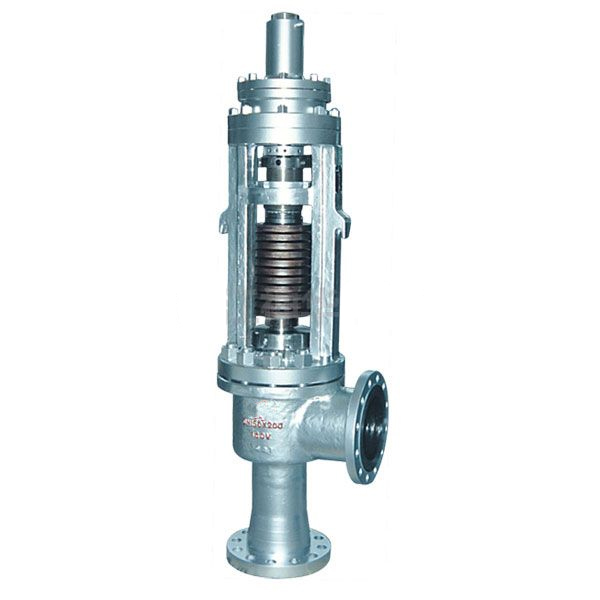
Industrial pipeline spring type safety valve with high pressure relief protection, good corrosion resistance and sealing performance
Category:
mechanical equipment/valve/safety valve
Model:
A41H/A42F/A43Y/A48H
Brand:
Haisheng Fluid
Nominal pressure:
PN1.6-PN4.0 MPa
Applicable Medium:
Steam/Air/Water
connection method:
Flanges/Threads
Operating temperature:
-20℃~450℃
Setting pressure deviation:
±3%
Valve body material:
Cast steel/stainless steel
Execution Standard:
GB/T 12243
structural form:
Spring micro opening/full opening
Retail Price
10,000,000.00USD
重量
kg
- Product Description
-
Nominal pressure PN1.6-PN4.0 MPa
Applicable Medium Steam/Air/Water
connection method Flanges/Threads
Operating temperature -20℃~450℃
Setting pressure deviation ±3%
Valve body material Cast steel/stainless steel
Execution Standard GB/T 12243
structural form Spring micro opening/full opening
Description :
Safety valve is an automatic valve mainly used in boilers, pressure vessels, and pipeline systems. When the medium pressure exceeds the specified value, it automatically opens for discharge to prevent system overpressure damage. It achieves the opening and closing action by balancing the spring force or heavy hammer force with the medium pressure, and is a key accessory to ensure industrial production safety. Typical operating conditions include steam boilers, compressed air systems, chemical reaction vessels, and various pressure equipment, ensuring rapid pressure relief under abnormal pressure, protecting equipment and personnel safety, and suitable for various media environments such as liquids, gases, and steam.
This safety valve is usually made of cast steel, stainless steel or alloy steel, and the valve seat and disc are precision ground to ensure sealing performance. The execution standard complies with GB/T 12243 "Spring Direct Load Safety Valve" or ASME specifications, with a common nominal pressure range of PN1.6 to PN4.0MPa and a set pressure deviation controlled within ± 3%. The connection methods are mostly flange connection or threaded connection, with diameters ranging from DN15 to DN200. The material needs to have good temperature resistance and corrosion resistance, suitable for working temperatures ranging from -20 ℃ to 450 ℃. Some high-temperature models are equipped with heat sinks to protect the spring components and ensure long-term stable operation.
When selecting, it is necessary to clarify the requirements for medium type, working pressure, temperature, and discharge capacity. For steam systems, it is advisable to use fully open safety valves to achieve greater displacement; Liquid media can be selected as micro opening type. Attention should be paid to the back pressure effect of the safety valve. If there is a variable back pressure, a bellows balanced structure should be selected. Compared to bursting discs, safety valves can be reused and tightly closed, but their response speed is slightly slower; Unlike pressure reducing valves, safety valves only operate when overpressure occurs and are not used to regulate normal operating pressure. Before installation, it is necessary to check the set pressure label to ensure that it matches the system design pressure and avoid frequent or no jumps caused by incorrect selection.
When installing, it should be installed vertically at the highest point of the container or pipeline, and the outlet pipeline should be unobstructed and led to a safe location to avoid excessive back pressure affecting discharge. Daily maintenance requires regular checks on the integrity of the lead seal to prevent unauthorized adjustments to the set pressure. It is recommended to conduct at least one offline verification or online lifting test per year to check whether the valve disc and seat are adhered and whether the spring is corroded. Common faults include leakage, insufficient pressure jump, or low recoil pressure, which are often caused by damage to the sealing surface, spring fatigue, or foreign object blockage. Damaged components need to be cleaned or replaced in a timely manner to ensure that the safety valve is always in a reliable standby state.
AfterSalesService :
Key words:
More Products