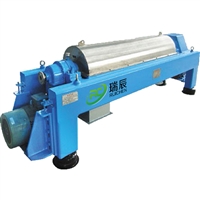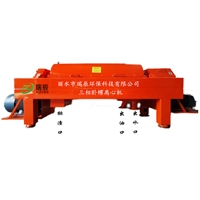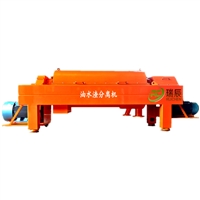
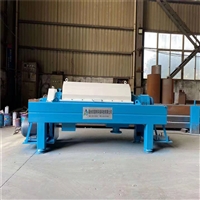
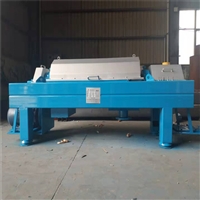
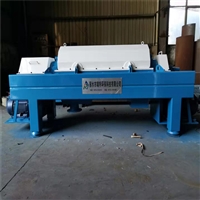
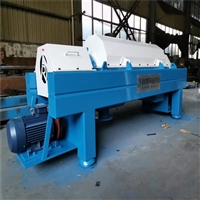
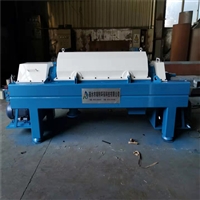
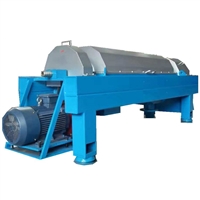
Kitchen waste oil residue water separation equipment three-phase centrifuge
Category:
Environmental Protection/Sewage treatment equipment/Oil water separator
Model:
RCSWL535
Brand:
Ruichen Environmental Protection
Retail Price
98,000.00USD
重量
kg
- Product Description
-
Description :
Kitchen waste oil residue water separation equipment three-phase centrifuge
The kitchen waste oil residue water separation equipment is used in the catering industry, enterprises and institutions, school canteens, residential areas. During the process of recycling tableware, the organic waste in the dining table and plates is pretreated and classified by a passive oil-water residue separator to separate oil, water, and residue into three phases. At this point, 20% -60% of the oil and water are separated from the kitchen waste and reduced at the source to save energy in the later terminal treatment; After eight hours of high-temperature sterilization and drying, the separated food residue is further reduced by 80% -90% to produce a final product; After 8 hours of high-temperature sterilization and fermentation, the added high-temperature biological bacteria undergo homologous biochemical reactions with animal food, and can be made into high protein animal feed base, which can be stored for a long time without odor.
Schematic diagram of three-phase centrifuge (RCSWL) series kitchen waste oil residue water separation equipment

Operating principle of three-phase centrifuge for kitchen waste oil residue water separation equipment
The kitchen waste liquid to be separated enters the acceleration chamber of the spiral pusher through the feeding pipe and then enters the inner wall of the high-speed rotating drum. Due to the different densities of the light liquid phase, heavy liquid phase, and insoluble solid phase in the material, the centrifugal force experienced by the three-phase materials is not the same. The insoluble solid phase is settled on the inner wall (outside) due to the centrifugal force caused by the specific gravity of the centrifuge, while the light liquid phase is settled far away from the inner wall (outside) of the drum due to the small centrifugal force received. The heavy liquid phase is in the middle, and the insoluble solid phase is discharged from the solid discharge port through the spiral pusher with a relative speed difference from the drum. The light and heavy liquid phases are then separated by different structures inside the machine, among which the heavy liquid phase is separated. Discharging through a centripetal pump, the light liquid phase is discharged by gravity, thus achieving the goal of three-phase separation of the material. The light and heavy liquid phases of our company's three-phase centrifuge are discharged by gravity and centrifugal force respectively, effectively avoiding material mixing and incomplete separation. Ordinary three-phase centrifuge often results in incomplete separation due to unstable composition of the light and heavy liquid phases during operation. Our three-phase centrifuge can adjust the interface between the light and heavy liquid phases according to changes in material composition during machine operation, thereby achieving the desired separation effect.
Processing range of three-phase centrifuge for kitchen waste oil residue water separation equipment;
Organic household waste such as meat, fish, pasta, fried foods, bread, vegetables, fruits, eggshells, animal bones (stick bones), etc. Garbage that cannot be decomposed, such as chopsticks, plastic, wood, rubber, beverage cans, glass products, ceramic products, hard objects such as stones and metals, large bones, and other inorganic substances that cannot be crushed or dissolved.
This device is also used for the separation of oil, water, and slag in the coal tar industry; The separation of oil, water, and slag in the petrochemical industry, the three-phase separation of oil, water, and slag in the oil and refining industry, the three-phase separation of oil, water, and slag in the vegetable oil industry, the separation of oil, water, and slag in the fish powder industry, the separation of oil, water, and slag in the swill oil industry, the separation of oil, water, and slag in the electrolytic copper industry, and the separation of oil, water, and slag in the waste materials of slaughterhouses.
Advantages and characteristics of three-phase centrifuge equipment for oil residue water separation
1. The equipment has a small footprint, stainless steel process, is sturdy and durable, easy to operate, and durable to use.
2. Self loading, saving manpower and maintenance costs.
3. Integrated fully sealed design, small-scale sorting table. Automatic door opening and closing design ensures no odor emission.
4. Low energy consumption, the PLC embedded intelligent automatic control system is equipped with manual buttons, providing bidirectional protection for greater safety and reliability.
5. Avoidance crushing controls the noise and entanglement of soft and hard materials.
6. The entire treatment process does not require rinsing and cleaning with tap water.
7. The output is on a dry basis and can be stored for a long time to maximize resource utilization.
8. The equipment and components have durability, corrosion resistance and anti-aging resistance. The design of easily removable door is adopted to meet the adjustment requirements and facilitate rapid inspection and maintenance.
9. This equipment has independent intellectual property patents for each step of feeding, crushing, squeezing, conveying, fermentation, drying, and control. It is a specialized equipment developed and innovated for the treatment of kitchen waste.

AfterSalesService :
Key words:- Kitchen waste oil residue water separation equipment
More Products