
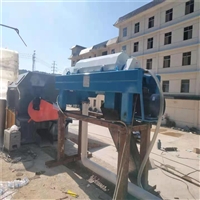
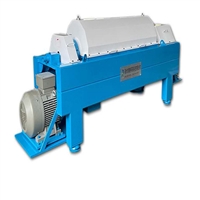
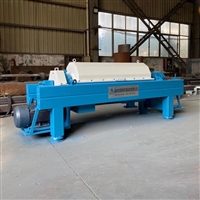
Underground Mud Treatment Equipment for Coal Mines in Changzhi City, Shanxi Province
Category:
Environmental Protection/Sludge treatment machinery/Horizontal spiral centrifuge
Model:
RCWL650
Brand:
Ruichen Environmental Protection
Retail Price
56,000.00USD
重量
kg
- Product Description
-
Description :
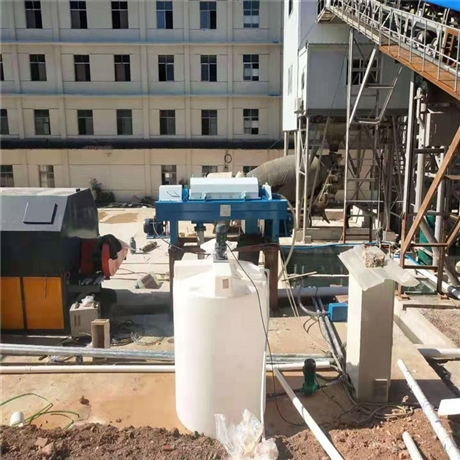
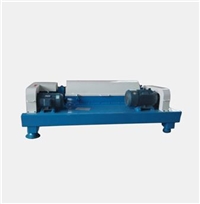
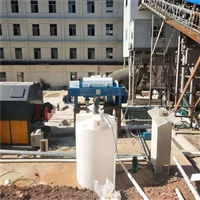
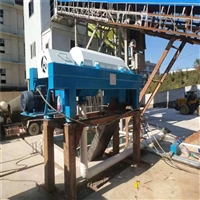
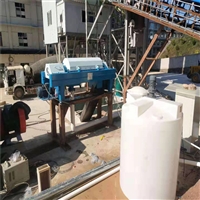
Underground Mud Treatment Equipment for Coal Mines in Changzhi City, Shanxi Province
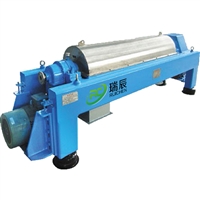
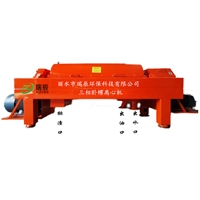
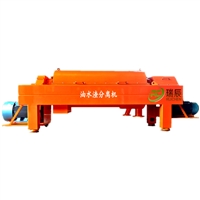
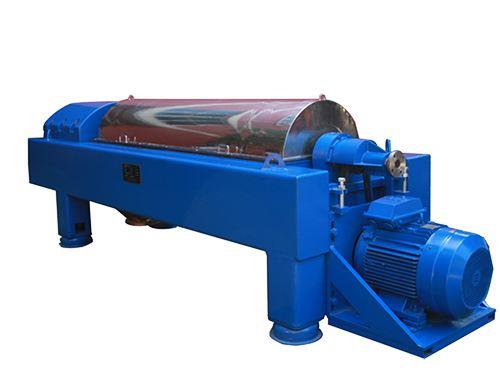
The third generation coal mine slurry dewatering equipment for underground mud treatment in coal mines is the coal mine slurry dewatering special dewatering machine (coal washing sludge dewatering machine). Description: The coal mine slurry dewatering and separation special centrifuge is composed of a column cone drum, a spiral unloader, a differential system, a bearing seat, a machine base, a cover, a main and auxiliary motor, and an electrical system. Under the strong centrifugal force generated by the high-speed rotation of the third-generation coal mine slurry dewatering equipment in the new centrifugal coal mine slurry dewatering scheme, the coal mine wastewater is continuously dehydrated 24 hours a day. The main motor rotates the drum through a V-belt, and the drum and screw differential are generated by the planetary gear differential and the auxiliary motor to achieve the separation and pushing of coal mine wastewater.
Construction scale of underground mud treatment equipment in coal mines in Changzhi City, Shanxi Province:
For a mine, it is necessary to construct sewage pipelines and sewage treatment plants in stages and batches according to the overall plan and drainage plan of the mine. The implementation should be carried out in stages and gradually implemented according to the goal of water environment protection.
(1) At present, one sewage treatment plant is being built in each of the industrial sites and residential areas of some coal mines, with two land acquisitions, repeated construction, increased investment, high operating energy consumption, high management costs, dispersed technical strength, and high cost per ton of water treatment. Generally speaking, the industrial site and residential area of a mine are not far apart, so it is more reasonable to build a sewage treatment plant of a certain scale together. Considering the drainage from the residential area to the industrial site, if the pipeline is buried too deep, a sewage lift pump station can be set up in the middle, or a sewage treatment plant can be constructed by land acquisition in the middle of the industrial site and residential area. Adopting a joint construction approach can not only save investment, but also greatly reduce operating costs.
(2) At present, many newly built mines are designed with relatively small labor quotas based on regulations and overall efficiency. However, after actual construction, coal mines recruit a large number of laborers, and with the development of coal mines, a large number of foreign personnel flood in, resulting in an increase in water consumption and sewage volume. Therefore, for the design of newly built coal mine sewage treatment plants, a retention factor should be considered when constructing the scale.
(3) Due to the significant changes in the water quality and quantity of coal mine wastewater, determining the reasonable design of wastewater quantity and quality directly involves the investment, operating costs, and cost-effectiveness of the project. Production wastewater and domestic wastewater should be considered comprehensively to avoid leaving too much room for investment, idle equipment, or inefficient operation.
Overview of the principle of underground mud treatment equipment in coal mines in Changzhi City, Shanxi Province:
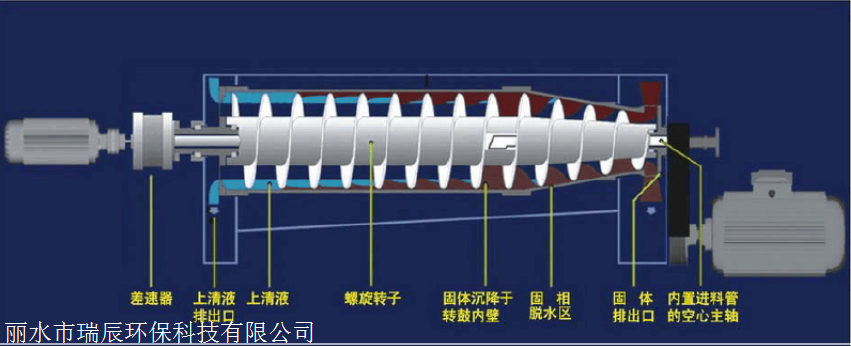
A centrifugal separator for separating suspension components using centrifugal settling method. The suspension added to the drum forms a ring-shaped liquid layer under the action of centrifugal force, and the solid particles in it settle onto the drum wall, forming sediment. The clarified liquid is discharged through the overflow port of the drum or the suction pipe, and is called the separation liquid. At the end of separation, manually or mechanically unload the sediment. During the process of settling towards the drum wall, solid particles also move axially with the liquid flow. When the feed amount is too large, they flow with the liquid to the overflow port, while fine particles that have not yet settled to the drum wall are discharged from the drum with the separation liquid, causing the separation liquid to become turbid. For difficult to separate suspensions with small density difference between solid and liquid phases, small solid particles, or high liquid viscosity, a sedimentation centrifuge with high separation factor should be selected to prolong the residence time of the suspension in the drum (such as reducing the feed amount or using a long drum), in order to ensure the clarity of the separated liquid. The sedimentation centrifuge has a wide range of applications, especially suitable for separating suspensions in centrifugal filtration where solid particles can easily clog the filter medium and cause excessive filtration resistance or when there is excessive loss of fine particles. However, the moisture content of the sediment is relatively high. Sedimentation centrifuge can be used for the separation of suspensions such as crystallization, chemical precipitates, coal powder, dewatering of various sewage sludge, and clarification of animal and vegetable oils.
Structural advantages of underground mud treatment equipment in coal mines in Changzhi City, Shanxi Province:
The underground mud treatment equipment in coal mines consists of a column cone drum, a spiral unloader, a differential system, a bearing seat, a machine base, a casing, a main and auxiliary motor, and an electrical system. Under the strong centrifugal force generated by the high-speed rotation of the centrifuge, coal mine wastewater is continuously dehydrated 24 hours a day. The main motor rotates the drum through a V-belt, and the drum and screw differential are generated by the planetary gear differential and the auxiliary motor to achieve the separation and pushing of coal mine wastewater. Centrifuges have two automatic control functions, namely differential speed control and torque control. Due to fluctuations in the solid content of coal mine wastewater feed, the use of differential speed control system ensures stable differential speed and constant mud dryness. The use of constant torque control keeps the centrifuge load in a stable state, ensuring that the separation effect or flocculant is in a stable state when used, which effectively ensures the reliable and safe operation of the centrifuge. Centrifuges have excellent sealing performance, and the separation of coal mine wastewater works in a fully sealed state, making the environment clean and tidy.
AfterSalesService :
Key words:- Coal mine underground mud treatment equipment
More Products