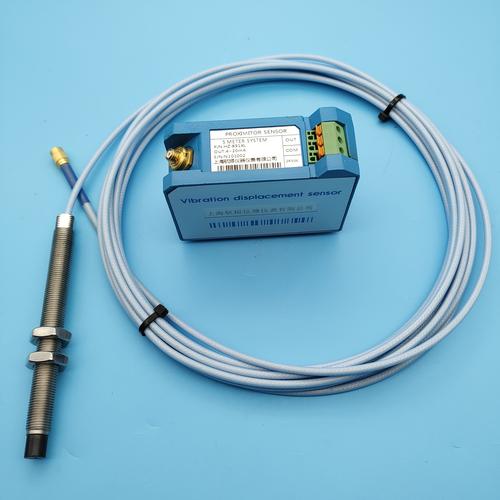

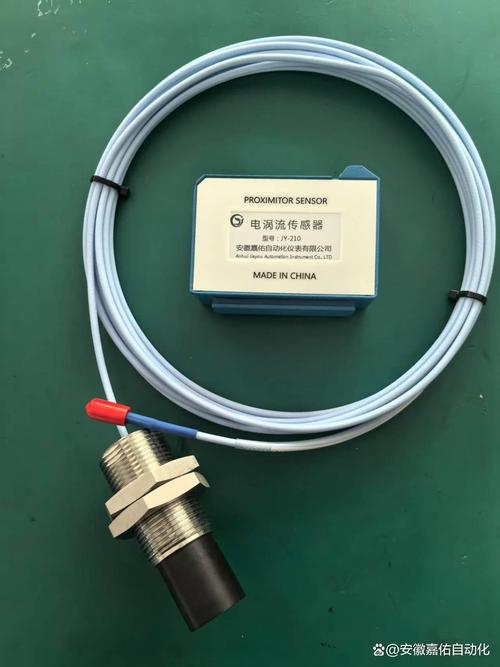
Eddy current displacement sensor for non-contact measurement and high-precision industrial monitoring
Category:
Instrumentation/Sensors, sensitive components/Displacement sensor
Model:
RZ-CG-01
Brand:
Rongzhen
Measuring principle:
Eddy current effect
measurement type:
Non contact displacement/vibration
Linear range:
0-5mm / 0-10mm
resolution:
0.1μm
Operating Temperature:
-50℃ ~ +150℃
Protection level:
IP67
power supply voltage:
-24V DC
output signal:
4-20mA / 0-10V
Retail Price
10,000,000.00USD
重量
kg
- Product Description
-
Measuring principle Eddy current effect
measurement type Non contact displacement/vibration
Linear range 0-5mm / 0-10mm
resolution 0.1μm
Operating Temperature -50℃ ~ +150℃
Protection level IP67
power supply voltage -24V DC
output signal 4-20mA / 0-10V
Description :
Eddy current displacement sensor is a non-contact measuring instrument based on the principle of electromagnetic induction, mainly used to monitor key parameters such as radial vibration, axial displacement, and speed of rotating machinery shaft systems. It solves the problem of traditional contact measurement being prone to wear and slow response in high-speed, high temperature, or oily environments, and is particularly suitable for status monitoring and fault diagnosis of large rotating equipment such as steam turbines, compressors, and water pumps. It can provide stable and reliable real-time data under harsh working conditions.
The sensor system usually consists of three parts: probe, extension cable, and preamplifier, and follows relevant standards such as GB/T 13823 or API 670. The typical linear range is 0-5mm or 0-10mm, with a resolution of up to 0.1 μ m. The operating temperature range is usually between -50 ℃ and+150 ℃. The probe housing is mostly made of stainless steel material, with a protection level of IP67 or above, which can resist the interference of dust, water vapor, and corrosive media in industrial sites, ensuring long-term stability during operation.
When selecting, it is necessary to clarify the material of the tested object. Eddy current sensors have different sensitivities to ferromagnetic and non-magnetic materials, and usually need to be calibrated for 4140 steel and other materials. If the measured surface is made of other metals, a correction factor adjustment is required. In addition, attention should be paid to the setting of the installation gap voltage, and it is generally recommended to work at the midpoint of the linear segment of the characteristic curve. For environments with limited space or strong electromagnetic interference, shielded probes should be selected and wiring should be arranged reasonably to avoid signal crosstalk affecting measurement accuracy.
During installation, ensure that the probe end face is perpendicular to the measured surface to avoid measurement errors caused by lateral tilting. During daily maintenance, it is necessary to regularly check whether the cable joints are loose, whether the insulation layer is damaged, and whether the power supply voltage of the preamplifier is normal. Common faults include large fluctuations in output signals or no output, often caused by gap changes, probe damage, or poor grounding. It is recommended to regularly use a calibration instrument for static calibration of the system to maintain the accuracy of the measurement system and extend the service life of the equipment.
AfterSalesService :
Key words:
More Products