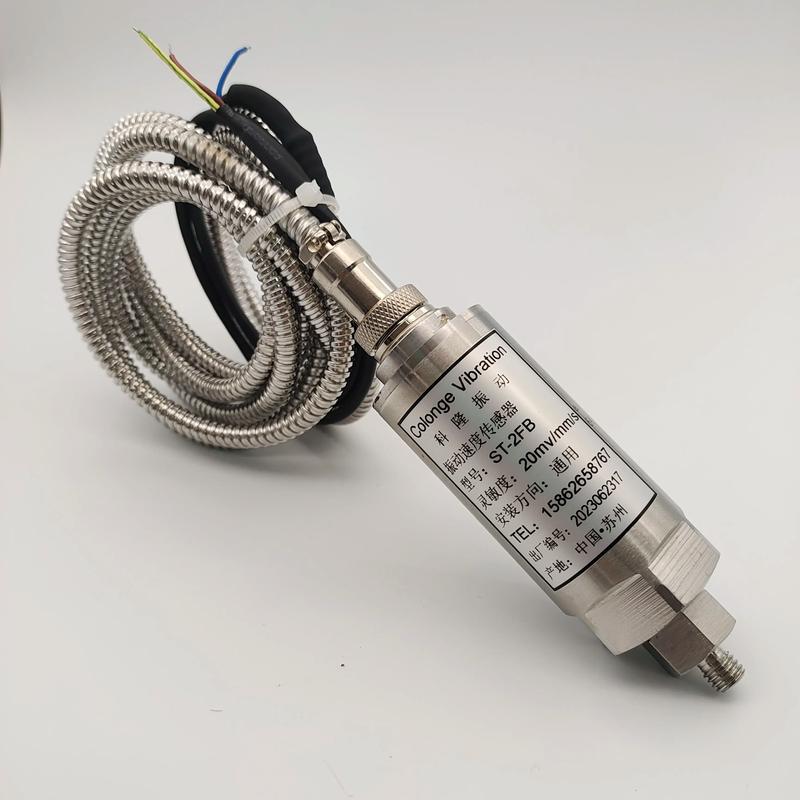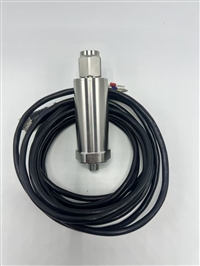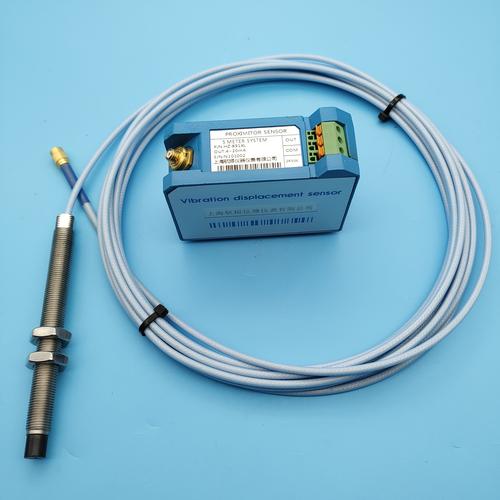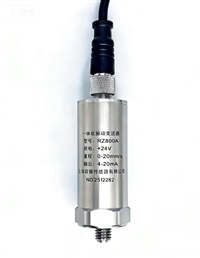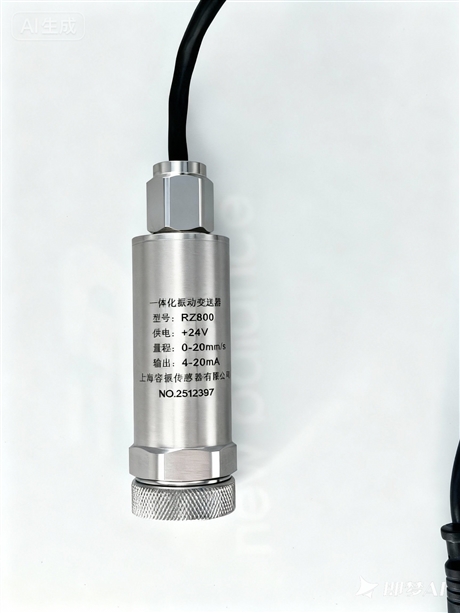

CYT-9200 Integrated Vibration Transmitter Industrial Equipment Status Monitoring Sensor
Category:
Instrumentation/transmitter /Other transmitters
Model:
CYT-9200
Brand:
Rongzhen
Measure variables:
Vibration velocity/acceleration/displacement
output signal:
4-20mA
power supply voltage:
24VDC
frequency range:
10Hz-1kHz
Protection level:
IP65
Operating Temperature:
-40℃~+85℃
install thread:
M10
Shell material:
stainless steel
Retail Price
10,000,000.00USD
重量
kg
- Product Description
-
Measure variables Vibration velocity/acceleration/displacement
output signal 4-20mA
power supply voltage 24VDC
frequency range 10Hz-1kHz
Protection level IP65
Operating Temperature -40℃~+85℃
install thread M10
Shell material stainless steel
Description :
CYT-9200 integrated vibration transmitter is an industrial monitoring device that integrates vibration sensors, signal conditioning circuits, and transmission modules. It is mainly used for real-time monitoring of the vibration status of rotating machinery such as motors, fans, pumps, compressors, etc. It directly outputs standard 4-20mA current or voltage signals, which can accurately reflect the vibration speed, acceleration, or displacement of the equipment, helping operation and maintenance personnel detect potential faults such as bearing wear, rotor imbalance, and misalignment in a timely manner, thereby avoiding unplanned shutdowns and ensuring production continuity and equipment safety. This integrated vibration transmitter is widely used in key equipment health management systems in industries such as power, petrochemicals, metallurgy, and cement.
The CYT-9200 integrated vibration transmitter usually adopts a stainless steel or engineering plastic housing, with good protection level (commonly IP65 or above), and is suitable for harsh industrial environments. The core sensing components are mostly piezoelectric accelerometers, with a measurement frequency range generally between 10Hz-1kHz and a range of typical specifications such as 0-20mm/s and 0-50mm/s. The power supply voltage is usually 24VDC, with a two-wire or three wire wiring method, which complies with the relevant vibration measurement standards of IEC and GB/T. The product has undergone strict temperature drift testing and electromagnetic compatibility testing to ensure stable operation within a wide temperature range of -40 ℃ to+85 ℃. It has strong anti-interference ability for signal transmission and is suitable for long-distance transmission to PLC or DCS systems.
When selecting the CYT-9200 integrated vibration transmitter, it is necessary to clarify whether the monitoring object is a rolling bearing or a sliding bearing, as well as the main types of faults that are of concern. If focusing on high-frequency impact signal detection, acceleration output type should be selected; If focusing on overall vibration energy, choose the speed effective value output type. There are mainly two installation methods: threaded fixation (M10 or M1/2-20UNF) and magnetic suction seat. Rigid connection can better ensure high-frequency response characteristics. Attention should be paid to distinguishing between integrated transmitters and separate probes+preamplifiers. The former has a compact structure, low cost, and less maintenance, while the latter is suitable for high temperatures or small spaces. For low-speed heavy-duty equipment, it is recommended to make a comprehensive judgment based on displacement parameters. At this time, it is necessary to confirm whether the transmitter supports low-frequency response.
When installing the CYT-9200 integrated vibration transmitter, the measuring point should be selected at the position where the bearing seat has the strongest rigidity and is closest to the raceway. The surface should be flat and clean, and coupling agent should be applied to ensure vibration transmission efficiency. When wiring, it is necessary to strictly distinguish between the positive and negative poles of the power supply and the signal line, and the shielding layer should be grounded at one end to prevent ground loop interference. In daily maintenance, regularly check for cable damage and loose joints, compare historical data trends, and if baseline drift is too large or signal mutation is found, check the sensor fixation status and the operating conditions of the tested equipment. Common faults include signal open circuits, short circuits, or abnormally high values. They can be checked by measuring the circuit current with a multimeter or using replacement methods to ensure the long-term reliable operation of the integrated vibration transmitter.
AfterSalesService :
Key words:
More Products