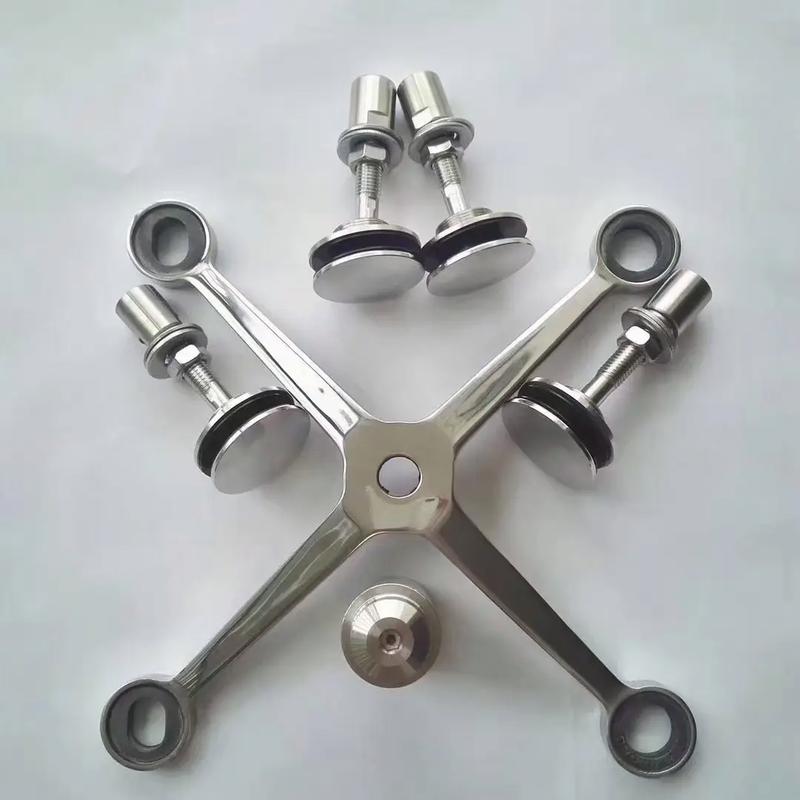

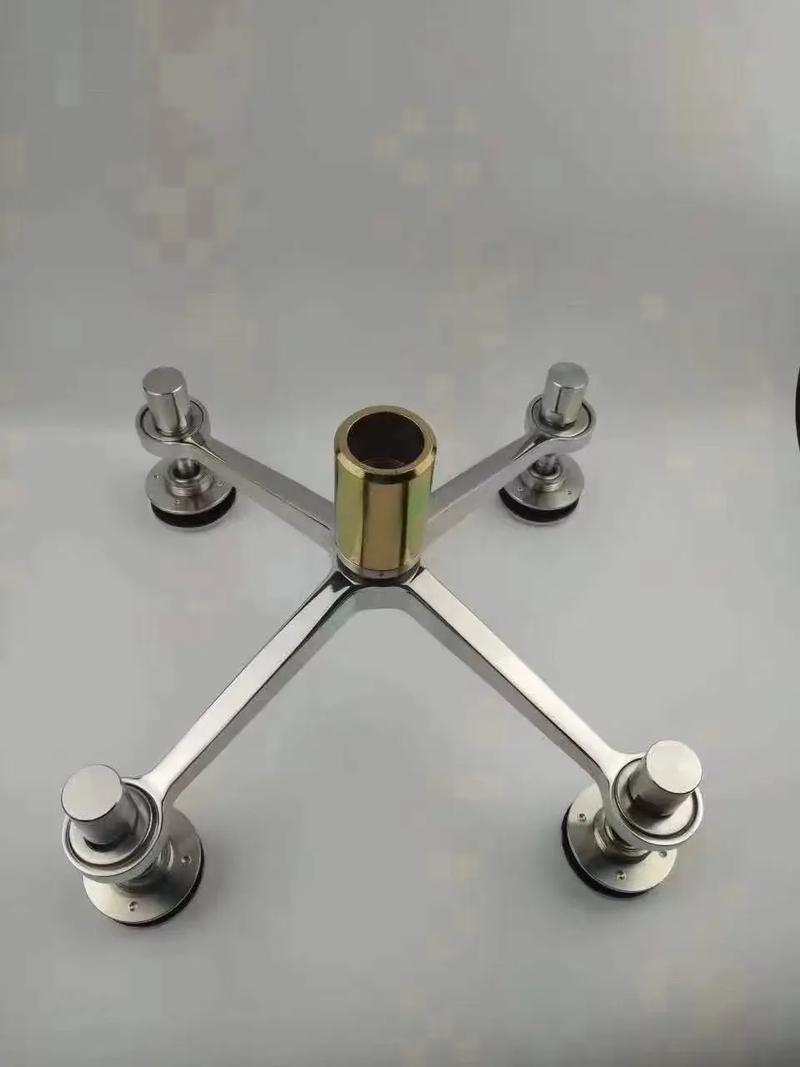
304 stainless steel connecting claw point curtain wall accessories, glass fixing claws, high corrosion resistance and strength
Category:
hardware/Curtain wall hardware accessories/Connecting claw
Model:
Type 200, Type 220, Type 250
Brand:
Jingze
Material:
304/316 stainless steel
Surface Treatment:
Polishing/Drawing/Sandblasting
structural type:
H-type/X-type/K-type/I-type
Suitable for glass:
Tempered glass/laminated glass
Application Scenarios:
Point supported curtain wall/skylight/canopy
connection method:
Bolt connection/joint fitting
corrosion resistance:
Salt spray resistance/antioxidant
adjustment function:
Three dimensional adjustable
Retail Price
10,000,000.00USD
重量
kg
- Product Description
-
Material 304/316 stainless steel
Surface Treatment Polishing/Drawing/Sandblasting
structural type H-type/X-type/K-type/I-type
Suitable for glass Tempered glass/laminated glass
Application Scenarios Point supported curtain wall/skylight/canopy
connection method Bolt connection/joint fitting
corrosion resistance Salt spray resistance/antioxidant
adjustment function Three dimensional adjustable
Description :
Docking claws are the core connecting components in point supported glass curtain wall systems, mainly used to fix tempered glass or laminated glass panels and transfer external forces such as wind loads and self weight borne by the glass to the main structure. This product is usually made of stainless steel casting or precision machining, with excellent mechanical strength and weather resistance. It is widely used in glass curtain walls, skylights, canopies and other scenarios of large shopping malls, airports, sports venues and high-rise buildings, solving the structural stability problem of large-area glass without frame support, ensuring that the appearance of the building is transparent and beautiful while meeting safety regulations.
The common material is 304 or 316 stainless steel, which has been polished, brushed or sandblasted on the surface, and has good anti rust and anti-corrosion properties. The structural forms include H-type, X-type, K-type, I-type, etc., which are suitable for different quantities of glass splicing needs. The product complies with relevant industry standards such as JG/T 138-2010 "Steel Cable Compression Tube Joints for Building Curtain Walls", and some high-precision products need to pass tensile and salt spray tests. Typical specifications include two jaw, three jaw, four jaw, and special angle customized versions, which can be used in conjunction with joints and adjusting bolts to fine tune the flatness and gaps of the glass, ensuring installation accuracy within the millimeter range.
When selecting, the bearing level and arm length of the connecting claw should be determined based on the size, thickness, and design wind pressure of the glass panel. H-type is suitable for straight line splicing, X-type is used for cross intersection nodes, and K-type is suitable for corner positions. Attention should be paid to distinguishing the applicable environments of 304 and 316 materials. It is recommended to use 316L material in coastal or highly corrosive areas. Not applicable to non point supported frame curtain wall systems. If the position deviation of the glass opening is large, it is necessary to choose a model with a long circular hole or a large adjustable range to avoid installation stress concentration that may cause glass breakage.
Before installation, it is necessary to check whether there are casting defects such as cracks and sand holes on the surface of the connecting claw, and confirm the stainless steel material identification. During installation, use a torque wrench to tighten the bolts to the specified torque, and it is strictly prohibited to forcefully strike and correct them. During daily maintenance, the dust and corrosive deposits on the surface of the claw should be regularly cleaned, and the connecting bolts should be checked for looseness, especially during typhoon seasons or after earthquakes, which require special inspections. If slight rust spots are found on the surface, stainless steel specific cleaning agents can be used for treatment. In case of severe corrosion or deformation, it should be replaced immediately to ensure the overall safety of the curtain wall system.
AfterSalesService :
Key words:
More Products