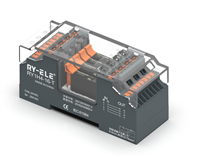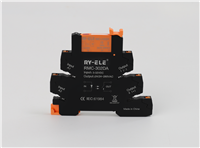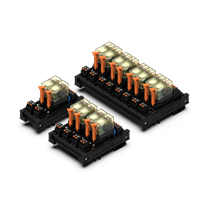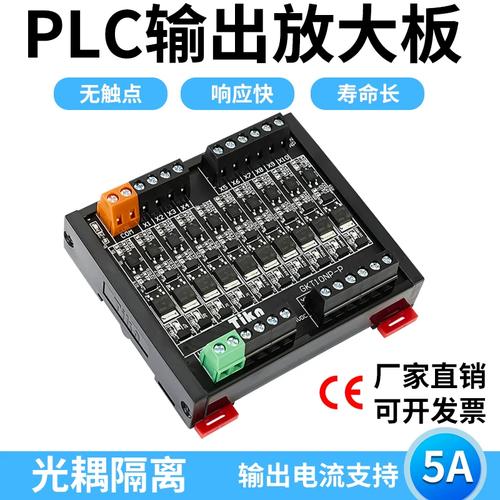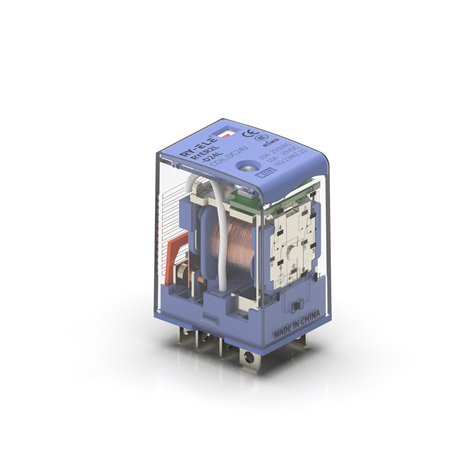

Industrial Control General Intermediate Relay High Sensitivity Contact Stability Zhejiang Rongyue Electric
Category:
electron/relay/relay
Model:
RYER
Brand:
Zhejiang Rongyue Electric
Coil voltage:
DC24V/AC220V
contact form :
2 open 2 close/4 open 4 close
Rated Current:
12A
insulation resistance:
≥100MΩ
mechanical life:
≥ 10 million times
electrical life:
≥ 300000 times
Action Time:
≤20ms
Release time:
≤10ms
Operating temperature:
-25℃~+55℃
Retail Price
10,000,000.00USD
重量
kg
- Product Description
-
Coil voltage DC24V/AC220V
contact form 2 open 2 close/4 open 4 close
Rated Current 12A
insulation resistance ≥100MΩ
mechanical life ≥ 10 million times
electrical life ≥ 300000 times
Action Time ≤20ms
Release time ≤10ms
Operating temperature -25℃~+55℃
Description :
Intermediate relay is a commonly used signal conversion and amplification component in industrial automation control systems, mainly used to expand the number or capacity of control contacts. It can convert weak control signals into signals that can drive high-power loads, or achieve synchronous control of multiple signals. In complex electrical circuits, intermediate relays play a crucial role in isolation, transmission, and logical judgment. They are widely used in machine tools, automated production lines, power protection, and building automation to ensure accurate execution of control instructions and solve the problem of insufficient direct control capabilities.
The intermediate relays in this series usually adopt standardized modular design, and common base installation methods include rail type or screw fixed type. The coil voltage specifications cover mainstream levels such as DC 12V, 24V, 48V, AC 110V, 220V, etc. The contact forms are mostly normally open and normally closed combinations, such as 4-open and 4-closed, 2-open and 2-closed configurations. The shell material is made of high-strength flame-retardant PC material, and the internal contacts are made of silver alloy material, which has good conductivity and resistance to arc oxidation. The product complies with international electrical standards such as IEC61810, with insulation resistance typically greater than 100M Ω and dielectric strength capable of withstanding a one minute withstand voltage test at 2000V/50Hz, ensuring stability in harsh electromagnetic environments.
When selecting, it is important to confirm whether the coil control voltage matches the type of control power supply (AC/DC) to avoid burning the coil. Select the appropriate contact capacity based on the load current. Generally, resistive loads can choose the 5A-10A specification, while inductive loads need to consider reducing capacity for use. If there are multiple control circuits, the model with a larger number of contact groups should be selected; If space is limited, ultra-thin or miniature intermediate relays can be selected. Compared with ordinary power relays, intermediate relays focus more on the sensitivity of signal transmission and multi-channel expansion capability, rather than directly cutting off large currents, so they are not suitable for the main circuit control of directly starting high-power motors.
During installation, ensure that the wiring terminals are securely fastened to prevent poor contact or heating caused by vibration. Regularly inspect the surface of the contacts for any signs of erosion or oxidation, and if necessary, gently sand or replace the relay with fine sandpaper. Please note that the working environment temperature should be between -25 ℃ and+55 ℃, and the relative humidity should not exceed 85%. Avoid prolonged exposure in places with corrosive gases or severe dust. Common faults include coil breakage, contact adhesion, or excessive contact resistance. During maintenance, a multimeter can be used to measure the coil resistance and contact on/off status to quickly identify the fault point and ensure the continuous operation of the system.
AfterSalesService :
Key words:
More Products