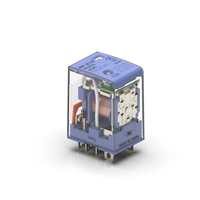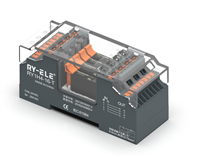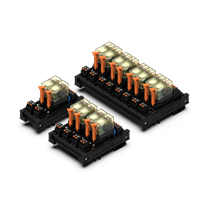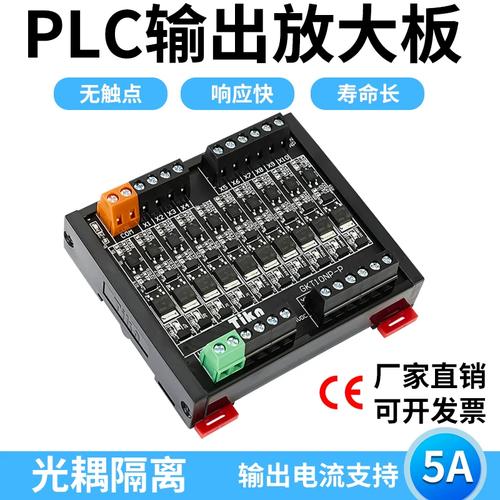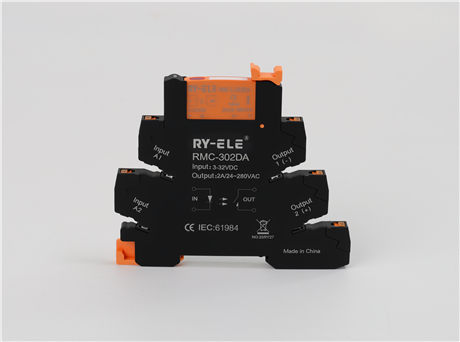

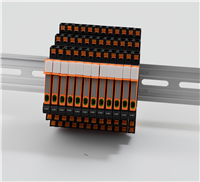
Ultra thin relay compact design saves space and is suitable for control cabinets
Category:
electron/relay/relay
Model:
RMC
Brand:
Rongyue Electric
Coil voltage:
DC 24V / AC 220V
contact form :
1NO+1NC / 2NO
Rated Current:
5A / 10A
Installation Method:
DIN35mm rail installation
Width dimension:
6.2mm / 10mm / 12.5mm
insulation resistance:
≥100MΩ
dielectric strength:
2500V AC/1min
mechanical life:
≥ 10 million times
Operating temperature:
-25℃ ~ +55℃
Shell material:
Flame retardant PC/PBT
Retail Price
10,000,000.00USD
重量
kg
- Product Description
-
Coil voltage DC 24V / AC 220V
contact form 1NO+1NC / 2NO
Rated Current 5A / 10A
Installation Method DIN35mm rail installation
Width dimension 6.2mm / 10mm / 12.5mm
insulation resistance ≥100MΩ
dielectric strength 2500V AC/1min
mechanical life ≥ 10 million times
Operating temperature -25℃ ~ +55℃
Shell material Flame retardant PC/PBT
Description :
Ultra thin relay is an electrical control component designed specifically for high-density installation environments, mainly solving the problems of large volume and occupying a lot of rail space in traditional relays. It compresses the thickness to half or even thinner than conventional products while maintaining standard electrical performance by optimizing the internal magnetic circuit structure and contact layout. Typical operating conditions include PLC output expansion, signal isolation conversion, and logic control of small automation equipment. This product is suitable for scenarios that require extremely high utilization of cabinet space, such as narrow control boxes, dense signal processing modules, etc. It can effectively reduce wiring difficulty and improve heat dissipation efficiency.
In terms of specifications, ultra-thin relays are usually installed using standardized DIN35mm rail mounting methods, with narrow body sizes such as 6.2mm, 10mm, or 12.5mm in width, and heights and depths that comply with industry standards for parallel installation with other modules. The shell material is often made of PC or PBT engineering plastics with good flame retardancy and UL94-V0 fire rating. The contact material is usually silver alloy or gold coating to ensure signal transmission stability under low load. The implementation standards refer to IEC 61810-1 and GB/T 21711.1, and some high-end models have passed CE and RoHS certification. The coil voltage covers commonly used levels such as DC 5V-24V and AC 110V-230V, and the insulation voltage is generally not less than 2500V AC.
When selecting, it is important to consider the matching of load type and control voltage. For DC low current signal isolation, it is recommended to choose models with gold contacts to reduce contact resistance; For inductive/resistive loads such as driving solenoid valves or indicator lights, attention should be paid to the rated switching power and arc extinguishing ability of the contacts. Compared with ordinary intermediate relays, the advantage of ultra-thin relays is that they have a higher density of points per unit area, but the single point carrying current is usually smaller (mostly 5A-10A), so they are not suitable for directly driving high-power motors or heaters. If the application scenario involves high-frequency switch actions, it is necessary to verify the mechanical and electrical life data to ensure that it meets long-term operational requirements.
In terms of installation and maintenance, the ultra-thin relay is directly fastened to the DIN rail without the need for screws, making it easy to disassemble and assemble. The wiring terminals are mostly spring type or screw type. It is recommended to use suitable specifications of cold pressed terminals to ensure reliable contact. Regularly check for oxidation or burn marks on the contacts during daily use, especially in humid or corrosive gas environments. If abnormal heating or louder movement sound is found in the coil, it should be replaced in a timely manner. Due to its compact structure and high integration of internal components, it is generally not recommended for non professionals to disassemble and repair it themselves. The typical usage cycle depends on the switching frequency and load properties, and with reasonable selection, it can achieve millions of operating lifetimes.
AfterSalesService :
Key words:
More Products