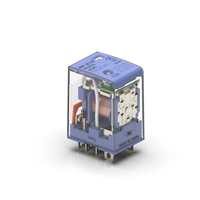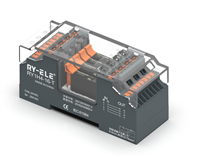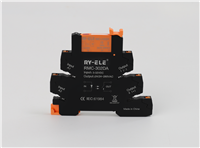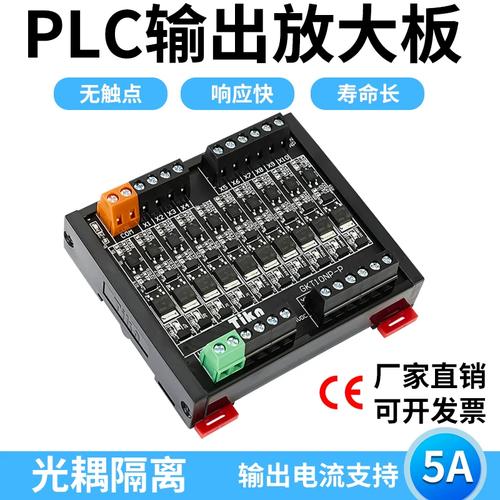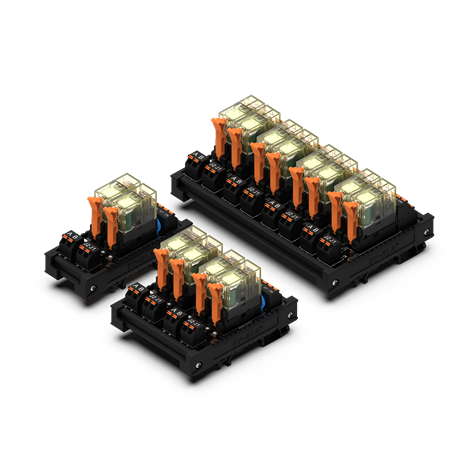

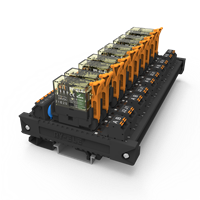
Industrial grade relay module signal isolation conversion expansion board
Category:
electron/electrical/Relay input module
Model:
RY1S
Brand:
Rongyue Electric
Coil voltage:
DC24V/AC220V
Contact load:
10A 250VAC
contact form :
SPDT (one open and one closed)
Installation Method:
35mm DIN rail
insulation resistance:
≥100MΩ
mechanical life:
≥ 10 million times
Operating temperature:
-40℃~+70℃
Shell material:
Flame Retardant PC
Retail Price
10,000,000.00USD
重量
kg
- Product Description
-
Coil voltage DC24V/AC220V
Contact load 10A 250VAC
contact form SPDT (one open and one closed)
Installation Method 35mm DIN rail
insulation resistance ≥100MΩ
mechanical life ≥ 10 million times
Operating temperature -40℃~+70℃
Shell material Flame Retardant PC
Description :
Relay module is an electrical control component that integrates electromagnetic relays, wiring terminals, and auxiliary circuits. It is mainly used to control and isolate weak electrical signals from strong electrical loads. In industrial automation control systems, it solves the problem of insufficient output current of PLC or microcontroller to directly drive high-power equipment, while protecting the core controller from high-voltage back electromotive force impact through photoelectric or physical isolation. This category is widely used in machine tool control, building automation, power distribution cabinets and other scenarios. It is a key intermediate link connecting the control layer and the execution layer, ensuring the stability and safety of signal transmission.
The relay module usually adopts a standard DIN rail installation structure, and the housing is mostly made of flame-retardant PC material or transparent dust cover design, which is easy to observe the working status. The internal core components are selected as high-sensitivity electromagnetic relays, and the contact materials are usually silver alloy or silver nickel alloy to ensure good conductivity and arc resistance. Common coil voltage specifications include DC12V, DC24V, AC220V, etc., and the contact load capacity is generally between 5A-10A. The product complies with international standards such as IEC61810 and has high insulation resistance and dielectric strength. Some models are equipped with LED status indicator lights and freewheeling diodes to display the suction status and eliminate reverse voltage when the coil is powered off.
When selecting, special attention should be paid to whether the coil control voltage matches the system output, and whether the contact load current meets the requirements of the controlled equipment. For inductive loads such as motors and solenoid valves, it is recommended to use modules with surge suppression function to extend their lifespan. If high-density installation is required, ultra-thin or multi-channel integrated relay modules can be selected; If the environmental vibration is large, industrial grade products with long mechanical life and good seismic performance should be selected. Attention should be paid to distinguishing between solid-state relay modules and electromagnetic relay modules. The former has no contacts, long lifespan but high heat dissipation requirements, while the latter has low cost and strong overload resistance but mechanical wear. The selection should be based on the actual operating frequency and load type.
During installation, it should be ensured that the DIN rail is firmly fixed, and the tightening torque of the wiring terminal screws is moderate to avoid overheating caused by virtual connections. Regularly check the contacts for oxidation or erosion during use, especially under frequent operation or high current conditions. If the indicator light does not light up or operates abnormally, first check whether the coil power supply voltage is normal, and then measure the contact continuity. During daily maintenance, the surface of the module should be kept clean to prevent dust accumulation from affecting heat dissipation or causing short circuits. In humid or corrosive environments, it is recommended to choose models with sealed protective covers and regularly check the insulation performance of the circuit to ensure long-term stable operation of the control system.
AfterSalesService :
Key words:
More Products