
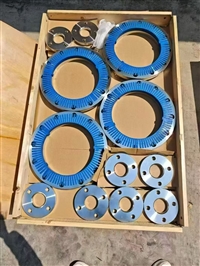
304/316 stainless steel flange industrial pipeline connection, corrosion-resistant high-pressure seal
Category:
building materials/Pipe fittings/flange
Model:
304/316
Brand:
Longchangtai
Material Grade:
304/316/316L
Execution Standard:
GB/T 9113 / HG/T 20592
pressure rating:
PN10-PN40 (Class150-600)
Type of sealing surface:
RF (convex surface)/MFM (concave convex surface)
connection method:
Welding (WN)/Flat Welding (PL)
Operating temperature:
-196 ℃ to 800 ℃
Surface Treatment:
Acid pickling passivation/sandblasting
Detection method:
Spectrometer detection/water pressure test
Retail Price
10,000,000.00USD
重量
kg
- Product Description
-
Material Grade 304/316/316L
Execution Standard GB/T 9113 / HG/T 20592
pressure rating PN10-PN40 (Class150-600)
Type of sealing surface RF (convex surface)/MFM (concave convex surface)
connection method Welding (WN)/Flat Welding (PL)
Operating temperature -196 ℃ to 800 ℃
Surface Treatment Acid pickling passivation/sandblasting
Detection method Spectrometer detection/water pressure test
Description :
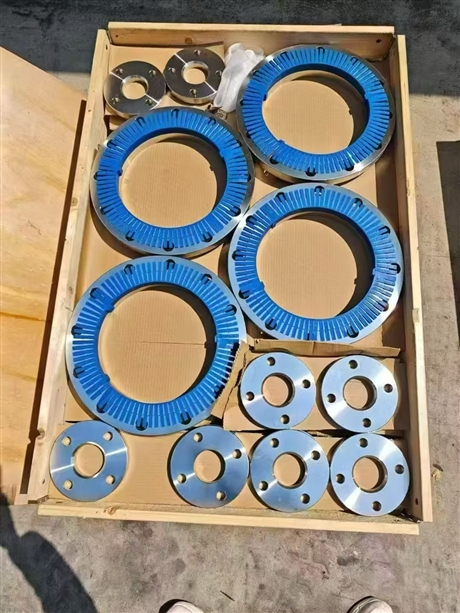
Stainless steel flanges are key fittings used for connecting and sealing pipes, valves, or equipment, mainly to solve pressure and leakage problems in fluid transportation systems. The picture shows a typical plate flat welding or butt welding flange, packaged with a blue protective sleeve, suitable for working conditions such as chemical, petroleum, natural gas, water treatment, and food and pharmaceutical industries. 304 material meets the requirements of general corrosive media, while 316 material has stronger resistance to pitting corrosion due to the addition of molybdenum element, making it suitable for environments containing chloride ions or seawater. This category achieves detachable connections through bolt fastening, making it easy for later maintenance and pipeline renovation. It is one of the most widely used standard components in industrial pipeline networks.
In terms of specifications, common calibers range from DN15 to DN2000, and pressure levels cover PN6 to PN40 (or Class150 to Class600). The material strictly follows the GB/T 20878 standard, with 304 corresponding to 06Cr19Ni10316 corresponding to 06Cr17Ni12Mo2. The sealing surface forms include protruding surface (RF), concave convex surface (MFM), and tenon groove surface (TG). As shown in the figure, some flanges have neck structures and belong to neck butt welding flanges (WN), which can withstand higher temperature and pressure fluctuations. The machining accuracy must comply with the GB/T 9113 or HG/T 20592 series standards, and the surface roughness is usually controlled within Ra3.2-6.3 μ m to ensure a tight fit of the gasket. Before leaving the factory, spectral analysis is required to verify the material composition, and water pressure testing or non-destructive testing should be conducted.
When selecting, it is necessary to clarify the characteristics of the medium, working temperature, and design pressure. If the medium is weak acid, weak alkali or room temperature clean water, 304 stainless steel flange has high cost-effectiveness; If it involves hydrochloric acid, sulfuric acid or marine atmospheric environment, 316 or 316L must be selected to prevent intergranular corrosion. Pay attention to distinguishing the size systems of "national standard", "American standard" and "German standard". Different bolt hole spacing and diameter may result in installation failure. For high-temperature conditions, the thermal expansion coefficient of the flange should be considered to avoid bolt loosening and leakage after prolonged operation. If the pipeline vibration is significant, it is recommended to use a necked flange to enhance rigidity, rather than a simple plate welding flange. In addition, attention should be paid to whether the flange thickness meets the current pressure rating requirements, and it is strictly prohibited to use low-pressure flanges for overpressure.
Before installation, the flange sealing surface should be cleaned to ensure that there are no scratches, rust spots, or oil stains. The gasket should be placed in the center, and the use of double-layer gaskets is strictly prohibited. The bolt tightening should be carried out in a diagonal cross sequence and tightened in stages, with uniform torque, to avoid flange deflection and leakage caused by one-sided force. In daily maintenance, the focus is on checking whether the bolts have rust and elongation, and whether there are signs of medium leakage on the sealing surface. In pipelines with significant temperature differences, thermal cycling may cause bolt stress relaxation. It is recommended to perform secondary tightening during the initial operation. If slight damage is found on the sealing surface, it can be repaired by grinding with a fine oilstone; If there are deep cracks or severe corrosion, it must be replaced immediately to avoid safety accidents. When storing, it should be kept dry to avoid iron ion contamination and rust caused by contact with carbon steel parts.
AfterSalesService :
Key words:
More Products