
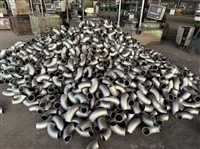
20 #/Q235B carbon steel push bend 90 degree 45 degree butt welded pipe fittings, oil and gas pipeline fittings
Category:
building materials/Pipe fittings/elbow
Model:
Specification and model DN15-DN2200
Brand:
Longchangtai
Material:
20# / Q235B
Type:
Butt welding elbow
angle:
45° / 90° / 180°
radius of curvature:
Long radius (R=1.5D)/Short radius (R=1.0D)
Execution Standard:
GB/T12459 / GB/T13401
connection method:
butt weld connection
Surface Treatment:
Sandblasting/anti rust paint/bare pipe
Applicable Medium:
Water/Steam/Oil/Gas
Operating temperature:
-20℃ ~ 450℃
production process:
Hot pressing/cold extrusion
Retail Price
10,000,000.00USD
重量
kg
- Product Description
-
Material 20# / Q235B
Type Butt welding elbow
angle 45° / 90° / 180°
radius of curvature Long radius (R=1.5D)/Short radius (R=1.0D)
Execution Standard GB/T12459 / GB/T13401
connection method butt weld connection
Surface Treatment Sandblasting/anti rust paint/bare pipe
Applicable Medium Water/Steam/Oil/Gas
Operating temperature -20℃ ~ 450℃
production process Hot pressing/cold extrusion
Description :
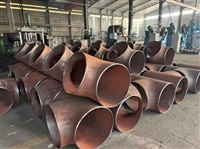
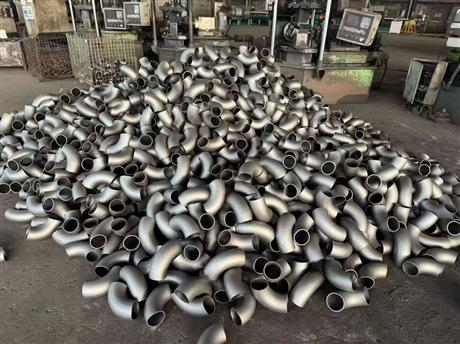
Carbon steel elbows are connecting fittings used in pipeline systems to change the direction of pipelines. They are mainly formed through pushing or pressing processes to solve the problem of straight pipelines being unable to turn. This product is made of 20 # steel or Q235B carbon structural steel, which has good plasticity and welding performance, and is suitable for medium and low pressure conditions such as petroleum, chemical, natural gas, power, and water supply pipelines. As a basic butt welded pipe fitting, it can withstand a certain internal fluid pressure, ensuring smooth flow of the medium at bends, and is an indispensable standardized component in industrial pipeline installation.
The manufacturing of this carbon steel elbow follows the standards of GB/T12459 "Steel butt welded seamless fittings" or GB/T13401 "Steel plate butt welded fittings". Material 20 # steel belongs to high-quality carbon structural steel, while Q235B is ordinary carbon structural steel, both of which have good mechanical strength. Surface treatment usually involves sandblasting to remove rust and then applying anti rust paint or shipping bare pipes, with the outer wall presenting a metallic gray black color. The angle specifications cover common 45 degree, 90 degree, and 180 degree bends, and the curvature radius is divided into two series: long radius (R=1.5D) and short radius (R=1.0D). The ports are machined or cut and polished to ensure the accuracy and coaxiality of the groove when docking with the pipeline.
When selecting, it is necessary to clarify the design pressure, medium characteristics, and working temperature. 20 # material has better temperature resistance than Q235B and is suitable for non corrosive media ranging from -20 ℃ to 450 ℃; Q235B has a lower cost and is mostly used for water and air transportation at room temperature and pressure. If the working conditions involve strong corrosion, high temperature and high pressure, or low temperature and deep cold environments, such carbon steel materials should be avoided and stainless steel or alloy steel elbows should be selected instead. When purchasing, it is necessary to confirm whether the execution standard is seamless pushing or seam pressing. Seamless parts have stronger pressure bearing capacity and are suitable for main lines; Seamless parts have high cost-effectiveness and are suitable for general branch lines or non critical parts.
Before installation, it is necessary to check whether there are sand holes, cracks or severe corrosion on the inner wall of the carbon steel elbow, and whether the groove surface is flat and free of burrs. It is recommended to use argon arc welding or manual arc welding during welding. Choose the appropriate welding rod (such as J422 or J507) according to the wall thickness and perform preheating treatment to reduce welding stress and prevent cracking in the heat affected zone. In daily maintenance, it is important to monitor the thinning of the outer arc top of the elbow, especially when transporting media containing particles, as this area is susceptible to erosion and wear. Regularly use ultrasonic thickness gauges to measure wall thickness. Once the thinning amount exceeds the design allowance, it should be replaced promptly to prevent pipe leakage.
AfterSalesService :
Key words:
More Products