
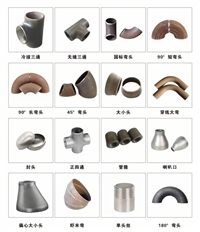
National standard carbon steel stainless steel pipeline fittings, tee elbows, large and small head heads, butt welded pipe fittings
Category:
hardware/Pipe fittings/Other pipe fittings
Model:
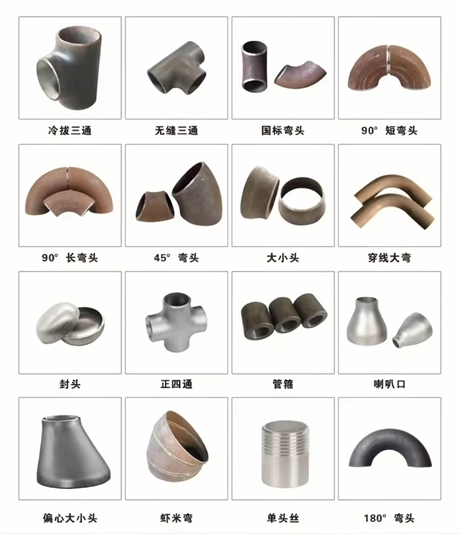
Cold drawn tee/seamless tee/national standard elbow/90 ° short elbow/90 ° long elbow/45 ° elbow/big
Brand:
Longchangtai
Product Name:
pipe fittings
Main material:
Carbon steel/stainless steel/alloy steel
Execution Standard:
GB/T12459/ASME B16.9
Specification Range:
DN15-DN1000
connection method:
Welding/threading/socket
Surface Treatment:
Sandblasting/anti-corrosion/acid cleaning
Operating temperature:
-29℃~650℃
pressure rating:
PN10-PN100/SCH10-SCH160
Product Type:
Three way/elbow/large and small head/head/four-way
Retail Price
10,000,000.00USD
重量
kg
- Product Description
-
Product Name pipe fittings
Main material Carbon steel/stainless steel/alloy steel
Execution Standard GB/T12459/ASME B16.9
Specification Range DN15-DN1000
connection method Welding/threading/socket
Surface Treatment Sandblasting/anti-corrosion/acid cleaning
Operating temperature -29℃~650℃
pressure rating PN10-PN100/SCH10-SCH160
Product Type Three way/elbow/large and small head/head/four-way
Description :
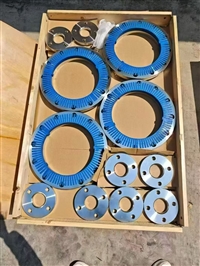
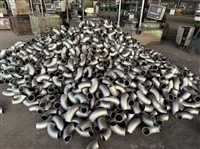
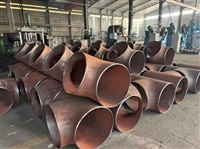
Pipeline fittings are key components used in industrial piping systems for connecting, turning, reducing, diverting, and plugging pipelines, solving the problem of direction changes and pipe diameter matching in fluid transport paths. The illustrated products cover a full range of products including cold drawn tees, seamless tees, various angle elbows (90 °/45 °/180 °), concentric and eccentric reducers, heads, positive tees, pipe clamps, horn mouths, shrimp bends, and single head wires. These pipeline fittings are widely used in petroleum, chemical, power, shipbuilding, building water supply and drainage, and HVAC engineering to ensure the sealing and structural strength of the pipeline system, adapt to the transportation conditions of high pressure, high temperature, or corrosive media, and are indispensable basic materials for pipeline prefabrication and on-site installation.
This series of pipeline fittings are usually made of 20 # carbon steel, 304/316L stainless steel, alloy steel, or Q235B material, and comply with international and domestic standards such as GB/T12459, GB/T13401, or ASME B16.9. The manufacturing process includes pushing, pressing, forging, and cold drawing, and the surface is treated with sandblasting, anti-corrosion coating, or acid pickling and passivation. The specification range covers DN15 to DN1000, and the wall thickness meets the requirements of Sch10-Sch160 and STD/XS/XXS series. For example, seamless tees are formed as a whole to ensure the strength of the weld seam. The curvature radius of a 90 ° long elbow is usually 1.5D to reduce fluid resistance. Eccentric reducers are used for horizontal pipeline drainage and airbag protection. All pipeline fittings must provide material certificates and non-destructive testing reports to ensure compliance with the manufacturing license requirements for pressure pipeline components.
When selecting, it is necessary to clarify the characteristics of the medium, design pressure, temperature, and connection method. For high-pressure and high-temperature steam pipelines, seamless process manufactured pipe fittings such as seamless tees and long radius elbows should be selected to avoid welding defects; Low pressure water and gas pipelines can be equipped with seamless or cold drawn pipe fittings to reduce costs. If the variable diameter is a horizontal pipeline and the liquid needs to be drained completely, eccentric reducers must be used instead of concentric reducers; Branch pipelines are selected as positive four-way or diagonal three-way according to flow distribution requirements. Pay attention to distinguishing between "threading bends" and pressure elbows. The former is only used for electrical conduit protection and is strictly prohibited for fluid transportation. It is strictly prohibited to directly mix weld pipeline fittings of different materials, and the risk of electrochemical corrosion should be considered. When connecting flanges, gaskets and bolts of corresponding pressure levels should be matched.
Before installing pipeline fittings, it is necessary to check the groove angle, blunt edge size, and inner wall cleanliness to ensure that there are no defects such as cracks or double skin. When welding connections, argon arc welding or submerged arc automatic welding should be used, with strict control of interlayer temperature and post weld heat treatment to eliminate stress. When installing elbows, attention should be paid to flow direction markings, and when installing large and small heads, the directionality of concentricity and eccentricity should be distinguished. In daily maintenance, the focus is on monitoring the erosion and thinning of the outer side of the elbow and the corrosion fatigue cracks at the three-way branch, especially for pipeline fittings that transport granular media or corrosive fluids. Regularly use ultrasonic thickness gauges to detect wall thickness. If local thinning exceeds the design allowance, it should be replaced in a timely manner to prevent leakage accidents caused by erosion perforation and ensure the safe and stable operation of the entire pipeline system.
AfterSalesService :
Key words:
More Products